Experience the intoxicating aroma of Pad Kee Mao, a legendary Thai street food staple that balances searing heat with deep, savory umami. This recipe captures the elusive “wok hei” or “breath of the wok,” delivering noodles that are deeply caramelized with visible charred edges.
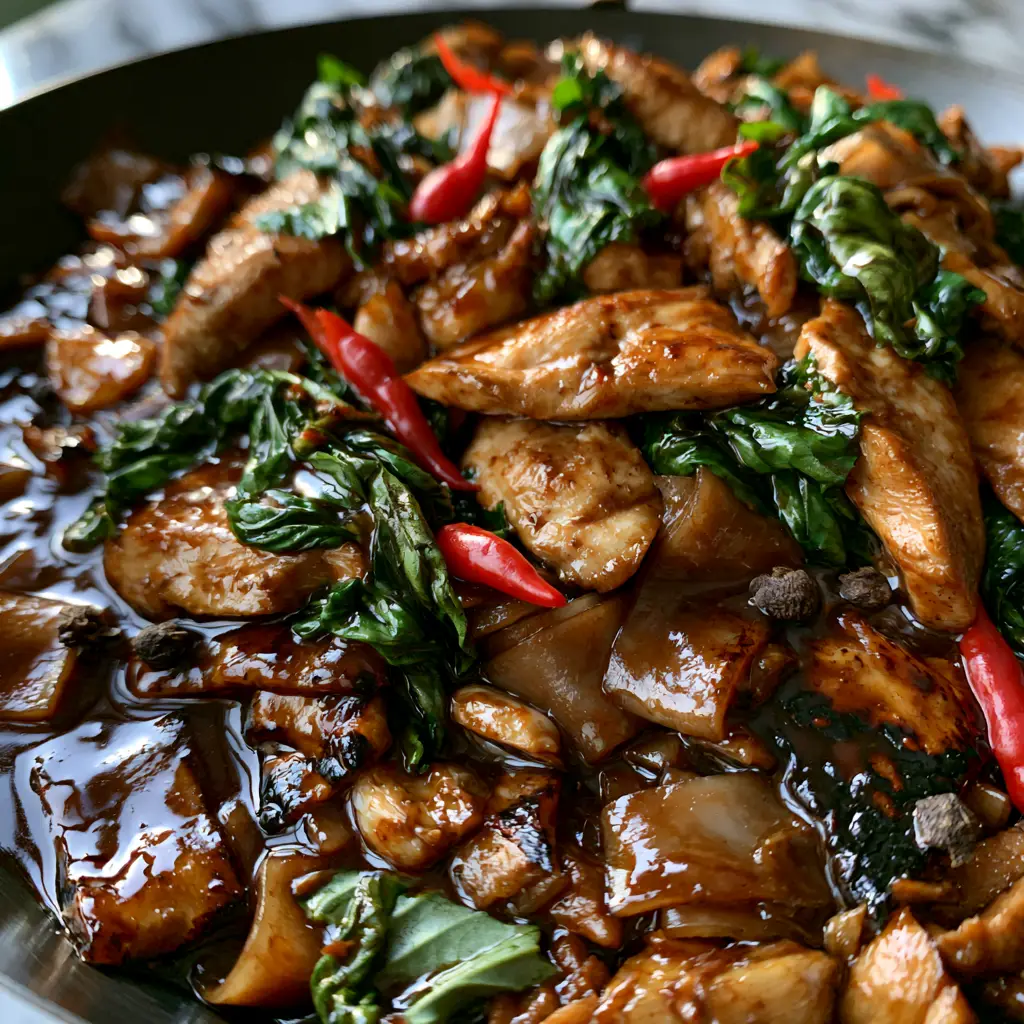
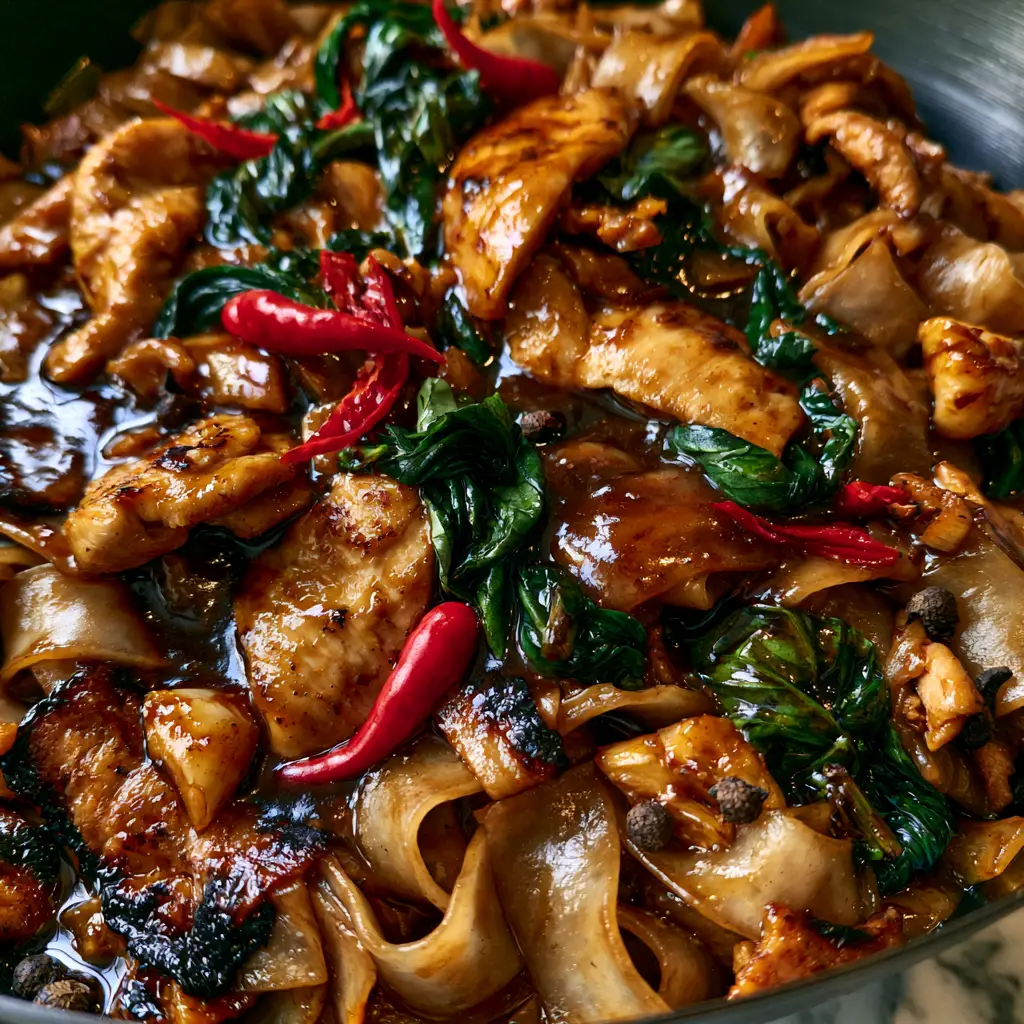
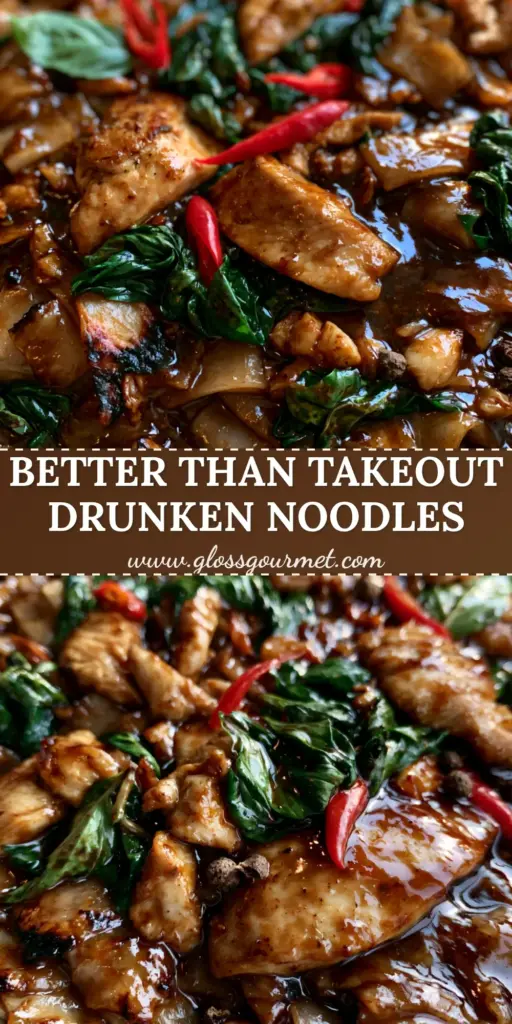
Imagine a matte charcoal ceramic bowl filled with wide, flat rice noodles, glistening under a glossy dark soy sauce glaze. Every bite offers tender strips of seared chicken, the punch of sliced red bird’s eye chilies, and the cooling, peppery notes of wilted fresh Thai basil.
Whether you are a seasoned home cook or a noodle enthusiast, this version of Pad Kee Mao replicates the high-heat intensity of a professional kitchen. Prepare to see steam wisps rising from your plate as you lift a generous, elastic portion of noodles with your fork.
Why This Is the Only Pad Kee Mao Recipe You Need
- Wok Hei Mastery: Learn the technique to achieve those signature charred edges on the rice noodles without them sticking or breaking.
- Perfectly Balanced Heat: We use sliced red bird’s eye chilies to provide a sharp, clean spice that cuts through the rich, dark soy glaze.
- Textural Contrast: From the elasticity of the wide noodles to the tender sear on the chicken breast, every ingredient serves a structural purpose.
- Authentic Visual Appeal: This dish is designed to look as good as it tastes, featuring vibrant green basil and bright red chili rounds against a dark, moody sauce.
The Essential Components for Authentic Drunken Noodles
To achieve the specific visual and flavor profile of restaurant-quality Pad Kee Mao, every ingredient must be chosen for its chemical and culinary properties. Here is the breakdown of what you will need.
The Noodle Foundation
Wide Flat Rice Noodles (Sen Yai): You need 16 oz (450g) of fresh wide rice noodles. These provide the necessary surface area for caramelization and the elastic “chew” seen in high-end food photography.
Neutral High-Smoke Point Oil: Use 3 tbsp (45ml) of grapeseed or canola oil. This is a foundational invisible ingredient required to sear the chicken and char the noodles at extreme temperatures without burning.
Proteins and Aromatics
Chicken Breast Strips: 10 oz (280g) of thinly sliced chicken breast. Slicing against the grain ensures the meat remains tender and sears quickly to maintain the moisture visible in the glossy finish.
Minced Sautéed Garlic: 5 cloves (approx. 25g) of fresh garlic. When minced finely and sautéed, it creates a nutty, aromatic base that infuses the oil and clings to the noodles.
Red Bird’s Eye Chilies: 3-6 chilies (10-20g), sliced into thin rounds. These provide the “Kee Mao” (drunken) punch and the bright red visual pop against the charcoal bowl.
The Glossy Dark Sauce Glaze
Dark Soy Sauce: 2 tbsp (30ml). This is critical for the “glossy dark soy sauce glaze” described in the blueprint; it provides the deep mahogany color and a hint of molasses sweetness.
Oyster Sauce & Fish Sauce: 2 tbsp (30ml) oyster sauce and 1 tbsp (15ml) fish sauce. These provide the savory backbone and saltiness required for a complex umami profile.
Cracked Black Pepper: 1 tsp (2g) of freshly cracked peppercorns. This adds a secondary, floral heat that complements the sharp spice of the bird’s eye chilies.
The Herbal Finish
Fresh Thai Basil: 1 cup (approx. 30g) of hand-torn leaves. These must be added at the very end to achieve the “wilted” look while retaining their vibrant green color and anise-like aroma.
Professional Equipment for Wok Hei
Achieving the visual blueprint’s charred edges requires specific tools. A carbon steel wok is preferred because it responds instantly to heat changes and develops a non-stick patina.
If you don’t have a wok, a heavy-bottomed cast iron skillet is the best substitute. It retains enough heat to sear the chicken breast strips and caramelize the rice noodles without dropping in temperature when the sauce is added.
You will also need a high-quality chef’s knife to slice the bird’s eye chilies into uniform rounds and a sturdy metal spatula to scrape the caramelized bits off the bottom of the pan.
The Master Class: How to Sear and Char Your Way to Perfect Pad Kee Mao
Phase 1: Prepping the Aromatics and Sauce
Begin by whisking together the dark soy sauce, oyster sauce, fish sauce, and a teaspoon of sugar in a small bowl. Having this “glaze” ready is vital because stir-frying happens in seconds.
Slice your red bird’s eye chilies into thin rounds and mince the garlic. If you prefer a more cohesive heat, you can pound the garlic and chilies together in a mortar and pestle to release the oils.
Phase 2: Searing the Chicken Breast
Heat 1 tbsp (15ml) of oil in your wok over high heat until you see the first wisps of smoke. Add the chicken breast strips in a single layer and let them sit for 60 seconds without moving them.
This creates the deep golden-brown crust described in the culinary blueprint. Toss briefly until cooked through, then remove the chicken from the wok to prevent it from becoming rubbery.
Phase 3: The Secret to Charred Rice Noodles
Add the remaining oil to the hot wok, followed by the garlic and chilies. Sauté for 30 seconds until the garlic is golden and fragrant, then add the wide rice noodles.
Spread the noodles out against the surface of the wok and let them sear undisturbed for 45-60 seconds. You are looking for those “charred ‘wok hei’ edges” where the rice starch begins to caramelize and turn dark brown.
Phase 4: The Final Toss and Wilt
Pour the sauce mixture over the noodles and add the chicken back into the pan. Use a tossing motion to ensure every noodle is coated in the glossy dark glaze.
Turn off the heat and throw in the Thai basil and cracked black pepper. The residual heat will create the “wilted fresh Thai basil” look while keeping the leaves tender and aromatic.
Expert Tips for Success
- Don’t Overcrowd the Pan: If you are making more than two servings, cook in batches. Too many noodles in the wok will cause them to steam rather than char.
- Room Temperature Noodles: If using fresh noodles from the fridge, microwave them for 30 seconds to soften them. This prevents them from breaking into small pieces during the stir-fry.
- The Sugar Balance: If the sauce feels too salty, add an extra teaspoon of palm sugar or brown sugar. This balances the fermentation of the fish sauce.
- Control the Heat: To reduce the spiciness, deseed the bird’s eye chilies before slicing them into rounds.
Storage, Reheating, and Meal Prep
Pad Kee Mao is best enjoyed immediately while the steam wisps are still rising. However, leftovers can be stored in an airtight container in the refrigerator for up to 3 days.
To reheat, avoid the microwave if possible as it can make the noodles mushy. Instead, flash-fry them in a hot skillet with a teaspoon of water to loosen the sauce and restore the elasticity.
We do not recommend freezing this dish. The texture of the wide rice noodles changes significantly upon thawing, losing the “chew” that makes this dish so iconic.
What to Serve with Drunken Noodles
To balance the richness of the dark soy glaze, pair this dish with something bright and acidic. A traditional green mango salad offers a crisp contrast to the soft noodles.
If you are hosting a multi-course Thai dinner, consider starting with a chilled spicy Asian noodle salad or serving a seared sesame ginger tuna steak as an upscale protein side.
For dessert, the floral notes of the Thai basil pair beautifully with a creamy mango crepe cake or a light refreshing fruit-based salad.
Frequently Asked Questions
Yes, but you must soak them in warm water until they are flexible but still firm (al dente) before stir-frying to ensure they don’t turn mushy in the wok.
Ensure your wok is screaming hot before adding the oil and noodles, and most importantly, let the noodles sit undisturbed for at least 45 seconds to develop a crust.
Rice noodles are naturally gluten-free, but you must use a certified gluten-free soy sauce, oyster sauce, and fish sauce to ensure the entire dish is safe for gluten-sensitive diets.
Thai Basil has a purple stem and an anise/licorice flavor, while Holy Basil (traditionally used in Thailand for this dish) is spicier and more peppery. This recipe uses Thai Basil for its accessibility and visual vibrancy.
There are many theories, but the most popular is that the dish is so spicy it requires a cold beer to wash it down, or that it’s the perfect late-night meal for those who have been drinking.
The Authentic Pad Kee Mao Recipe
Pad Kee Mao: The Ultimate Guide to Smoky, Charred Drunken Noodles
Ingredients
Equipment
Method
- In a small bowl, whisk together the dark soy sauce, oyster sauce, fish sauce, and black pepper. Set aside.
- Mince the garlic and slice the bird's eye chilies into thin rounds. Slice the chicken breast into thin strips.
- Heat 1 tbsp (15ml) of oil in a wok over high heat until smoking. Add chicken strips and sear for 1-2 minutes until a golden crust forms. Remove from wok.
- Add remaining oil, garlic, and chilies to the wok. Sauté for 30 seconds. Add rice noodles and spread them out. Let sit undisturbed for 1 minute to achieve charred edges.
- Return chicken to the wok and pour in the sauce. Toss vigorously for 1 minute until the noodles are glossy and dark. Turn off heat.
- Fold in the Thai basil until just wilted. Serve immediately while steam wisps are visible.
Notes
A carbon steel wok is the best tool for authentic wok hei.
Join the Gloss Gourmet Community
If you loved the smoky, charred flavors of this Pad Kee Mao, we want to hear about it! Leave a comment below or share your creation on social media. Your feedback helps us refine our forensic culinary blueprints for future recipes.
Don’t forget to follow us on Pinterest for more high-RPM recipe inspiration and stunning food photography. Sign up for our newsletter to receive the latest “wok hei” tips delivered straight to your inbox.