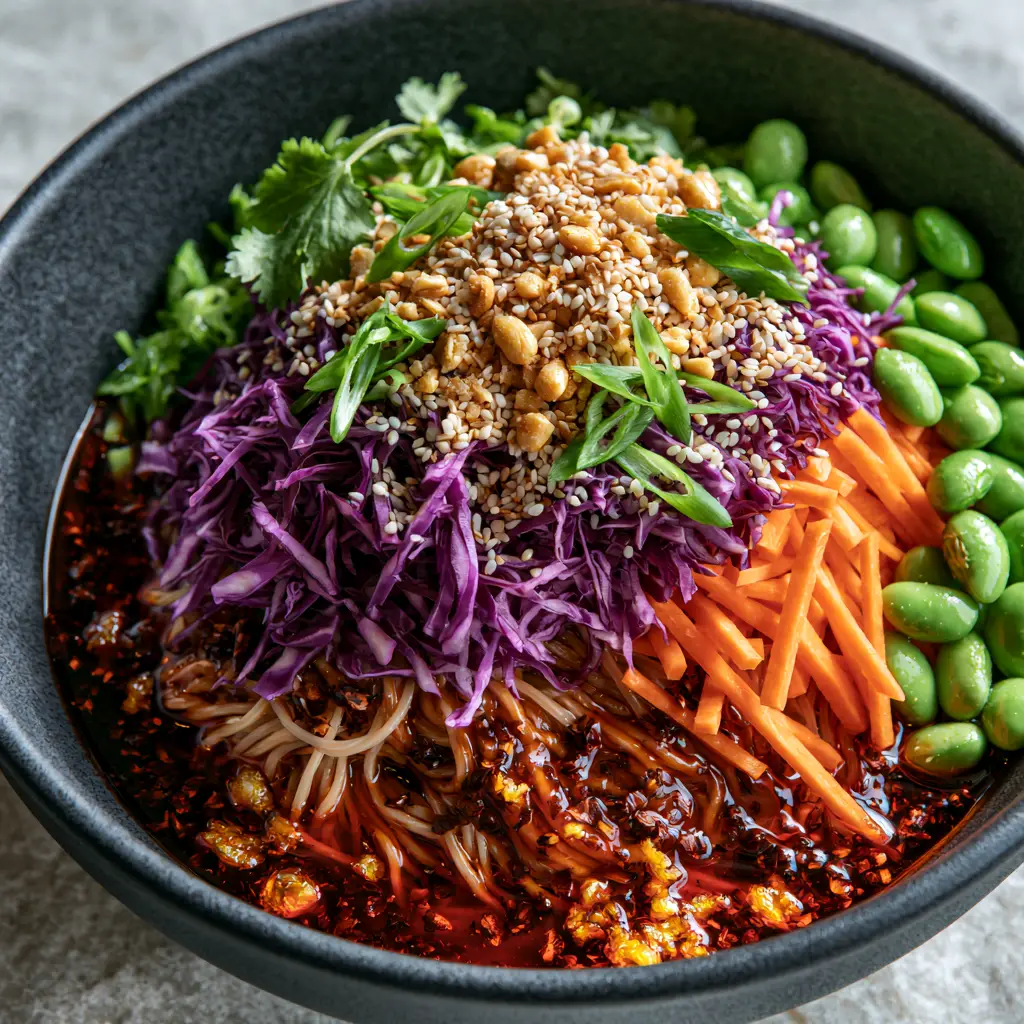
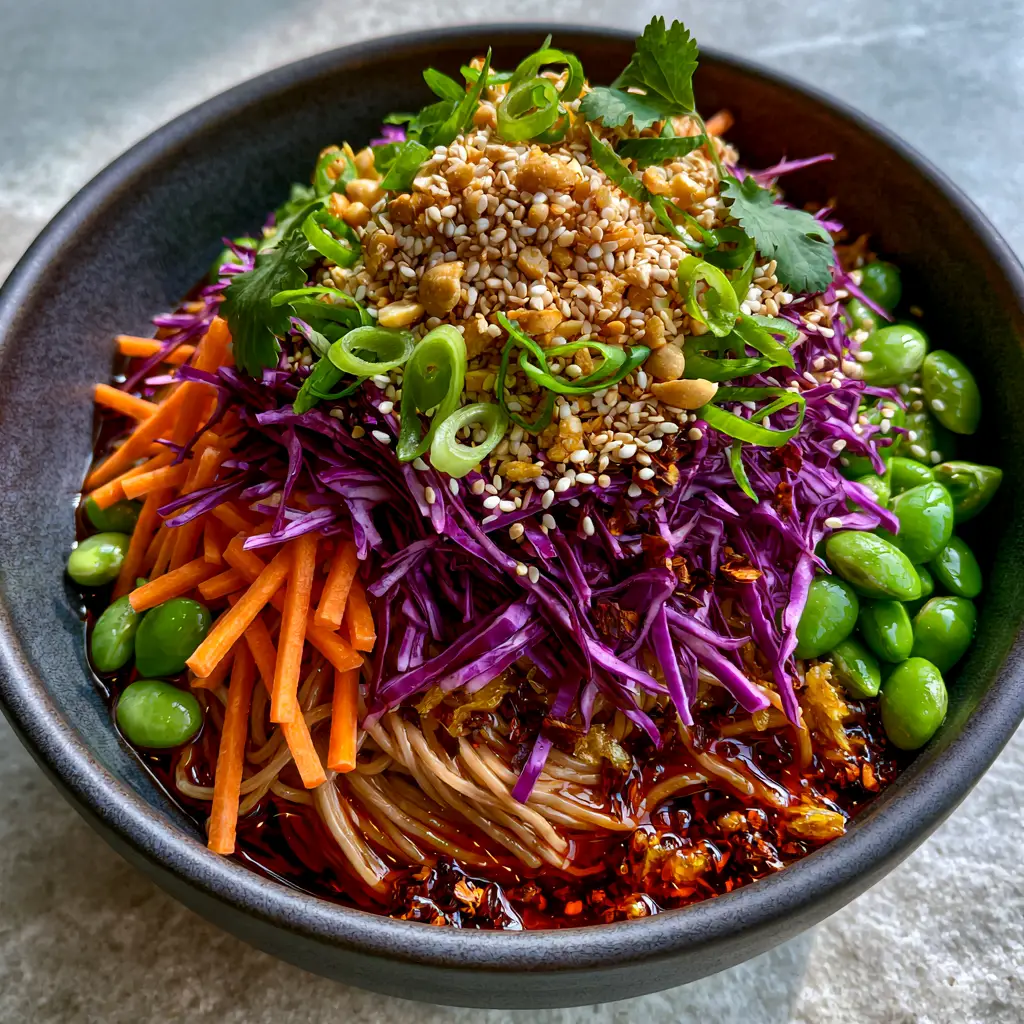
There is a specific, electrifying joy in a bowl of spicy Asian noodle salad that balances fire, crunch, and silkiness. Imagine a matte dark charcoal ceramic bowl, heavy in your hands, filled with a towering heap of springy wheat noodles. These aren’t just any noodles; they are thoroughly drenched in a thick, glossy, deep crimson Szechuan chili oil sauce that shimmers under natural daylight.
Every bite of this spicy Asian noodle salad offers a masterclass in texture. You get the snap of blanched emerald edamame, the dense crunch of raw purple cabbage, and the earthy sweetness of matchstick carrots. It is a visual and culinary feast that looks as professional as a high-end bistro dish but remains accessible for the enthusiastic home cook.
Whether you are seeking a vibrant lunch or a show-stopping dinner side, this recipe delivers on the promise of bold, authentic flavors. The sauce is perfectly viscous, adhering to every strand of wheat noodle without any watery pooling at the bottom of the bowl. Let’s dive into the science of building this crimson masterpiece.
Why This Crimson Noodle Bowl Defines Texture and Heat
- Springy Wheat Foundation: We use specific boiling and shocking techniques to ensure the noodles retain a “q-bounce” texture that stands up to the heavy sauce.
- Multidimensional Heat: By utilizing both toasted chili flakes and a prepared Szechuan oil, we create layers of warmth rather than a flat, stinging spice.
- Structural Crunch: The combination of fried garlic bits, crushed roasted peanuts, and raw julienned vegetables provides a rhythmic contrast to the soft noodles.
- Viscous Adhesion: Unlike thin vinaigrettes, this sauce is engineered to coat the noodles, ensuring the crimson sheen stays on the food, not the bowl.
The Essential Pantry for a Vibrant Salad
To achieve the visual and flavor profile described in our blueprint, every ingredient serves a specific purpose. We balance the fats of the oil with the acidity of vinegar and the freshness of raw produce.
Springy Wheat Noodles: 12 oz (340g) of dried wheat noodles (such as lo mein or thick ramen) provide the necessary gluten structure. These noodles absorb the sauce’s pigment while maintaining their individual shape.
Szechuan Chili Oil & Flakes: 1/2 cup (120ml) of high-quality crimson oil combined with 2 tbsp (10g) of toasted flakes. This provides the “glossy crimson” aesthetic and the signature numbing heat of Szechuan peppercorns.
Fried Garlic Bits: 4 cloves of garlic, finely minced and fried until golden. These add a savory, bitter-sweet crunch that contrasts with the fresh aromatics.
Raw Vegetable Medley: 2 cups (180g) shredded purple cabbage and 1 cup (125g) matchstick carrots. These provide the “vibrant layers” and a necessary aqueous crunch to cut through the oil.
Blanched Edamame: 1 cup (155g) of shelled emerald edamame. Blanching them briefly ensures they are “plump” and bright green, offering a pop of plant-based protein.
The Garnish Trio: Toasted white sesame seeds, crushed roasted peanuts, and a heavy scatter of fresh scallions and cilantro. These provide the final “heavy garnish” that creates the artisan, handheld photo look.
Foundational Liquid Base: 3 tbsp (45ml) soy sauce, 1 tbsp (15ml) rice vinegar, and 1 tsp (5g) sugar. These invisible ingredients are essential for emulsifying the chili oil into a sauce that adheres to the noodles.
Professional Tools for the Modern Kitchen
Achieving the perfect julienne on your carrots and the right sear on your garlic requires the right equipment. You don’t need a professional kitchen, but a few specific tools will elevate the result.
- Large Stockpot: For boiling the wheat noodles in plenty of salted water to prevent sticking.
- Stainless Steel Skillet: Essential for frying the garlic bits to a perfect golden hue without burning.
- Mandoline Slicer or Sharp Chef’s Knife: To get those dense, fine shreds of purple cabbage and precise matchstick carrots.
- Matte Ceramic Serving Bowls: To replicate the aesthetic of the dark charcoal bowl which makes the crimson oil and green edamame pop visually.
Crafting the Perfect Spicy Asian Noodle Salad
Preparing the Springy Noodle Base
Bring a large pot of salted water to a rolling boil. Add 12 oz (340g) of wheat noodles and cook according to package instructions, but stop exactly 1 minute before the suggested time for “al dente.”
Immediately drain the noodles and plunge them into a bowl of ice water. This “shocks” the noodles, stopping the cooking process and locking in that springy texture. Once chilled, drain thoroughly and pat dry; excess water is the enemy of a viscous sauce.
Infusing the Deep Crimson Chili Oil Sauce
In a small saucepan, heat 1/2 cup (120ml) of neutral oil over medium-low heat. Add the minced garlic and fry for 2-3 minutes until they become “golden fried garlic bits.” Remove from heat immediately to prevent over-browning.
In a heat-proof bowl, combine the fried garlic (and its oil), the Szechuan chili oil, toasted chili flakes, soy sauce, rice vinegar, and sugar. Whisk vigorously until the sauce looks thick and emulsified. You are looking for a deep crimson color that coats the back of a spoon.
Prepping the Rainbow Vegetable Layers
While the noodles dry, prepare your vegetables. Blanch 1 cup (155g) of shelled edamame in boiling water for 2 minutes, then shock in ice water to maintain that “plump emerald green” appearance.
Finely shred the purple cabbage and julienne the carrots into thin matchsticks. These should be raw and crisp. Finely slice the scallions on a bias and roughly chop the cilantro leaves for the final assembly.
Assembling for Maximum Visual Impact
Place the chilled noodles in a large mixing bowl and pour over the crimson chili sauce. Toss thoroughly until every strand is glossy. There should be no pooling at the bottom; the sauce should adhere to the wheat.
Transfer the noodles to a matte charcoal bowl. Layer the cabbage, carrots, and edamame in distinct sections on top. Finish with a “heavy garnish” of crushed roasted peanuts, toasted sesame seeds, scallions, and cilantro. The side-lit daylight will catch the sheen of the oil perfectly.
Culinary Tips for Restaurant-Quality Results
- The Dry Noodle Secret: Ensure your noodles are very dry after shocking. If they are wet, the chili oil will slide off, leading to the “watery pooling” we want to avoid.
- Toasting the Flakes: If your chili flakes aren’t pre-toasted, toss them in a dry pan for 30 seconds until fragrant before adding to the oil. This awakens the piperine and capsicum.
- Peanut Precision: Use roasted, salted peanuts and crush them just before serving to ensure the oils in the nuts are fresh and aromatic.
- Acid Balance: If the sauce feels too heavy, add an extra teaspoon of rice vinegar. The acidity cuts through the richness of the Szechuan oil.
Preserving the Crunch: Storage and Prep
This spicy Asian noodle salad is excellent for meal prep, but timing is everything. If you are making this ahead of time, store the dressed noodles and the raw vegetables in separate containers.
The noodles will stay springy in the refrigerator for up to 3 days. However, the cabbage and carrots will lose their snap if they sit in the chili oil for too long. For the best experience, assemble the layers just before serving to maintain the textural contrast described in our blueprint.
We do not recommend freezing this dish, as the wheat noodles will lose their structural integrity and become mushy upon thawing.
Elevating Your Feast: What to Serve
This vibrant bowl stands alone as a light dinner, but it also pairs beautifully with other Asian-inspired textures. For a protein-heavy meal, serve it alongside a perfectly seared sesame ginger tuna steak.
If you are hosting a summer gathering, you might want to contrast the heat of the Szechuan oil with a refreshing creamy mango avocado salad or a crisp vegetable rice noodle salad for those who prefer a milder profile. For a lighter alternative to wheat, you can even look into a classic ramen noodle salad approach.
Your Pressing Noodle Questions
Yes, you can substitute the wheat noodles with thick rice noodles and ensure you use tamari instead of soy sauce, though the texture will be less ‘springy’.
Start with cold oil and minced garlic, heating them together over medium-low heat. Remove the garlic as soon as it turns light golden, as it will continue to cook in the residual heat.
Ensure the noodles are shocked in ice water and then patted completely dry. Also, adding a small amount of sugar and soy sauce helps emulsify the oil into a viscous glaze.
This specific recipe is designed to be served chilled or at room temperature, which highlights the crispness of the raw cabbage and carrots.
Wheat-based noodles like lo mein, udon, or thick-cut ramen are best because their gluten structure provides the ‘springy’ texture needed to hold heavy chili oil sauces.
Recipe Card: The Ultimate Spicy Noodle Build
Spicy Asian Noodle Salad with Crimson Szechuan Chili Oil
Ingredients
Equipment
Method
- Cook wheat noodles in salted water until just under al dente. Drain and immediately plunge into ice water to ensure a springy texture. Drain again and pat dry.
- Heat a small amount of oil in a skillet and fry minced garlic until golden and crisp. Do not burn.
- Whisk the fried garlic and its oil with Szechuan chili oil, flakes, soy sauce, rice vinegar, and sugar until a thick, crimson emulsion forms.
- Coat the chilled noodles thoroughly in the sauce until they are glossy and deep crimson.
- Place noodles in a bowl. Add distinct layers of cabbage, carrots, and edamame. Top with a heavy garnish of peanuts, sesame seeds, scallions, and cilantro.
Notes
Use a matte dark bowl to enhance the visual contrast of the crimson oil and green vegetables.
Closing & Call to Action
Crafting this spicy Asian noodle salad is a rewarding sensory experience, from the sound of the crunching cabbage to the brilliant crimson visual of the Szechuan oil. It represents the perfect marriage of culinary science and aesthetic presentation. We would love to see your recreations! Please leave a comment below and share your photos with us on Pinterest to join our community of passionate home cooks.