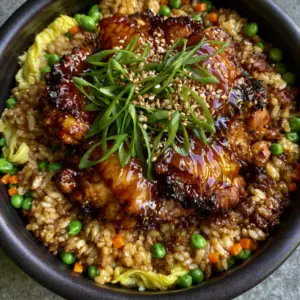
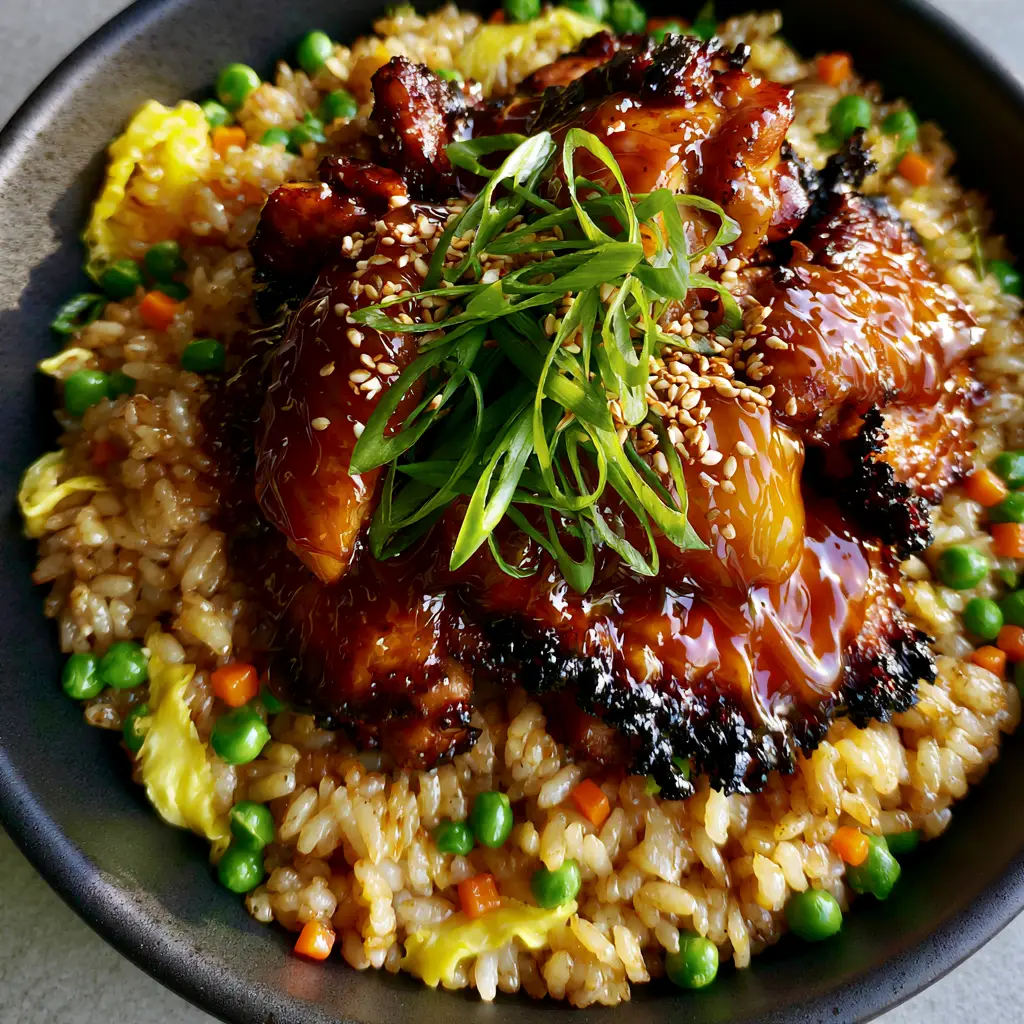
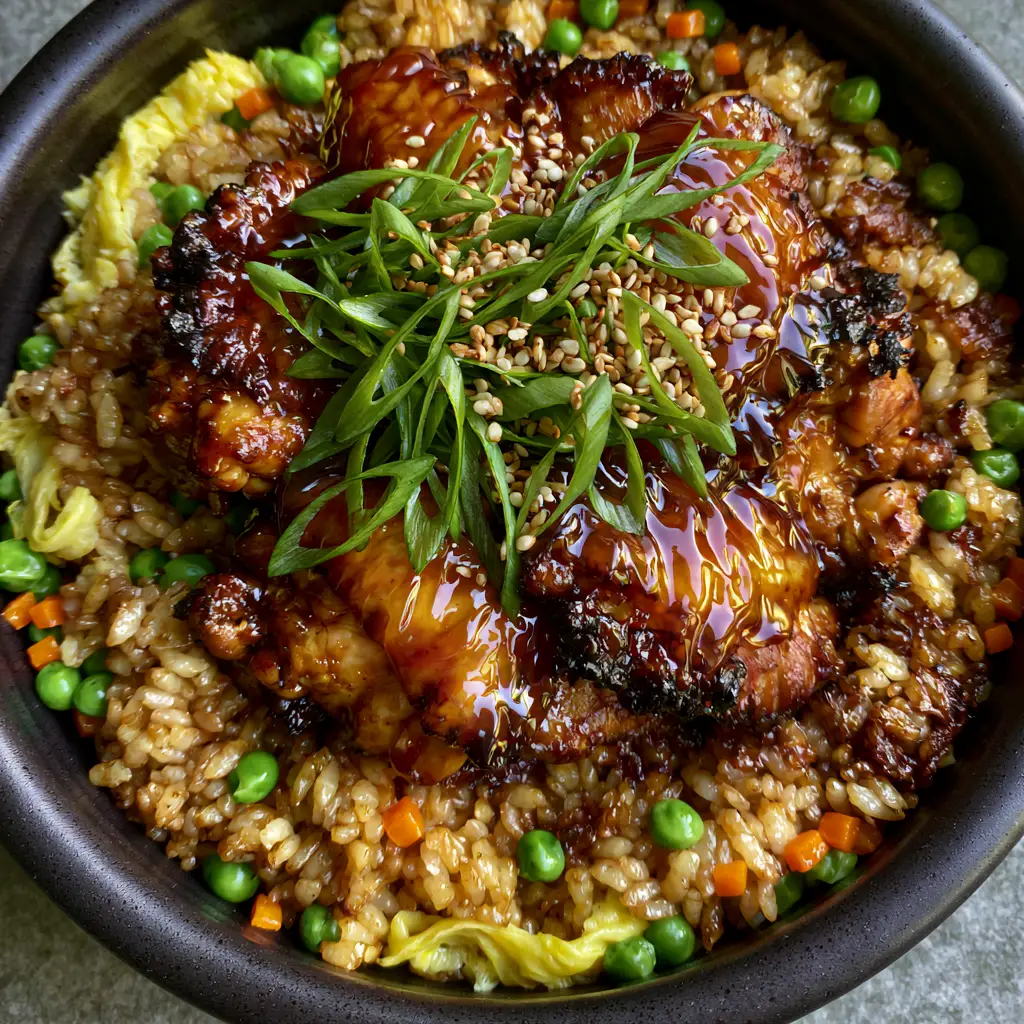
There is a specific kind of culinary magic that happens when high-heat searing meets a rich, velvet-thick glaze. This japanese bbq chicken fried rice isn’t just another weeknight meal; it is a masterclass in texture and visual contrast. Imagine succulent, charred chunks of chicken thigh, each one lacquered in a dark amber Japanese BBQ sauce that shimmers under the kitchen lights. These protein-packed morsels sit atop a bed of golden-brown, fluffy short-grain rice, punctuated by the snap of bright green peas and the sweetness of tiny diced carrots.
The visual appeal of this dish, as seen in our latest photography, relies on the interplay between the matte finish of the stoneware bowl and the translucent, glossy sheen of the sauce. If you have been looking for a way to level up your stir-fry game beyond the standard takeout fare, this recipe provides the roadmap. By focusing on the Maillard reaction for the chicken and the “wok hei” for the rice, we create a symphony of flavors that is as beautiful as it is delicious.
Whether you are a seasoned home cook or a weekend kitchen warrior, the secret to this dish lies in the prep. From the toasted white sesame seeds that provide a nutty crunch to the vibrant green scallions that cut through the richness of the umami glaze, every component is intentional. Let’s dive into the science and soul of this Japanese-inspired comfort food classic.
Why This Umami-Packed Stir-Fry Will Become Your New Obsession
- Textural Contrast: You get the crunch of charred chicken edges, the fluffiness of individual rice grains, and the soft “ribbons” of scrambled eggs in every single bite.
- The Gloss Factor: Using a Japanese-style BBQ sauce (rich in soy, ginger, and mirin) creates a thick, translucent coating that mimics professional restaurant plating.
- Efficiency and Flavor: This recipe utilizes the high-heat searing technique to lock in juices while building a deep, complex flavor profile in under 30 minutes.
- Vibrant Aesthetics: The color palette—ranging from deep amber and golden brown to bright orange and emerald green—makes this a visual centerpiece for any dinner table.
The Essential Components for Japanese BBQ Chicken Fried Rice
To achieve the specific visual results of our blueprint, you need high-quality ingredients that behave correctly under heat. Here is the breakdown of what you’ll need and why each element matters for the final result.
The Protein: Succulent Chicken Thighs
1.5 lbs (680g) Boneless Skinless Chicken Thighs. We use thighs instead of breasts because the higher fat content allows for a superior sear and “charred, crispy edges” without drying out the meat. Cut these into 1-inch (2.5cm) chunks to ensure they cook quickly and provide maximum surface area for the glaze.
The Glaze: Japanese BBQ Sauce
3/4 cup (180ml) Japanese BBQ Sauce (such as Bachan’s or a homemade soy-mirin-ginger reduction). This is the source of our “thick glossy dark brown umami glaze.” It provides the sugar necessary for caramelization and the deep amber hue that catches the light.
The Base: Day-Old Short-Grain Rice
4 cups (600g) Cooked Short-Grain Rice, chilled. Short-grain rice, typical in Japanese cuisine, provides a slightly chewy texture; using day-old rice ensures the grains stay separate and “fluffy” rather than turning into a mushy clump during the stir-fry process.
The Garden: Peas, Carrots, and Aromatics
1/2 cup (75g) Bright Green Peas and 1/2 cup (75g) Small Diced Orange Carrots. These provide the “vibrant” color pops described in our visual prompt. We also include 2 cloves (10g) of minced garlic and 1 tsp (5g) of grated ginger to build an aromatic foundation.
The Finishers: Eggs and Garnishes
2 large Eggs, whisked. These are transformed into “soft yellow scrambled egg ribbons” that weave through the rice. For the final flourish, you’ll need 2 tbsp (10g) Thin-Sliced Green Onions and 1 tsp (5g) Toasted White Sesame Seeds to provide that professional garnish look.
Foundational “Invisible” Ingredients
2 tbsp (30ml) Neutral Oil (like avocado or grapeseed) for high-heat searing, and a pinch of Kosher salt (5g) to season the eggs. These don’t show up as primary colors in the bowl, but they are scientifically required to achieve the sear and flavor balance.
Must-Have Kitchen Tools for Professional Results
Achieving the “golden-brown” rice and “seared chicken” requires tools that can handle and distribute high heat effectively. Here is what we recommend using in your kitchen.
A Heavy-Bottomed Carbon Steel Wok or Large Cast Iron Skillet: These materials retain heat exceptionally well, allowing you to sear the chicken quickly and “fry” the rice rather than steaming it. The wide surface area is crucial for the moisture evaporation that leads to fluffiness.
A High-Heat Silicone Spatula or Metal Wok Turner: You need a tool that can scrape the bottom of the pan to incorporate the “egg ribbons” and prevent the glaze from burning. This ensures every grain of rice is coated in the residual umami flavors.
Step-by-Step Evolution of the Perfect Fried Rice
Follow these instructions closely to replicate the visual and sensory cues found in our macro photography. Timing and heat management are the keys to success.
1. Searing the Chicken for Maximum Char
Place your wok or skillet over medium-high heat and add 1 tbsp (15ml) of oil. Once the oil is shimmering and just starting to smoke, add the chicken thigh chunks in a single layer. Resist the urge to move them for 2-3 minutes; this allows the Maillard reaction to create those “visible charred, crispy edges.” Flip and cook for another 2 minutes until the chicken is golden brown and nearly cooked through.
2. Creating the Glossy Umami Lacquer
Pour the Japanese BBQ sauce over the seared chicken. The sauce will immediately bubble and begin to reduce. Toss the chicken constantly for 1-2 minutes until the sauce transforms into a “thick, translucent, glossy dark amber glaze” that clings to every piece of meat. Remove the chicken and any excess glaze from the pan and set aside in a warm bowl.
3. Preparing the Vegetable and Egg Foundation
Wipe the pan quickly if there are any burnt bits, then add the remaining oil. Toss in the diced carrots and stir-fry for 2 minutes until they soften slightly but retain their “bright orange” hue. Add the peas, garlic, and ginger, sautéing for 30 seconds until fragrant. Push the vegetables to the side and pour in the whisked eggs. Let them set for 10 seconds, then gently swirl them into “ribbons” before mixing with the vegetables.
4. The High-Heat Rice Integration
Turn the heat to high and add the chilled rice to the pan. Use your spatula to break up any clumps. Stir-fry vigorously for 3-5 minutes. The goal is for the rice to absorb the residual oils and aromatics, turning “golden-brown” and slightly toasted. If the rice looks too pale, add a teaspoon of soy sauce for color, but ensure the grains remain “individual and fluffy.”
5. The Final Assembly and Garnish
Return the glazed chicken chunks and any resting juices back into the pan with the rice. Toss together for 60 seconds to harmonize the temperatures. The rice should not be drenched in sauce, but rather speckled with the dark glaze from the chicken. Transfer to a “shallow matte black stoneware bowl” and finish with a generous sprinkle of toasted white sesame seeds and a handful of fresh sliced green onions.
Expert Tips for Stir-Fry Success
- The Cold Rice Secret: Never use freshly cooked rice. Fresh rice contains too much moisture, which leads to a gummy texture. Chilling the rice dehydrates the surface of the grains, allowing them to fry properly. If you enjoyed our classic chicken fried rice, you know this is the golden rule.
- Don’t Overcrowd the Pan: If your pan is too small, cook the chicken in two batches. Overcrowding drops the temperature, causing the meat to steam in its own juices rather than developing those crispy, charred edges.
- High Smoke Point Oils: Use oils like avocado, peanut, or canola. Butter or olive oil will burn at the temperatures required for this recipe, ruining the clean umami profile of the Japanese BBQ sauce.
- Rinse Your Rice: Before cooking the rice (the day before), rinse it until the water runs clear. Removing excess surface starch is essential for “individual grains” that don’t stick together.
The Best Pairings for Your Japanese BBQ Feast
This japanese bbq chicken fried rice is a complete meal on its own, but it pairs beautifully with lighter, acidic sides to balance the richness of the glaze. If you want a full Asian-inspired spread, consider starting with a refreshing mango avocado salad or a side of spicy dill pickle chips for a surprising tangy crunch.
For those who love more noodle-based options alongside their rice, our ramen noodle salad offers a great textural contrast. If you’re looking for more protein-heavy additions, a sesame ginger tuna steak would complement the flavors of the BBQ glaze perfectly.
Frequently Asked Questions
It’s not recommended. Fresh rice contains too much moisture, which leads to a soggy stir-fry. If you must use fresh rice, spread it out on a baking sheet and air-dry it in front of a fan or refrigerator for at least 30 minutes before cooking.
The key is high heat and patience. Ensure your pan is shimmering hot before adding the chicken, and don’t move the pieces for at least 2 minutes. This allows the Maillard reaction to create a flavorful crust before the glaze is added.
The gloss comes from the reduction of sugars in the Japanese BBQ sauce. Ensure you let the sauce bubble and thicken around the chicken for 1-2 minutes until it transforms into a translucent lacquer.
While short-grain rice (like sushi rice) is traditional and provides a nice chew, you can use medium-grain rice. The most important factor is that the rice is chilled and the grains are separated before hitting the wok.
Japanese BBQ sauce is a soy-based glaze with ginger, garlic, and mirin, known for its sweet-savory umami profile. You can find brands like Bachan’s at most major retailers or make a simple version at home by reducing soy sauce, sugar, and ginger.
The Master Recipe: Japanese BBQ Chicken Fried Rice
Japanese BBQ Chicken Fried Rice: The Ultimate Glossy Umami Stir-Fry
Ingredients
Equipment
Method
- Heat 1 tbsp oil in a wok. Add chicken chunks in a single layer and sear until a deep golden-brown crust and charred edges form, about 3-4 minutes.
- Pour in Japanese BBQ sauce. Toss until the sauce reduces into a thick, glossy dark amber glaze. Remove chicken and set aside.
- Add remaining oil to the wok. Sauté carrots and peas for 2 minutes. Pour in whisked eggs and scramble into soft yellow ribbons.
- Add chilled rice. Stir-fry on high heat for 3-5 minutes until the grains are fluffy and golden-brown.
- Return chicken to the pan. Toss for 1 minute. Garnish with sesame seeds and green onions.
Notes
Make sure the wok is smoking hot before adding the chicken to get those charred edges.
Closing & The Final Bite
There is nothing quite like the satisfaction of creating a restaurant-quality meal in your own kitchen. This japanese bbq chicken fried rice hits every sensory note: the visual shimmer of the glaze, the aromatic scent of ginger and toasted sesame, and the savory depth of seared chicken. It’s a versatile recipe that rewards the home cook who pays attention to the details of heat and timing.
If you made this dish, we want to see it! Did you get those perfect charred edges on your chicken? Tag us on social media or leave a comment below with your results. For more visual inspiration and recipe pins, be sure to follow us on Pinterest. Happy cooking!