There is a specific, primal joy that comes from a perfectly seasoned cast iron skillet sizzling on the stove. Hamburger steaks are a cornerstone of American comfort food, but achieving that restaurant-quality finish requires more than just tossing meat in a pan. We are aiming for a very specific visual and textural result: thick, juicy patties with dark brown caramelized edges, smothered in a glossy, mahogany-colored onion gravy that glistens under natural light.
This recipe focuses on the synergy between high-heat searing and slow-tempered onion caramelization. The result is a dish that looks as good as it tastes, featuring soft, translucent golden-brown onion slivers and a heavy garnish of vibrant, finely chopped fresh flat-leaf parsley. Every bite is accented by the punch of coarse cracked black pepper, cutting through the richness of the beef broth reduction.
Whether you are looking for a nostalgic weeknight meal or a centerpiece for a rustic Sunday dinner, these hamburger steaks deliver. The mahogany sauce clings to the meat, ensuring every forkful is moist and deeply savory. Let’s dive into the culinary science of the perfect sear and the glossy reduction that makes this dish a timeless classic.
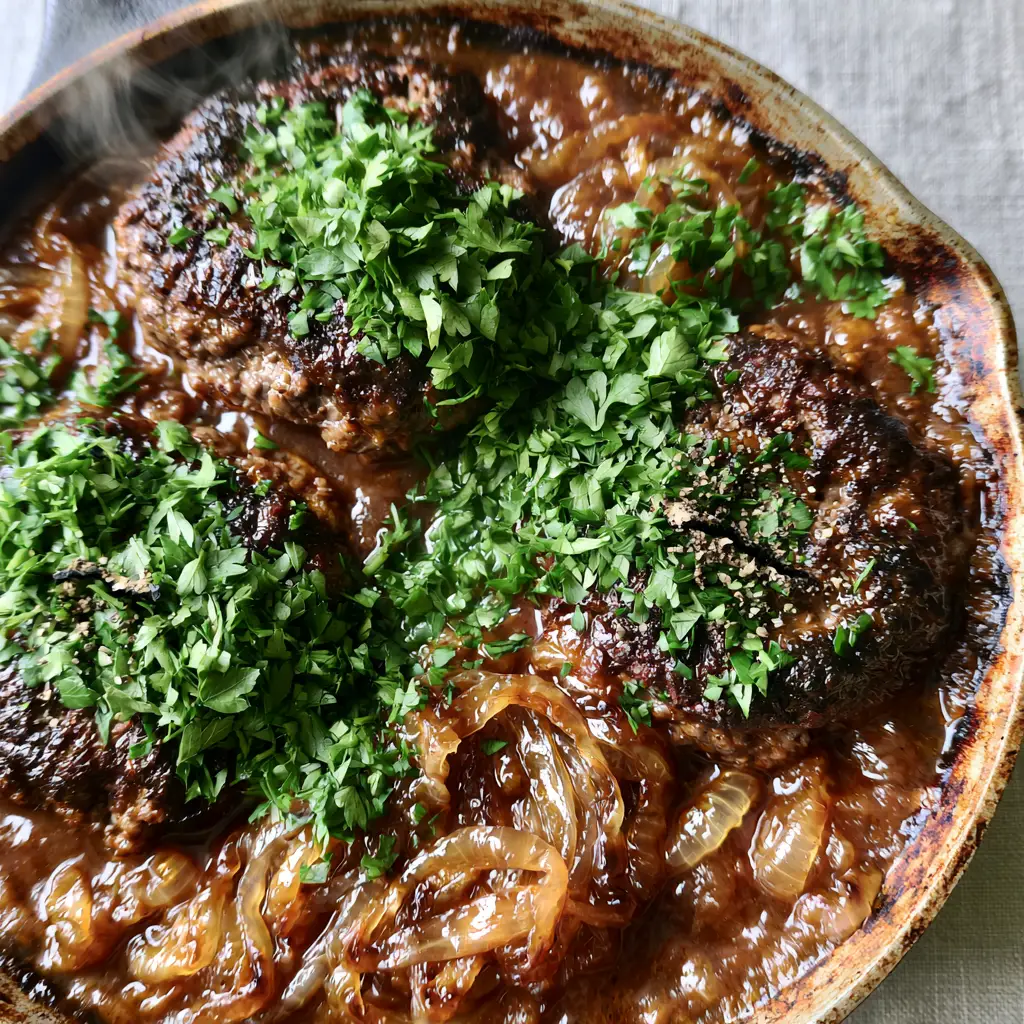
Why These Cast Iron Hamburger Steaks Are the Ultimate Comfort Food
- The Perfect Maillard Reaction: We utilize the heat retention of cast iron to create those coveted dark brown caramelized edges that provide a textural contrast to the tender interior.
- Glossy Mahogany Gravy: Unlike pale, floury gravies, this sauce is a deep, rich brown, achieved through a combination of beef drippings, high-quality stock, and a touch of Worcestershire sauce.
- Translucent Onion Slivers: We don’t just sauté onions; we soften them until they are glistening and golden, providing a sweet counterpoint to the savory beef.
- Visual Sophistication: The contrast of the dark gravy against the bright, finely chopped parsley and coarse black pepper makes this a “smartphone-photo-ready” meal every single time.
- One-Pan Efficiency: Everything happens in a single rustic skillet, allowing the beef juices to build the foundation of the sauce for maximum flavor depth.
The Essential Components for Savory Hamburger Steaks
To achieve the specific visual and flavor profile described in our blueprint, every ingredient must serve a structural or sensory purpose. We use 80/20 ground beef to ensure enough fat for a glossy sauce and a tender patty that doesn’t dry out during the searing process.
The Beef Base: 1.5 lbs (680g) of 80/20 ground beef provides the ideal fat-to-lean ratio. The fat renders out to provide the base for our roux, while the proteins brown deeply for that charred edge effect.
The Aromatics: 2 large (approx. 400g) yellow onions, sliced into thin slivers, are essential for the texture of the gravy. As they cook, they release sugars that caramelize into a translucent, golden-brown state.
The Liquid Gold: 2 cups (480ml) of high-quality beef stock forms the body of the mahogany sauce. Using a low-sodium stock allows you to control the seasoning while reducing the liquid to a thick, glossy consistency.
Foundational Binders: 1/2 cup (50g) of panko breadcrumbs and 1 large egg act as the structural “invisible” ingredients. These keep the thick patties from falling apart while maintaining a tender, juicy mouthfeel.
The Color Enhancers: 1 tbsp (15ml) of Worcestershire sauce and a pinch of dark soy sauce (optional) help achieve that specific mahogany hue. They add umami depth and ensure the gravy isn’t just brown, but vibrantly dark and glossy.
The Finishing Touches: 1/4 cup (15g) of finely chopped fresh flat-leaf parsley and 1 tsp (2g) of coarse cracked black pepper provide the visual “pop.” The green parsley adds a fresh herbaceous note that balances the heavy, savory notes of the beef.
Tools Required for the Perfect Rustic Result
To replicate the visual blueprint exactly, equipment choice is paramount. A 12-inch (30cm) rustic seasoned cast iron skillet is non-negotiable for this recipe. Cast iron’s ability to maintain high heat is what creates the dark brown charred edges on the patties that stainless steel simply cannot replicate.
You will also need a sturdy metal spatula to scrape up the “fond”—those delicious browned bits stuck to the bottom of the pan after searing. A wire whisk is necessary for incorporating the flour into the fat to create a smooth, lump-free roux for the glossy gravy. Finally, a sharp chef’s knife is required to get those paper-thin onion slivers and the finely minced parsley garnish.
Mastering the Cast Iron Sear: Step-by-Step Instructions
Phase 1: Preparing the Thick Beef Patties
In a large mixing bowl, combine the ground beef, panko breadcrumbs, egg, salt, and half of the cracked black pepper. Gently fold the ingredients together using your hands; overworking the meat will result in a dense, tough steak rather than a tender one.
Divide the mixture into three equal portions, forming thick, circular patties about 1 inch (2.5cm) thick. Use your thumb to create a slight indentation in the center of each patty. This prevents the “football effect” where the meat bulges in the middle, ensuring a flat surface for maximum pan contact and even browning.
Phase 2: Achieving the Signature Charred Edges
Place your cast iron skillet over medium-high heat and add 1 tbsp (15ml) of high-smoke-point oil, like avocado or grapeseed oil. Wait until the oil is shimmering and just starting to wisps of smoke—this is the sensory cue that the pan is ready for a forensic-level sear.
Carefully place the three patties into the skillet. Press down slightly with your spatula. Let them cook undisturbed for 4-5 minutes. You are looking for a deep, dark brown crust to form on the edges. Flip only once, searing the other side for another 3-4 minutes until the exterior is beautifully caramelized but the center remains slightly underdone, as they will finish in the gravy.
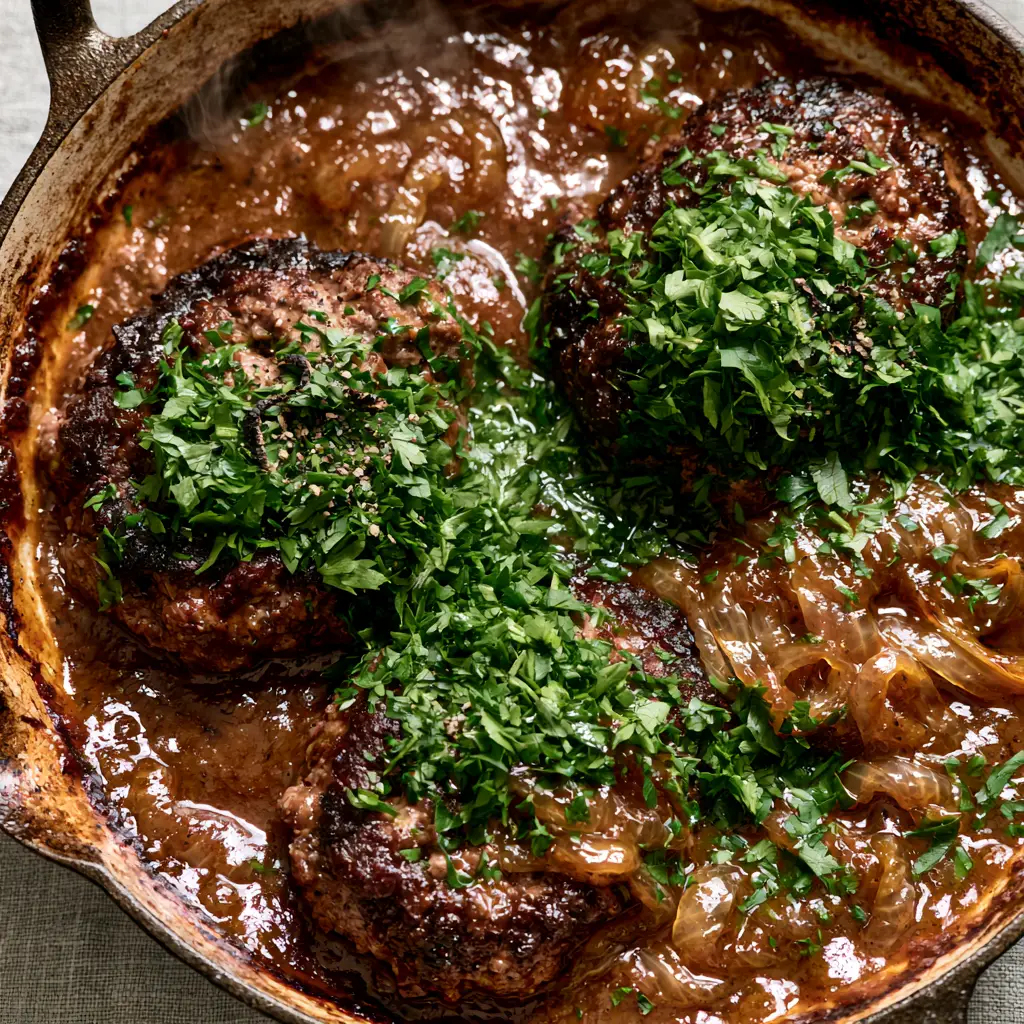
Phase 3: The Onion Caramelization Process
Remove the patties from the skillet and set them aside on a plate. Do not wash the pan! The rendered beef fat and browned bits are essential. Lower the heat to medium and add the yellow onion slivers along with 1 tbsp (15g) of butter.
Sauté the onions, stirring frequently. Look for the visual change: the onions will move from opaque white to translucent, and eventually to a glistening, golden-brown. This should take about 8-10 minutes. If the pan looks dry, add a splash of water to scrape up the remaining fond.
Phase 4: Constructing the Mahogany Gravy
Sprinkle 2 tbsp (16g) of all-purpose flour over the caramelized onions. Stir constantly for 1-2 minutes to cook out the raw flour taste; the mixture should turn a light tan color. Slowly pour in the beef stock while whisking vigorously to prevent lumps.
Add the Worcestershire sauce. Increase the heat slightly to bring the liquid to a gentle simmer. As the sauce reduces, it will transform into a thick, glossy, mahogany-colored gravy. It should be thick enough to coat the back of a spoon—a culinary cue known as “nappe.”
Phase 5: The Final Simmer and Garnish
Nestle the seared patties back into the skillet, partially submerging them in the bubbling gravy. Spoon some of the sauce and soft onions over the top of the meat. Cover and simmer for 3-5 minutes, allowing the internal temperature of the beef to reach 160°F (71°C).
Just before serving, remove from heat. Shower the skillet with the vibrant, finely chopped parsley and the remaining coarse cracked black pepper. The steam rising from the skillet will carry the aroma of the fresh herbs and savory beef throughout your kitchen.
Expert Tips for Culinary Success
- Cold Meat is Key: Keep your ground beef in the refrigerator until the moment you are ready to form the patties. Cold fat stays within the meat fibers better, resulting in a juicier steak.
- Don’t Crowd the Skillet: Our prompt specifies three patties in the skillet for a reason. Overcrowding leads to steaming rather than searing, which will ruin the “charred edges” visual.
- The “Gloss” Secret: If your gravy looks matte instead of glossy, whisk in a cold pat of butter (10g) right at the end after turning off the heat. This French technique, called monter au beurre, adds a professional sheen.
- Fresh Pepper Matters: Do not use pre-ground pepper. The coarse cracks of freshly ground black peppercorns provide essential texture and a floral heat that pre-ground spice lacks.
Preserving Your Leftovers: Storage and Reheating
Hamburger steaks actually improve with a little time, as the patties continue to absorb the flavors of the onion gravy. Store any leftovers in an airtight container in the refrigerator for up to 3-4 days. The gravy will thicken significantly when cold, turning almost jelly-like due to the gelatin in the beef stock.
To reheat, place the patties and gravy back into a skillet over low heat. Add a tablespoon of water or beef broth to loosen the sauce. Avoid the microwave if possible, as it can turn the beef rubbery. For long-term storage, these freeze exceptionally well for up to 2 months. Thaw overnight in the fridge before reheating.
What to Serve with This Rustic Skillet Meal
This dish is incredibly rich, so it pairs perfectly with sides that can soak up that mahogany gravy or provide a fresh contrast. A mound of garlic mashed potatoes or buttered egg noodles is the classic choice for the sauce.
If you want to balance the plate with something lighter, consider a crisp green salad. The acidity in a peach arugula salad cuts through the heavy beef fat beautifully. Alternatively, a tangy grinder salad offers a creamy, zesty crunch that complements the soft caramelized onions. For those looking for a unique fusion, a side of spicy asian noodle salad provides a surprising heat that works well with the black pepper notes.
Frequently Asked Questions
Yes, you can use stainless steel, but you may not achieve the same intensity of dark charred edges. Avoid non-stick pans, as they don’t allow for the necessary browning of the meat or the sauce.
Ensure you include the egg and breadcrumbs as a binder, and let the patties sear undisturbed for the full 4-5 minutes to create a structural crust before flipping.
Hamburger steaks are typically simpler, focusing on beef and onions, whereas Salisbury steak often includes more fillers like bell peppers and a slightly sweeter gravy containing ketchup or tomato paste.
Yellow onions are best because they have a high sugar content which allows them to become soft, translucent, and golden-brown when caramelized slowly.
A pale gravy usually means the beef wasn’t seared long enough to create a dark ‘fond’ or the flour wasn’t cooked sufficiently. Adding a dash of Worcestershire or dark soy sauce can help deepen the color visually.
The Ultimate Cast Iron Hamburger Steaks Recipe
Hamburger Steaks with Rich Mahogany Onion Gravy and Charred Cast Iron Edges
Ingredients
Equipment
Method
- Mix beef, breadcrumbs, egg, salt, and half the pepper. Form three 1-inch thick patties with a center indentation.
- Heat oil in cast iron skillet until shimmering. Sear patties for 4-5 minutes per side until dark brown charred edges appear.
- Remove meat. Sauté onion slivers in butter for 8-10 minutes until translucent and golden-brown.
- Whisk in flour for 1 minute, then slowly add beef stock and Worcestershire sauce. Simmer until mahogany-colored and glossy.
- Return patties to skillet. Simmer for 3-5 minutes. Garnish heavily with parsley and remaining cracked pepper.
Notes
For an extra glossy finish, whisk in a cold pat of butter at the very end.
Closing & Call to Action
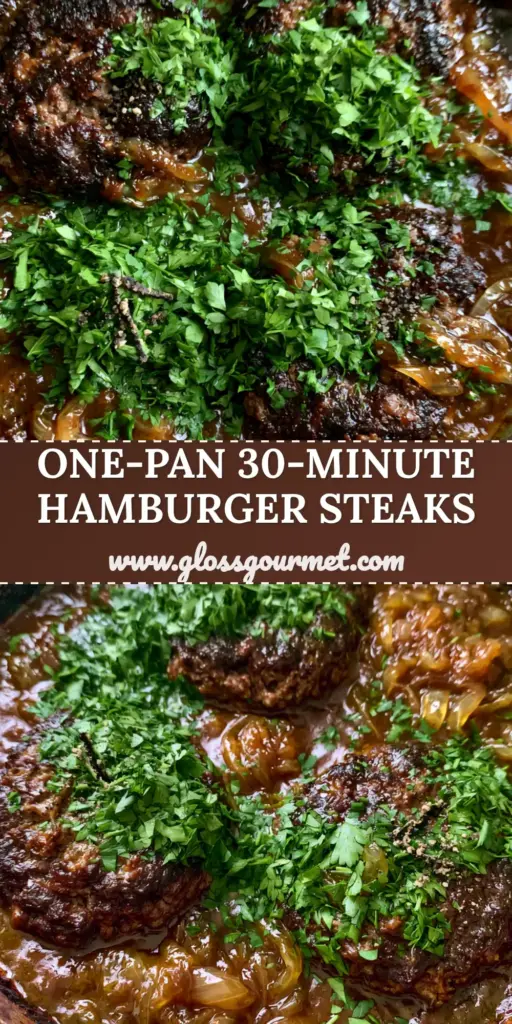
Mastering hamburger steaks is a rite of passage for any home cook who loves the rustic charm of cast iron cooking. The combination of that mahogany-colored gravy and the tender, seared beef is a testament to how simple ingredients can create a world-class meal. The visual appeal of the glistening onions and fresh parsley makes it a dish you’ll want to show off before the first bite.
If you enjoyed this deep dive into comfort food science, please leave a comment below and tell us how your sear turned out! Don’t forget to save this recipe to your “Dinner Inspiration” board on Pinterest so you always have it on hand. For more decadent treats to follow this savory meal, check out our birthday cake cookies for the perfect dessert.