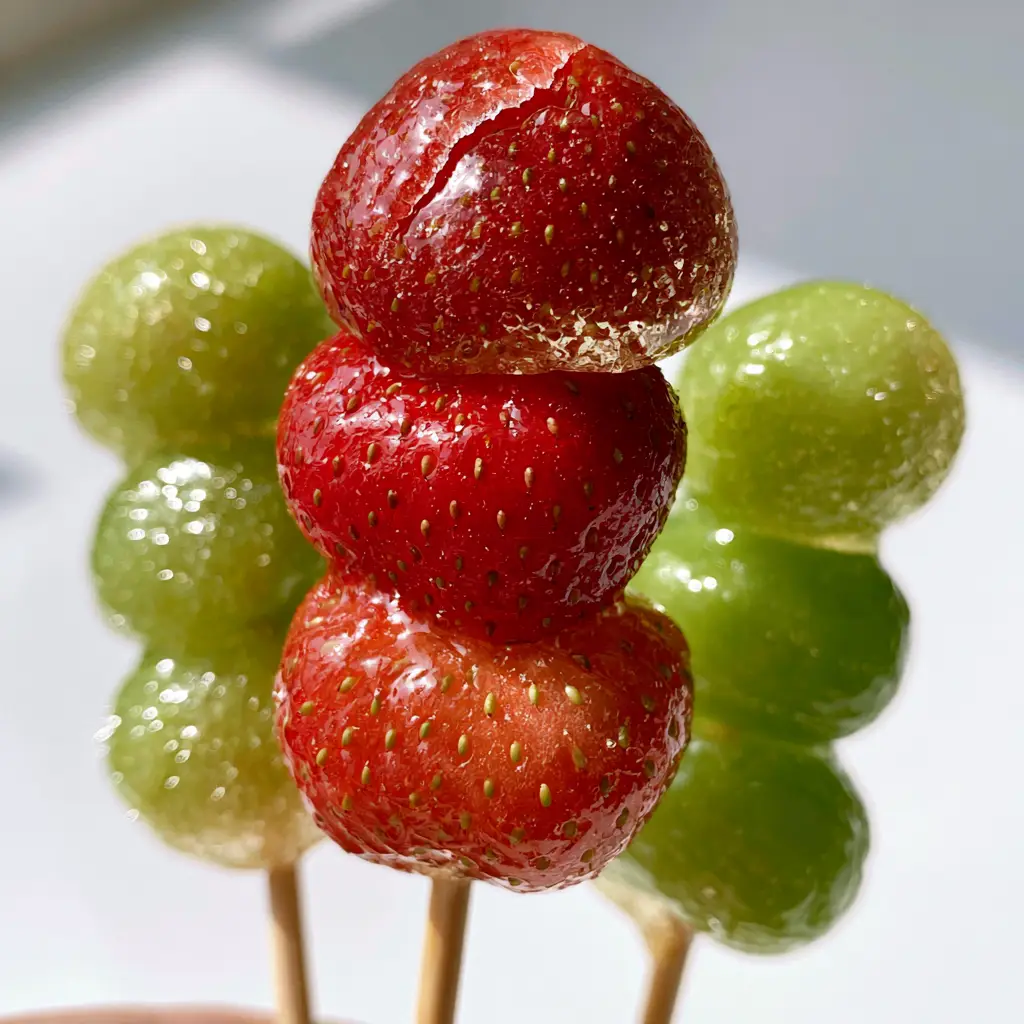
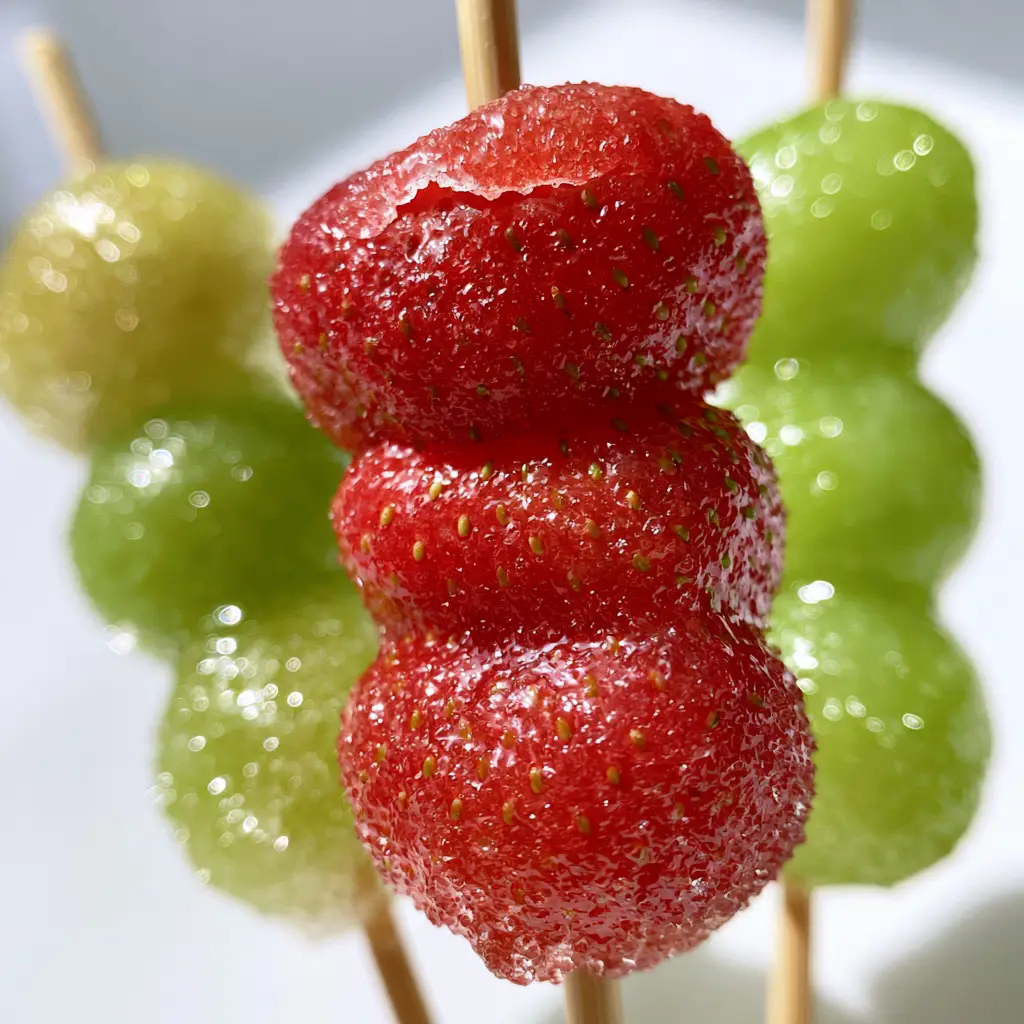
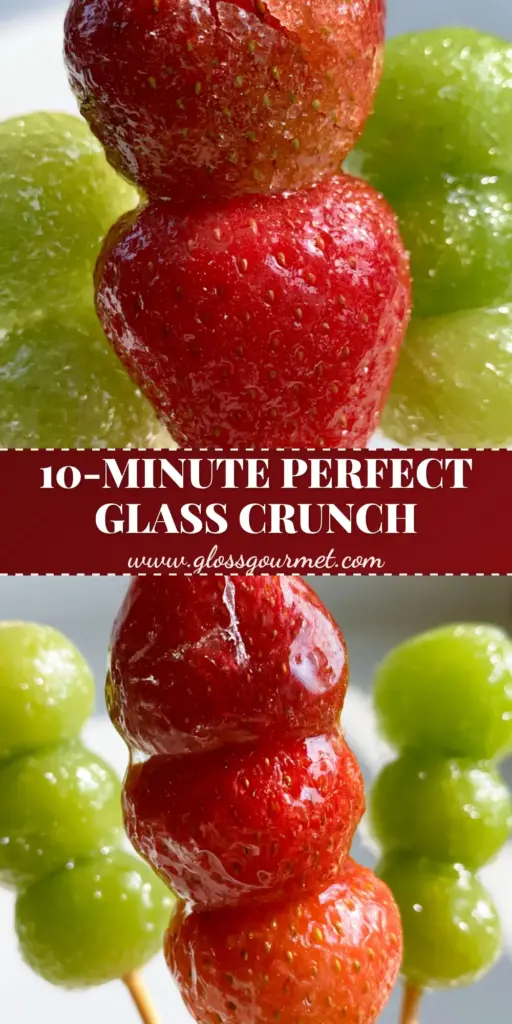
There is nothing quite as satisfying as the sound of a Tanghulu shell shattering between your teeth. This traditional Northern Chinese street food has taken the world by storm, turning simple whole ripe red strawberries and vibrant green grapes into glistening, edible jewels. The magic lies in the contrast: a microscopically thin, glass-like sugar coating that gives way to a burst of fresh, juicy fruit.
When you hold a skewer of Tanghulu up to the natural sunlight, the highlights should dance across a perfectly transparent surface. Achieving that professional, high-key kitchen look requires more than just sugar and heat; it requires a deep understanding of candy science. In this guide, we will walk you through the forensic details of creating that ultra-sharp focus on the sugar coating and that iconic shatter-like texture.
Whether you are a seasoned confectioner or a home cook looking for a show-stopping dessert, this recipe ensures your fruit is encased in a crystal-clear glaze. We will focus on capturing those visible sugar fractures and maintaining the plump, natural skin texture of the fruit beneath the coating. Get your bamboo skewers ready, because we are about to master the art of the perfect crunch.
Why This Handheld Street Food Is the Ultimate Crunchy Obsession
- The Perfect Shatter: Our technique focuses on the hard-crack stage, ensuring a delicate crack in the sugar shell rather than a sticky, tooth-tugging mess.
- Visual Brilliance: By controlling the temperature precisely, you achieve a thin transparent sugar glaze that reflects light with brilliant, diamond-like highlights.
- Textural Contrast: The marriage of cold, juicy jumbo strawberries and a brittle, glass-like coating creates a sensory experience unlike any other.
- Natural Beauty: We use methods that preserve the tiny seeds and skin textures of the fruit, making them look like preserved specimens in a bright, minimalist kitchen.
The Science-Backed Ingredients for a Crystal-Clear Glaze
To achieve the forensic visual accuracy of professional Tanghulu, every ingredient must serve a structural purpose. We aren’t just making syrup; we are creating a sugar glass that must remain stable and transparent on a white marble background.
Granulated White Sugar: 2 cups (400g). High-purity white sugar is essential for a neutral color and a clear finish. It provides the crystalline structure needed for those satisfying sugar fractures.
Filtered Water: 1 cup (240ml). Water acts as the solvent, ensuring the sugar dissolves evenly without premature crystallization. Using filtered water prevents mineral impurities from clouding your transparent glaze.
Jumbo Ripe Red Strawberries: 12-15 pieces. Choose berries that are firm and plump with their hulls removed. The deep red color provides a stunning contrast against the clear sugar coating in high-key lighting.
Vibrant Green Grapes: 15-20 pieces. Seedless grapes offer a different structural resistance than strawberries. Their smooth skin allows the microscopically thin glaze to adhere perfectly without sliding off.
Light Corn Syrup (Optional): 1 tbsp (15ml). While traditionalists might skip it, a touch of glucose helps prevent “recrystallization.” This ensures your glaze stays glass-like and doesn’t turn grainy or opaque.
Essential Tools for Achieving Food-Styling Excellence
Creating Tanghulu that looks like a professional food styling shot requires the right equipment to maintain temperature and safety. Precision is the difference between a sticky fruit and a crystal-clear masterpiece.
Digital Candy Thermometer: This is non-negotiable for reaching the exact 300°F (150°C) “hard crack” stage. Without it, you are guessing, and guessing leads to sticky skewers.
Bamboo Skewers: These provide the classic handheld look and the necessary grip for the fruit. Ensure they are sturdy enough to support three jumbo strawberries without bending.
Heavy-Bottomed Saucepan: A thick pot distributes heat evenly, preventing “hot spots” that could burn the sugar and turn your clear glaze amber.
Ice Water Bath: A large bowl of 4 cups (1L) of water with 2 cups (approx. 300g) of ice. This “shocks” the sugar, instantly creating that brittle, shatter-like texture.
Mastering the Dip: Step-by-Step Tanghulu Instructions
Phase 1: Preparing the Fruit Canvas
Wash your strawberries and grapes thoroughly in cold water to remove any debris. The most critical step for success is drying the fruit; use a lint-free paper towel to ensure every millimeter of the skin is bone-dry. Any residual moisture will cause the sugar to slip, preventing that microscopically thin coating from bonding to the skin.
Thread the fruit onto the bamboo skewers. For a visually balanced look, place three jumbo strawberries on the central skewers and alternating grapes on the side skewers. Leave enough room at the bottom of the skewer to hold comfortably against a minimalist kitchen background.
Phase 2: Achieving the Hard-Crack Syrup
Combine the 2 cups (400g) of sugar and 1 cup (240ml) of water in your heavy-bottomed saucepan. Stir once gently before turning on the heat to medium-high. Once the mixture begins to simmer, stop stirring entirely. Stirring at high temperatures introduces air and can trigger crystallization, ruining the transparency.
Monitor the thermometer closely. As the bubbles become smaller and more uniform, you are approaching the goal. You are looking for the syrup to reach 300°F (150°C). This is the “Hard Crack” stage where the sugar loses all moisture and becomes brittle upon cooling.
Phase 3: The Rapid Coating Technique
Once the temperature hits 300°F (150°C), tilt your pan slightly so the syrup pools on one side. Work quickly but with precision. Dip a skewer into the syrup and rotate it once, ensuring a thin, even coat over the strawberries or grapes. Immediately let the excess syrup drip off for 2-3 seconds.
Plunge the coated skewer into the ice water bath for exactly 5 seconds. This rapid temperature drop creates the “glass” effect and prevents the heat from cooking the fresh fruit inside. You will hear a faint crackling sound—this is the sign of a perfect Tanghulu shell forming.
Phase 4: Setting on Marble
Place the finished skewers on a sheet of parchment paper or a clean white marble background. The cold surface of the marble helps maintain the crispness of the shell. You should see a delicate crack in the top strawberry if handled correctly, showcasing that beautiful shatter-like texture.
Expert Tips for a Professional Sugar Fracture
- Avoid Overcooking: If the sugar goes above 310°F (154°C), it will begin to caramelize and turn yellow. For a crystal-clear look, pull it off the heat exactly at 300°F.
- Dry Means Dry: If your strawberries are even slightly damp, the sugar will “weep” and slide off within minutes. Use a hair dryer on a cool setting if you want to be extra sure!
- The “Snap” Test: If you don’t have a thermometer, drop a bit of syrup into cold water. If it hardens instantly and snaps when bent, it is ready.
- Speed is Key: The sugar continues to cook in the pot even after the heat is off. Work through your skewers as fast as possible to keep the glaze thin.
Preservation and Storage Secrets
Tanghulu is a “live” dessert, meaning it is at its peak the moment it is made. Due to the high water content of the fruit and the hygroscopic nature of sugar, it will eventually start to melt. For the best crunch, serve within 30-60 minutes of dipping.
If you must store them, place them in an airtight container with a piece of parchment paper between layers and keep them in a cool, dry place. Do not refrigerate for long periods, as the humidity in the fridge will turn the glass-like coating into a sticky syrup. This is a treat designed to be enjoyed immediately under natural sunlight highlights!
Crunchy Pairings and Serving Suggestions
While Tanghulu is a star on its own, it fits beautifully into a wider spread of textures and flavors. If you are hosting a brunch, try serving these skewers alongside some fluffy Greek yogurt waffles. The tartness of the yogurt balances the intense sweetness of the candy shell.
For a refreshing summer lunch, these candied fruits act as a great palate cleanser after a savory ramen noodle salad or a zesty green Thai mango salad. The contrast between the spicy, savory noodles and the icy, sweet crunch of the grapes is truly addictive. If you’re looking for more strawberry inspiration, don’t miss our strawberry shortcake smoothie for a creamy alternative.
Frequently Asked Questions
Yes, you can use the ‘cold water test.’ Drop a small amount of syrup into ice water; if it hardens instantly and snaps cleanly when you try to bend it, it’s ready.
Absolutely! While strawberries and grapes are classic, mandarin oranges, kiwi slices, and even pineapple chunks work well, provided they are patted extremely dry.
Avoid stirring the syrup once it starts boiling. Stirring can cause sugar crystals to catch on the sides of the pan and chain-react, turning your clear syrup cloudy or grainy.
This is usually due to moisture. If the fruit wasn’t dried completely before dipping, or if the Tanghulu is stored in a humid environment (like a fridge), the sugar will draw out the fruit’s juice and dissolve.
Sticky Tanghulu usually happens if the sugar syrup didn’t reach the ‘hard crack’ stage of 300°F (150°C). If the temperature is too low, the sugar remains pliable rather than brittle.
The Ultimate Tanghulu Masterpiece
Tanghulu Recipe: The Ultimate Secret to Crystal-Clear Candied Fruit
Ingredients
Equipment
Method
- Wash fruit and dry meticulously with a paper towel. Any moisture will prevent the glaze from sticking.
- Thread 3 strawberries or 4 grapes onto each bamboo skewer.
- Combine sugar, water, and corn syrup in a pot. Heat to medium-high without stirring until it reaches 300°F (150°C).
- Tilt the pan, dip a skewer, and rotate once quickly for a thin coating.
- Immediately plunge the skewer into ice water for 5 seconds to set the shell.
Notes
Work in small batches to keep the sugar at the correct temperature.
Closing & Call to Action
Mastering Tanghulu is a rite of passage for any home cook who loves the intersection of science and sweets. The sight of jumbo strawberries encased in a crystal-clear shell is enough to stop anyone mid-scroll. We hope this guide helps you achieve that perfect shatter and those brilliant highlights you’ve been dreaming of!
Did you manage to get that iconic crack in your sugar shell? We want to see your results! Leave a comment below or tag us in your photos. Don’t forget to follow us and save this recipe to your favorite boards on Pinterest for your next sweet craving!