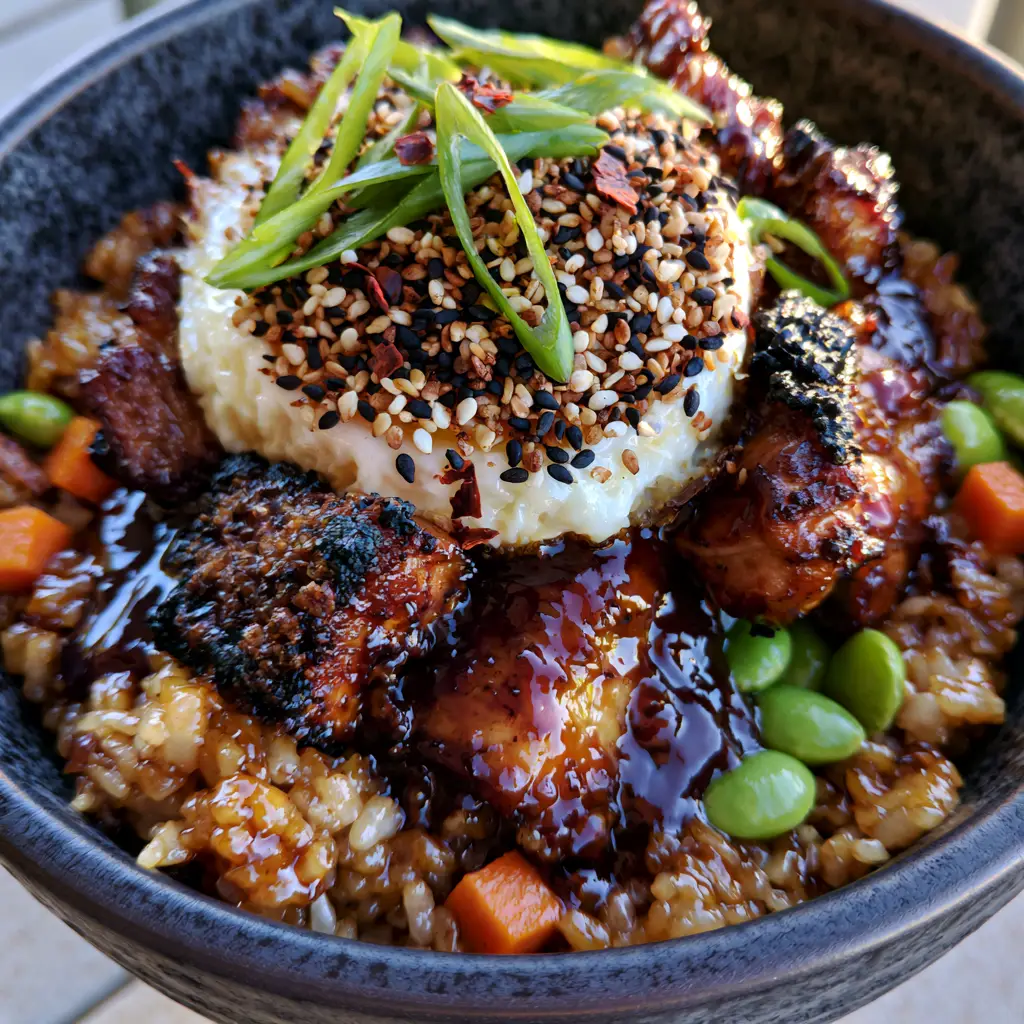
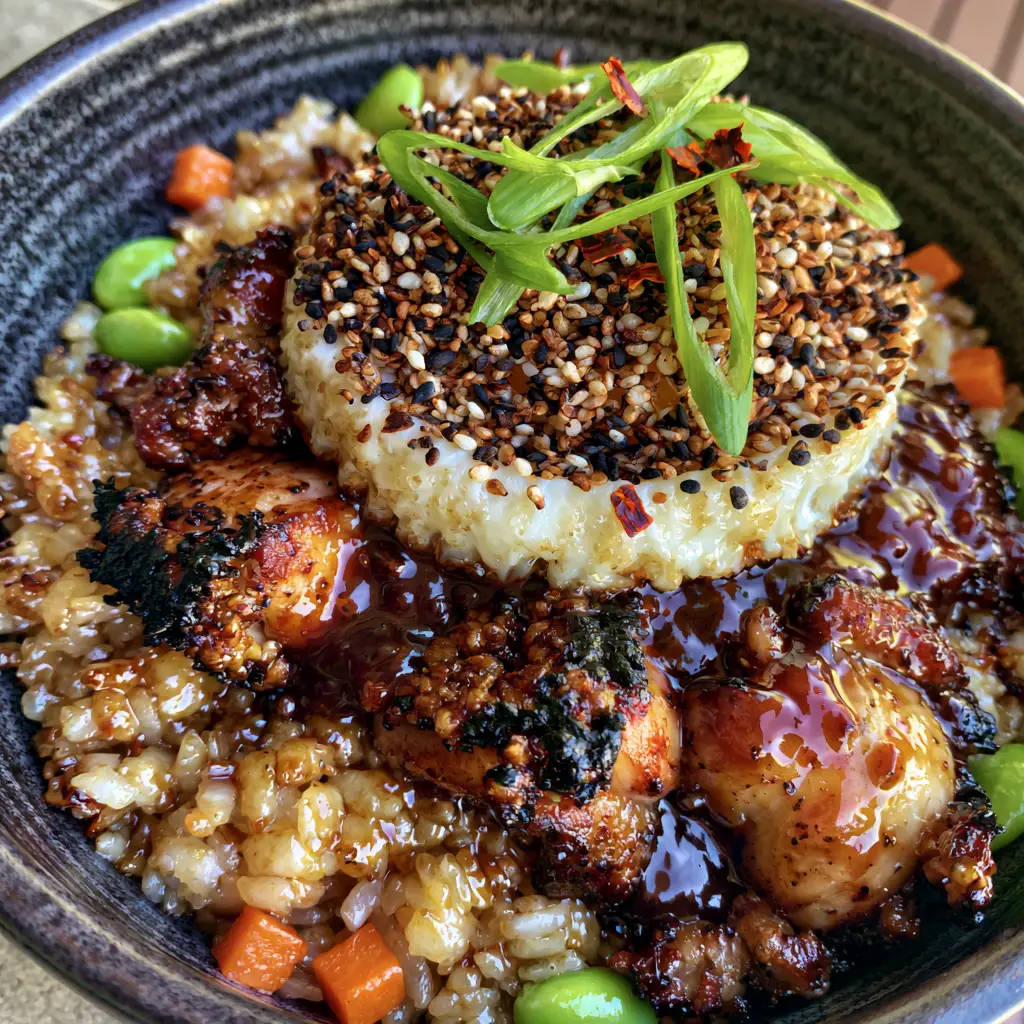
Japanese BBQ chicken fried rice is the ultimate fusion of smoky, charred textures and deeply savory Japanese flavors. This isn’t your standard takeout; it’s a masterclass in balance, featuring tender chicken thigh chunks coated in a thick, glistening dark mahogany glaze that catches the light beautifully.
The secret lies in the contrast between the fluffy, individual grains of short-grain rice and the intensely caramelized edges of the chicken. Every bite offers a symphony of toasted sesame seeds, vibrant scallions, and a hint of micro-cilantro that cuts through the rich, umami-packed sauce.
Whether you’re craving a high-protein dinner or a gourmet meal prep option, this recipe delivers a visual and culinary experience that rivals any high-end izakaya. Let’s dive into how to achieve those professional results in your own kitchen.
Why This Umami-Rich Bowl Beats Takeout Every Time
- Deep Caramelization: Unlike soggy takeout, our chicken is seared until it develops charred, crispy edges and a mahogany-colored crust.
- The “Glisten” Factor: We use a specific ratio of mirin and brown sugar to create a thick, mirror-like glaze that clings to every morsel of chicken.
- Superior Rice Texture: By using short-grain rice and specific stir-frying techniques, we ensure each grain is distinct and fluffy, never mushy.
- Vibrant Freshness: A heavy hand with bias-cut scallions and micro-cilantro adds a bright, herbaceous lift that balances the salty-sweet profile.
The Anatomy of a Perfect Glaze: Essential Ingredients & Substitutions
Boneless Skinless Chicken Thighs (1 lb / 450g): Thighs are non-negotiable for this recipe as they remain juicy under high heat and provide the fat necessary for that deep sear. You could use breast meat, but you will lose that signature “melt-in-the-mouth” texture found in premium Japanese BBQ chicken fried rice.
Short-Grain White Rice (3 cups / 450g cooked): Also known as sushi rice, this variety offers a chewy, bouncy texture. Ensure it is “day-old” or chilled to remove excess moisture, which is the key to preventing a gummy result.
Japanese BBQ Glaze (The “Tare”): A blend of 1/4 cup (60ml) soy sauce, 2 tbsp (30ml) mirin, and 1 tbsp (15g) brown sugar. This creates the dark, umami-heavy base that mimics the flavor of high-end yakitori sauces.
Aromatic Base: 1/2 small white onion (60g) and 2 cloves of garlic (10g). The onion provides tiny charred bits throughout the rice, while the garlic infuses the oil with a foundational fragrance.
Large Eggs (2 units): Beaten and scrambled into golden bits, these add a rich, creamy contrast to the salty glaze and toasted grains.
Fresh Garnishes: 3 stalks (45g) of scallions and a pinch of micro-cilantro. The scallions must be cut on a sharp bias (diagonal) to match the visual elegance of professional plating.
Toasted White Sesame Seeds (1 tbsp / 9g): These provide a nuttiness and a visual “dusting” that highlights the dark glaze of the chicken.
High-Smoke Point Oil (2 tbsp / 30ml): Use avocado or canola oil. This allows you to reach the temperatures required for the Maillard reaction without burning the fat.
Pro-Grade Kitchen Tools for Achieving That Wok-Style Char
To recreate the visual depth seen in our professional photos, a heavy-bottomed carbon steel wok or a large cast-iron skillet is essential. These materials retain heat efficiently, allowing the chicken to sear quickly while the rice “toasts” rather than steams.
A wide, flat spatula is also helpful for flipping the rice in large sections, which preserves the integrity of the individual grains. Lastly, ensure you have a sharp chef’s knife for those precision bias-cut scallions that give the dish its “gourmet” height.
Mastering the Sizzle: Your Step-by-Step Guide to Perfection
1. Searing the Chicken for Maximum Char
Heat 1 tbsp (15ml) of neutral oil in your pan over medium-high heat until it shimmers. Add the chicken thigh chunks in a single layer, leaving space between them to prevent steaming.
Let them sit undisturbed for 3-4 minutes until the edges are visibly charred and a deep golden-brown crust forms. This “visual cue” of blackened edges is what provides the smoky backbone of the Japanese BBQ chicken fried rice.
2. Building the Mahogany Glaze
Pour your prepared soy-ginger-mirin mixture over the seared chicken. Toss constantly as the sugar in the glaze begins to bubble and reduce.
Stop when the sauce has thickened into a dark, glistening mahogany coating that clings tightly to the meat. Remove the chicken from the pan and set it aside, leaving the residual flavorful oils behind.
3. Scrambling the Golden Egg Bits
Wipe the pan quickly if there are burnt sugar bits, then add a splash of oil. Pour in the beaten eggs and scramble them quickly into small, golden ribbons.
Once they are just set but still vibrant yellow, remove them from the pan. Keeping the eggs separate until the end ensures they don’t get stained brown by the rice seasonings.
4. Frying the Rice and Aromatics
Add the remaining oil and sauté the finely diced onions until they show tiny charred edges. Add the chilled short-grain rice, breaking up any clumps with the back of your spatula.
Stir-fry for 4-5 minutes, allowing the rice to “pop” and toast in the pan. This step is critical for achieving that non-mushy, individual grain texture described in our blueprint.
5. The Final Assembly and Garnish
Fold the glazed chicken and the golden egg bits back into the rice. Toss over high heat for 1 minute to marry the flavors, then transfer to a rustic black ceramic bowl.
Garnish heavily with the bias-cut scallions, a dense dusting of toasted sesame seeds, and the delicate micro-cilantro leaves. The green should pop against the dark, glistening sauce of the chicken.
The Secret to Non-Mushy, Perfectly Fluffy Short-Grain Rice
If your fried rice often turns out clumpy, the culprit is usually moisture. Short-grain rice has a higher starch content, which makes it delicious but prone to sticking.
Always rinse your rice under cold water until the water runs clear to remove surface starch. Once cooked, spread it on a baking sheet and refrigerate for at least 4 hours—or overnight—to allow the grains to dehydrate and firm up.
If you’re in a rush, you can spread freshly cooked rice in front of a fan for 20 minutes. This mimics the dehydration process and helps you achieve those distinct, “individual grains” seen in the recipe photos.
Optimal Ways to Store and Reheat Your Leftover Fried Rice
This Japanese BBQ chicken fried rice stores exceptionally well, making it a favorite for next-day lunches. Place leftovers in an airtight container and refrigerate for up to 3 days.
To reheat, avoid the microwave if possible, as it can make the chicken rubbery. Instead, toss the rice in a hot skillet with a teaspoon of water or a splash of mirin to re-steam the grains while maintaining the chicken’s glaze.
If you must use a microwave, cover the bowl with a damp paper towel. This creates a small steam chamber that keeps the short-grain rice bouncy and the chicken tender.
Creative Pairings to Elevate Your Japanese BBQ Experience
To turn this bowl into a full multi-course meal, consider starting with a light, acidic appetizer. A refreshing mango avocado salad provides a tropical brightness that cuts through the rich umami of the chicken.
If you want to keep with the Asian-fusion theme, a spicy asian noodle salad serves as a great side for sharing. For those who enjoy a variety of poultry dishes, you might also like comparing this to our authentic thai basil chicken fried rice for a different flavor profile.
Finally, if you have extra sesame seeds and ginger on hand, our sesame ginger tuna steak is a sophisticated protein pairing that shares many of the same pantry staples.
Common Questions About This Caramelized Chicken Delight
Absolutely. Substitute the chicken with thick-cut king oyster mushrooms or firm tofu. Ensure you sear them until charred to maintain the ‘Visual Recipe Blueprint’ of the dish.
Yes, jasmine rice works well, but it will have a lighter, more floral profile. Short-grain (sushi) rice is preferred for its signature chewy, ‘bouncy’ texture that holds up better to the heavy BBQ glaze.
Always use chilled, day-old rice. Freshly cooked rice contains too much moisture, which steam-cooks in the pan and results in a mushy texture rather than a fried one.
They are similar, but Japanese BBQ sauce (often called Tare) usually has a smokier, deeper umami profile with less sweetness and more ginger/garlic depth than standard bottled Teriyaki.
The combination of soy sauce, mirin, and brown sugar creates a ‘tare’ style sauce. When reduced over high heat, the sugars caramelize, creating that mahogany color and mirror-like shine.
Japanese BBQ Chicken Fried Rice: The Full Recipe Card
Japanese BBQ Chicken Fried Rice with Caramelized Umami Glaze
Ingredients
Equipment
Method
- Heat oil in a wok over medium-high heat. Add chicken thighs and sear for 4 minutes until edges are charred and deeply caramelized.
- Add soy sauce, mirin, sugar, and ginger. Toss until the liquid reduces into a thick, glistening dark mahogany glaze. Remove and set aside.
- Quickly scramble eggs until golden ribbons form; remove and set aside.
- Sauté onions until charred. Add rice and stir-fry for 5 minutes until grains are toasted and fluffy.
- Fold chicken and eggs back into the rice. Garnish with bias-cut scallions, sesame seeds, and micro-cilantro before serving in a black ceramic bowl.
Notes
Don't overcrowd the pan when searing the chicken or it won't char properly.
Bringing the Izakaya Home: Final Thoughts
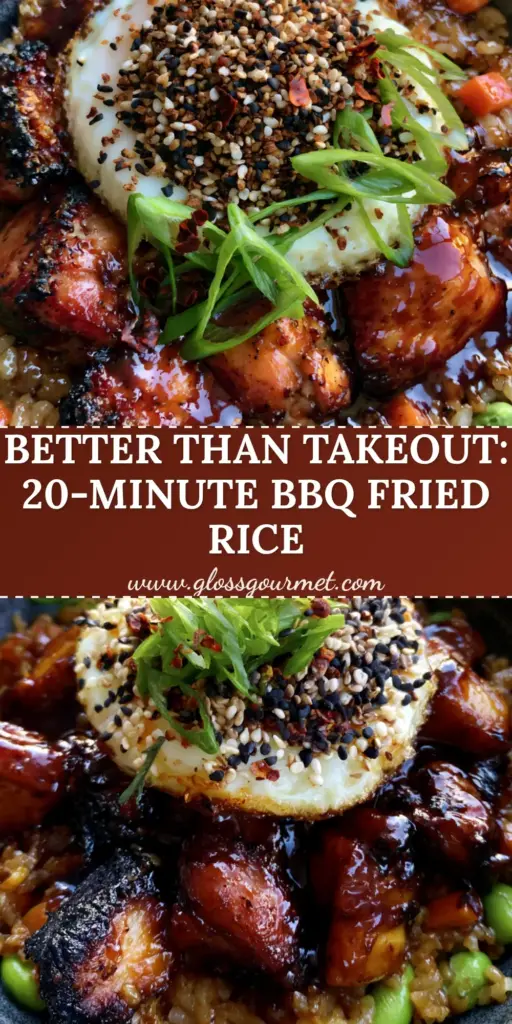
Creating a restaurant-quality Japanese BBQ chicken fried rice is all about the details—from the charred chicken thighs to the precise bias-cut scallions. This dish proves that with the right technique, simple ingredients like rice and soy sauce can be transformed into a gourmet masterpiece.
We hope this recipe becomes a staple in your kitchen for those nights when you need comfort food with a sophisticated edge. If you enjoyed this dish, please leave a comment below and tell us how your caramelization turned out!
Don’t forget to share your creations with us on Pinterest and subscribe to our newsletter for more elite culinary guides. Happy cooking!