When the temperature rises and the kitchen feels like a sauna, the last thing you want to do is stand over a steaming pot of boiling water. This No Cook Noodle Salad is the ultimate solution for those seeking a vibrant, refreshing, and deeply satisfying meal without ever turning on the stove.
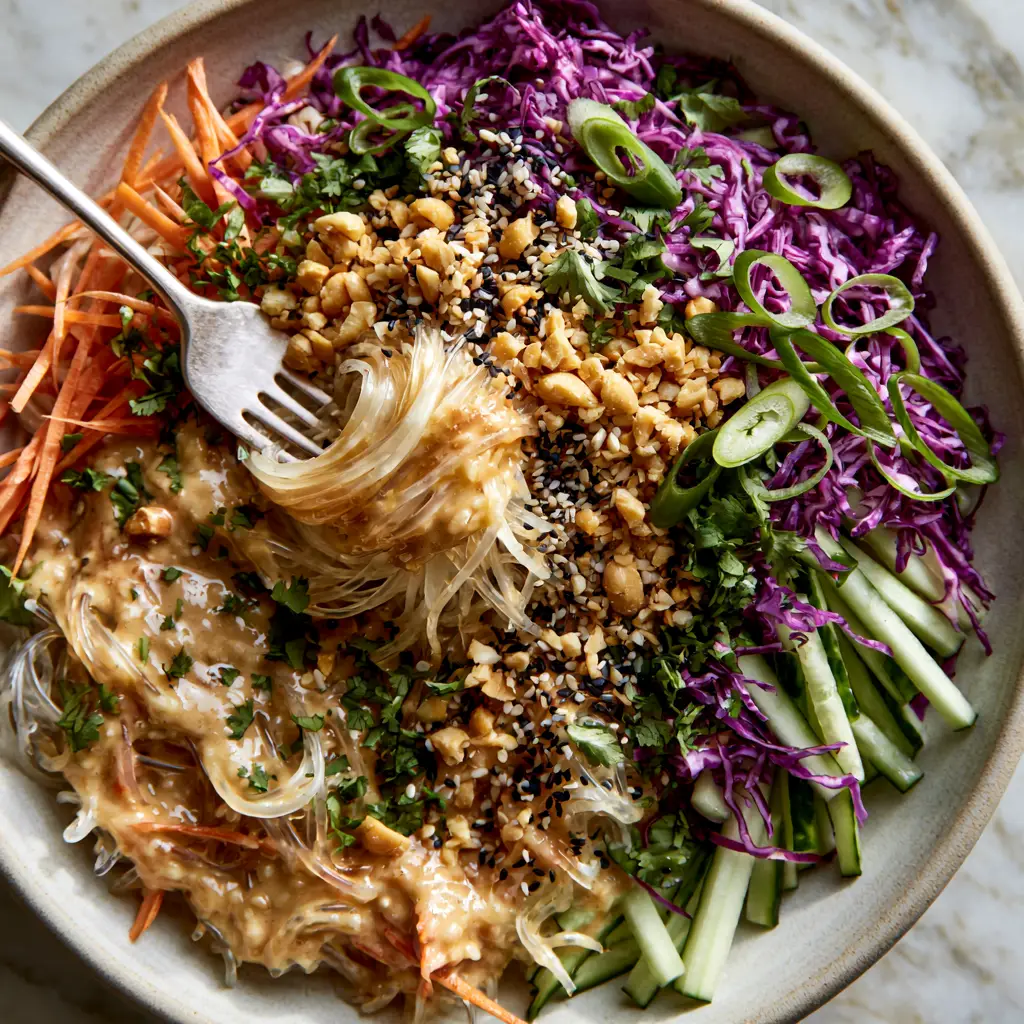
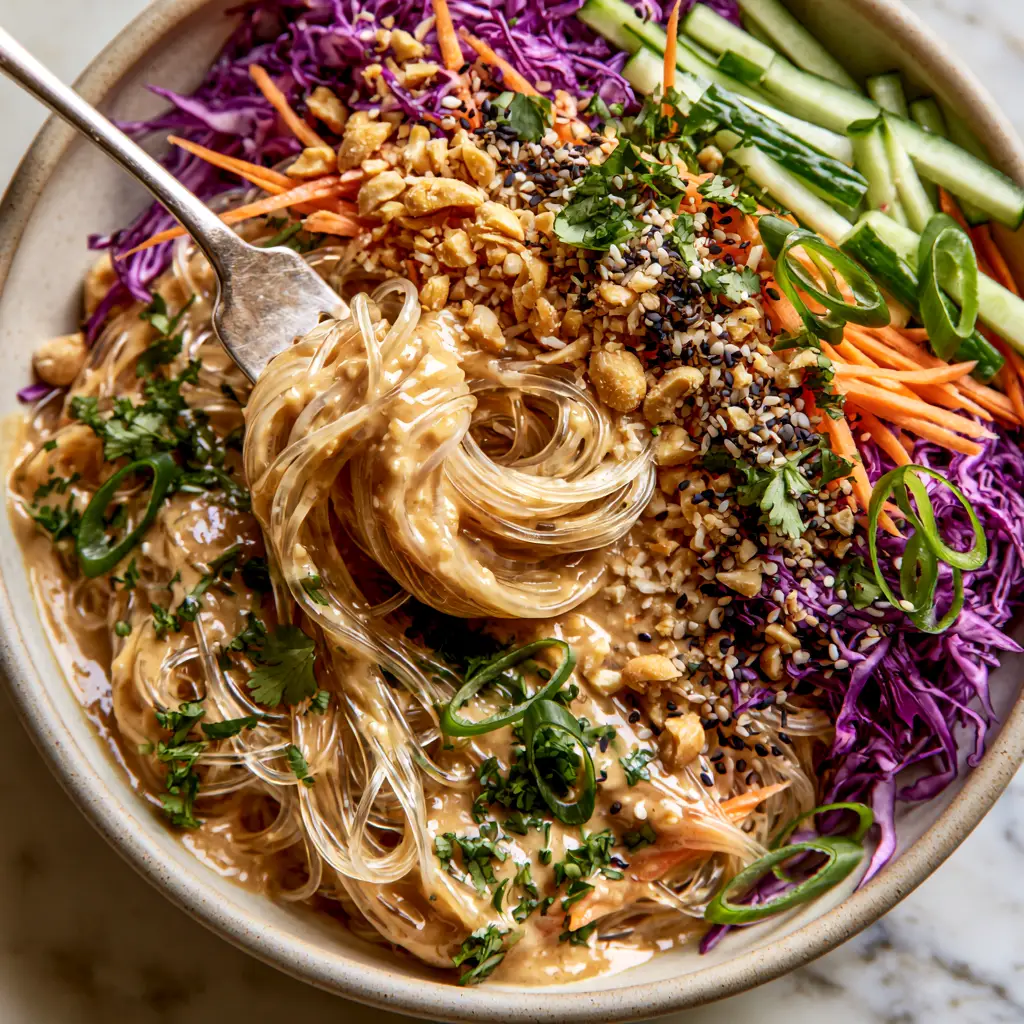
Imagine a bowl filled with translucent, glossy glass noodles that have been perfectly hydrated to an al dente snap. Each strand is generously coated in a thick, tan peanut ginger dressing that balances savory umami with a bright, zesty finish.
This isn’t just a salad; it’s a textural masterpiece. Between the crunch of julienned carrots, the cooling snap of matchstick cucumbers, and the earthy bite of shredded purple cabbage, every mouthful offers a new sensory experience that feels professional yet effortless.
Why This Chilled Noodle Bowl Is a Summer Game-Changer
- Visually Stunning Presentation: The contrast between the vibrant purple cabbage, bright orange carrots, and the glossy translucent noodles makes this a “gram-worthy” meal that tastes as good as it looks.
- Zero Heat Required: By utilizing the soaking method for glass noodles, you keep your kitchen cool while still achieving the perfect noodle texture.
- Complex Flavor Profile: The dressing combines creamy fats, sharp ginger, and acidic lime to create a restaurant-quality finish that coats every ingredient perfectly.
- Meal-Prep Friendly: Unlike traditional salads that wilt, these sturdy vegetables and glass noodles actually benefit from a little “marinating” time in the fridge.
The Vibrant Components of Your Cold Noodle Bowl
To achieve the specific visual and textural results seen in professional food photography, each ingredient in this No Cook Noodle Salad has been selected for its structural integrity and color pop.
Translucent Glass Noodles (Cellophane Noodles): 6 oz (170g). Usually made from mung bean or sweet potato starch, these noodles provide the signature clear, glossy look and a satisfyingly chewy “bounce.”
Creamy Peanut Ginger Dressing: 1/2 cup (120ml). This foundational sauce acts as the bridge between the neutral noodles and the sharp raw vegetables, providing the “thick, tan” coating described in our visual blueprint.
Julienned Raw Carrots: 1 cup (125g). These provide a bright orange hue and a rigid crunch that stands up against the softer noodles.
Matchstick Cucumbers: 1 cup (150g). Using a seedless English cucumber ensures your salad stays crisp rather than watery, providing a cooling element to balance the ginger heat.
Shredded Raw Purple Cabbage: 1 cup (70g). This adds a deep, vibrant violet color and a peppery bite that cuts through the richness of the peanut butter.
Crushed Toasted Peanuts: 1/4 cup (35g). For that essential “golden” garnish that adds a deep, nutty aroma and a heavy crunch to the top of the dish.
White and Black Sesame Seeds: 1 tbsp (9g). This dual-tone sprinkle provides a sophisticated visual finish that suggests a high-end culinary execution.
Fresh Chopped Cilantro: 1/2 cup (15g). The herbaceous notes lift the entire dish, adding a pop of bright green that contrasts beautifully with the tan dressing.
Sliced Raw Green Onions: 3 medium stalks. These “thin rounds of bright green scallions” provide a mild allium bite and a professional-looking garnish.
Foundational Invisible Ingredients: You will also need 1 tbsp (15ml) toasted sesame oil to prevent noodle clumping and a pinch of sea salt to draw out the natural sweetness of the raw vegetables.
Essential Tools for Professional Vegetable Prep
To replicate the “macro shot” precision of this dish, how you cut your vegetables is just as important as how you season them. Achieving those perfect matchsticks is the secret to a high-end mouthfeel.
A sharp chef’s knife or a julienne peeler is indispensable here. You want the carrots and cucumbers to be roughly the same thickness as the hydrated noodles so they intertwine perfectly during the “fork lift” moment. A large matte ceramic bowl is also recommended, as the wide surface area allows for the layered presentation of the toppings.
Hydrating Glass Noodles Without a Stove
The “Boiling Water Soak” Technique
While we call this a No Cook Noodle Salad, the noodles do require hydration. Instead of boiling them on a stovetop, place your dry glass noodles in a large heat-proof bowl. Pour enough boiling water (from a kettle) over them to fully submerge the nests.
Let them sit for 5–7 minutes. You are looking for a specific visual cue: the noodles should transition from opaque white to completely translucent and glossy. Test a strand; it should be al dente, meaning it has a slight resistance to the tooth without being crunchy.
The Immediate Cold Shock
Once the noodles reach that perfect translucency, drain them immediately in a colander. Rinse them under cold running water for at least 30 seconds. This stops the residual heat from overcooking the starch, which would otherwise result in a mushy, clumped mess.
Whisking the Creamy Sesame Ginger Dressing
To achieve the “thick, tan” consistency seen in our macro photography, the emulsification process is key. In a medium bowl, combine 1/3 cup (80ml) creamy peanut butter, 2 tbsp (30ml) soy sauce, 1 tbsp (15ml) rice vinegar, 1 tbsp (15ml) honey, and 1 tsp (5g) freshly grated ginger.
Slowly whisk in 1–2 tablespoons of warm water. Watch as the dressing transforms from a grainy paste into a smooth, glossy emulsion. It should be thick enough to coat the back of a spoon but fluid enough to swirl easily through the noodles.
Assembling for Maximum Visual Impact
Coating the Base
Place your cooled, drained noodles in a large mixing bowl. Pour half of the peanut ginger dressing over them and use tongs to toss thoroughly. The noodles should look “glossy and coated,” as if they are glowing under the light. This base layer ensures that every bite has flavor, even before the toppings are mixed in.
Layering the Rainbow
Transfer the coated noodles to your serving bowl. Instead of tossing the vegetables in immediately, layer the julienned carrots, matchstick cucumbers, and shredded purple cabbage on top in distinct sections. This creates the “vibrant Asian glass noodle salad” look where colors are distinct and saturated.
The Final Garnish Flourish
Finish the dish by raining down the crushed golden peanuts and the duo of sesame seeds. Scatter the chopped cilantro and green onion rounds across the top. The goal is a “heavily garnished” appearance that suggests abundance and freshness. If you’re feeling adventurous, this is a great base to add a sesame ginger tuna steak on the side for extra protein.
Expert Tips for the Perfect Noodle Texture
- Prevent Clumping: If you aren’t serving the salad immediately, toss the rinsed noodles in 1 tsp (5ml) of toasted sesame oil. This creates a microscopic barrier that prevents the starch from sticking together.
- Squeeze the Cucumbers: After cutting your matchstick cucumbers, pat them dry with a paper towel. This prevents excess moisture from thinning out your creamy dressing.
- Ginger Freshness: Always use freshly grated ginger rather than powdered. The fibrous juice from the fresh root provides the “zing” that makes the peanut sauce pop.
- Noodle Variety: If you can’t find mung bean glass noodles, a vegetable rice noodle salad approach works well too, though the noodles will be white rather than translucent.
Optimal Storage and Meal Prep Advice
This No Cook Noodle Salad is remarkably sturdy. It can be stored in an airtight container in the refrigerator for up to 3 days. Unlike a grinder salad which can get soggy quickly, glass noodles maintain their chew quite well.
If you are meal prepping, store the dressing in a separate small jar. Toss the noodles and veggies together, then add the dressing and garnishes just before eating to maintain that “macro shot” freshness and the crunch of the peanuts.
What to Pair with Your Refreshing Salad
While this bowl is a complete meal on its own, it also serves as a fantastic side dish. For a spicy kick, you might enjoy comparing this to a spicy asian noodle salad or serving it alongside some grilled tofu. If you’re hosting a summer spread, it pairs beautifully with fruit-forward sides like a green thai mango salad or even a refreshing peach arugula salad to keep the “no-cook” theme going.
Expert Answers to Your Noodle Salad Questions
No. Glass noodles are typically made from mung bean starch and turn translucent when hydrated, offering a chewy texture. Rice vermicelli is made from rice flour and remains opaque white when cooked.
Yes! Glass noodles are naturally gluten-free. Simply ensure you use Tamari or a gluten-free soy sauce alternative in the peanut ginger dressing.
Rinse them thoroughly with cold water immediately after soaking, then toss them in a small amount of toasted sesame oil to lubricate the strands.
Absolutely. Because glass noodles and cabbage are structurally sturdy, this salad stays fresh in the fridge for up to 3 days. Store the dressing separately for the best results.
Almond butter or cashew butter work beautifully. For a nut-free version, use sunflower seed butter (SunButter) or tahini.
The Ultimate No-Cook Glass Noodle Recipe
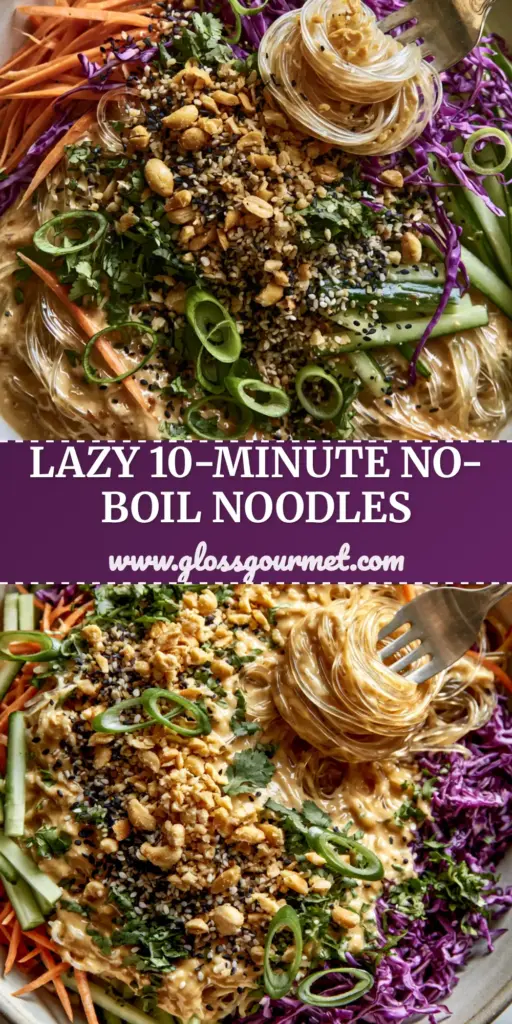
No Cook Noodle Salad with Creamy Peanut Ginger Dressing
Ingredients
Equipment
Method
- Place dry glass noodles in a heat-proof bowl and cover with boiling water from a kettle. Let soak for 5-7 minutes until translucent and glossy.
- Drain noodles and rinse under cold water immediately to stop cooking and remove excess starch. Toss with a teaspoon of sesame oil to prevent sticking.
- Whisk peanut butter, soy sauce, rice vinegar, honey, and ginger together. Add warm water 1 tablespoon at a time until a thick, creamy tan consistency is reached.
- Toss the noodles with half the dressing until evenly coated and glossy.
- Top with julienned carrots, cucumber matchsticks, and purple cabbage. Drizzle with remaining dressing.
- Finish with a heavy layer of crushed peanuts, sesame seeds, cilantro, and green onions. Serve chilled.
Notes
If making ahead, keep the dressing separate until ready to serve to maintain vegetable crunch.
Closing Thoughts on This Summer Staple
This No Cook Noodle Salad proves that you don’t need a stove to create a gourmet, nutrient-dense meal. Its combination of translucent textures and rainbow colors makes it a joy to both prepare and eat. Whether you’re making this for a quick lunch or a beautiful dinner party, it’s sure to become a repeat favorite in your kitchen.
Did you love the “snap” of the glass noodles? Let us know in the comments below! Don’t forget to share your creations on Instagram and tag us, and be sure to pin this recipe to your favorite healthy eating boards on Pinterest for later!