There is a specific kind of culinary magic that happens when high-heat searing meets a savory-sweet umami glaze. These Korean beef bowls are the ultimate manifestation of that alchemy, featuring ground beef that is pushed to the limit of caramelization until it develops those coveted, jagged dark-brown edges. If you have been searching for a weeknight meal that looks like a professional food photograph and tastes like a high-end bistro dish, this is your new gold standard.
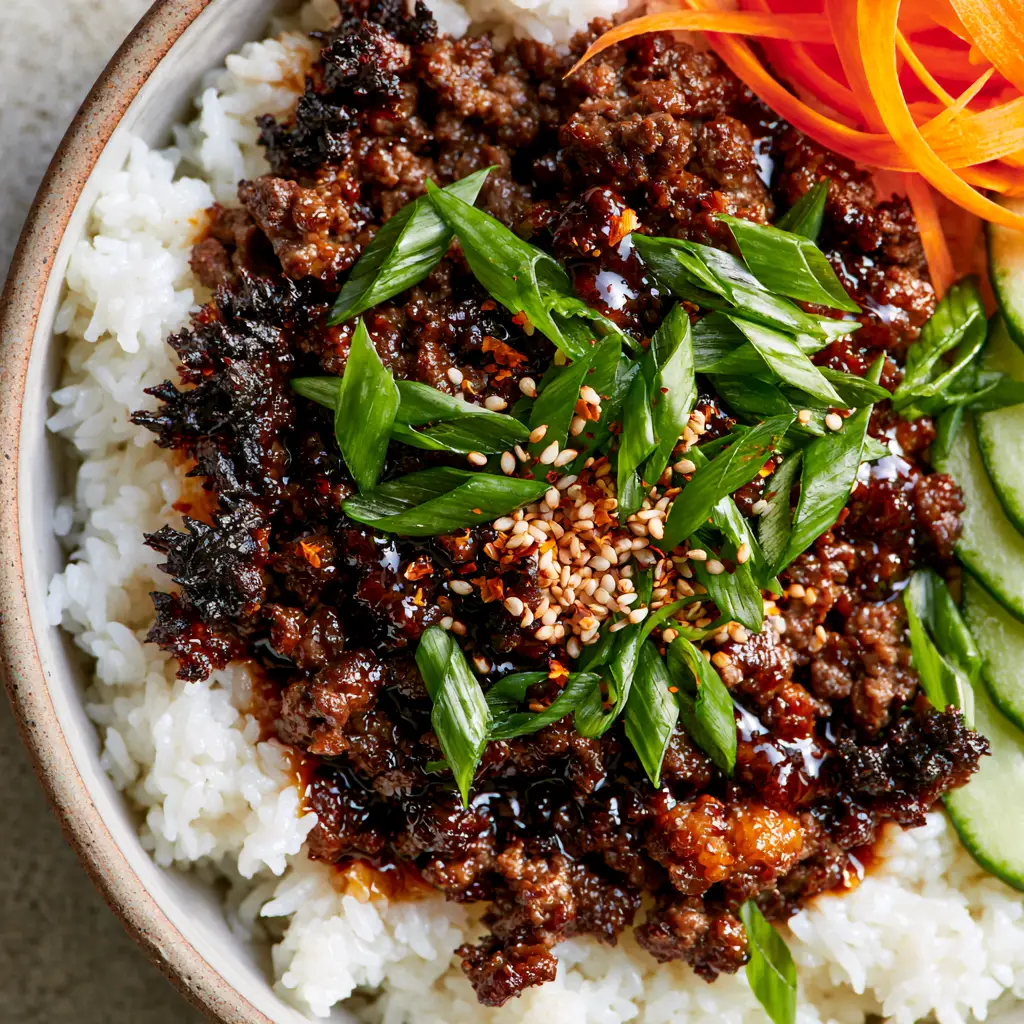
Imagine a base of fluffy, steaming jasmine rice that acts as a blank canvas for the main event: deeply browned beef coated in a thick, glistening, lacquered dark soy and ginger glaze. The contrast is what makes this dish legendary. You have the warmth of the beef, the cooling crunch of chilled Persian cucumbers, and the bright snap of julienned raw carrots, all finished with the aromatic bite of bias-cut scallions and toasted sesame seeds.
This recipe is designed for the home cook who values efficiency but refuses to sacrifice texture or depth of flavor. By following the specific searing techniques outlined below, you will transform humble ground beef into a gourmet protein that rivals any steakhouse preparation. It is fast, visually stunning, and packed with the bold flavors of ginger, garlic, and toasted sesame.
Why You Will Crave These Ultra-Crispy Korean Beef Bowls
- The Maillard Reaction: We use a specific high-heat technique to ensure the beef is not just cooked, but deeply caramelized with crispy, charred edges that provide an incredible mouthfeel.
- Lacquered Texture: The soy-ginger glaze is reduced until it reaches a thick, glossy consistency that perfectly coats every morsel of protein without making the rice soggy.
- Textural Harmony: The combination of steaming soft rice, sizzling beef, and chilled raw vegetables creates a sensory experience that hits every part of the palate.
- Visual Vibrancy: With bright orange carrot ribbons, emerald green scallions, and a heavy sprinkle of toasted seeds, this dish is a feast for the eyes before the first bite.
Essential Ingredients for the Ultimate Soy-Ginger Glaze
Lean Ground Beef: I recommend using 90% lean ground beef (450g) to ensure there is enough fat for searing without the dish becoming overly greasy. The fat is what allows those jagged edges to fry to a crisp in the pan.
Jasmine Rice: Use 1.5 cups (300g) of dry jasmine rice to create a fluffy, aromatic foundation. Its slight floral note pairs perfectly with the punchy ginger in the beef glaze.
Fresh Ginger and Garlic: You will need 2 tbsp (12g) of freshly grated ginger and 4 cloves of minced garlic. These aromatics provide the foundational “zing” that defines the flavor profile of authentic Korean beef bowls.
Dark Soy Sauce: Use 1/4 cup (60ml) of high-quality soy sauce to provide the deep brown color and essential salinity. This is what creates that dark, lacquered look seen in professional food photography.
Brown Sugar or Honey: 3 tbsp (45g) of sweetener is vital for the caramelization process. It reacts with the heat to create the sticky, thick consistency of the glaze.
Toasted Sesame Oil: 1 tbsp (15ml) added at the end of the cooking process provides an unmistakable nutty aroma. This oil should not be used for searing as it has a low smoke point.
Fresh Vegetables for Garnish: You must have 2 medium carrots (120g) and 2 Persian cucumbers (100g). These provide the essential “cool” element to balance the heat of the beef.
Scallions and Sesame Seeds: 3 green scallions (15g) cut on a sharp bias and 1 tbsp (9g) of toasted white sesame seeds offer the final professional touch. The scallions provide a fresh onion bite that cuts through the rich glaze.
Dried Red Pepper Flakes: 1 tsp (2g) of red pepper flakes adds a subtle, lingering warmth. Adjust this based on your personal heat tolerance.
The Professional Toolset for Perfect Caramelization
To achieve the specific “crispy charred edges” mentioned in the visual blueprint, a heavy-bottomed skillet is non-negotiable. A cast-iron skillet or a heavy stainless steel pan is ideal because they retain heat exceptionally well, preventing the beef from steaming in its own juices.
You will also need a sharp chef’s knife or a mandoline for the julienned carrots. To get those “thin ribbons” or “julienned” textures, precision is key. A fine microplane for the ginger will ensure the aromatics melt into the sauce rather than leaving woody chunks in the final dish.
How to Master the Crispy Searing Process
Step 1: Steaming the Jasmine Foundation
Rinse 1.5 cups (300g) of jasmine rice under cold water until the water runs clear. This removes excess surface starch and ensures the rice stays fluffy and individual rather than clumping together.
Combine the rice with 2.25 cups (540ml) of water in a pot with a pinch of salt. Bring to a boil, then reduce to the lowest heat, cover, and simmer for 15 minutes. Let it stand covered for 5 minutes before fluffing with a fork to release the steam.
Step 2: Preparing the Cold Vegetable Garnish
While the rice cooks, julienne the carrots into thin, matchstick-sized ribbons. Slice the Persian cucumbers into thin, circular rounds. Keeping these chilled until the moment of serving is vital for the “cool, crisp” contrast described in our visual goals.
Take your green scallions and cut them on a sharp diagonal (bias-cut). This increases the surface area and creates a more professional, restaurant-quality presentation similar to a high-end noodle salad presentation.
Step 3: Achieving the Deeply Caramelized Beef
Heat 1 tbsp (15ml) of high-smoke point oil (like avocado or vegetable oil) in your heavy skillet over medium-high heat until it begins to shimmer. Add the ground beef in a single layer, breaking it into large chunks with a wooden spoon.
Crucial Culinary Cue: Do not stir the beef for the first 4-5 minutes. You want to hear an aggressive sizzle. Look for the edges of the beef to turn a deep, dark brown and become jagged and crispy. This is the Maillard reaction in action.
Step 4: Creating the Lacquered Ginger Glaze
Once the beef is well-browned, drain most of the excess fat, leaving about 1 tbsp in the pan. Add the minced garlic and grated ginger, stirring for 30 seconds until the aroma fills the kitchen and the garlic is golden but not burnt.
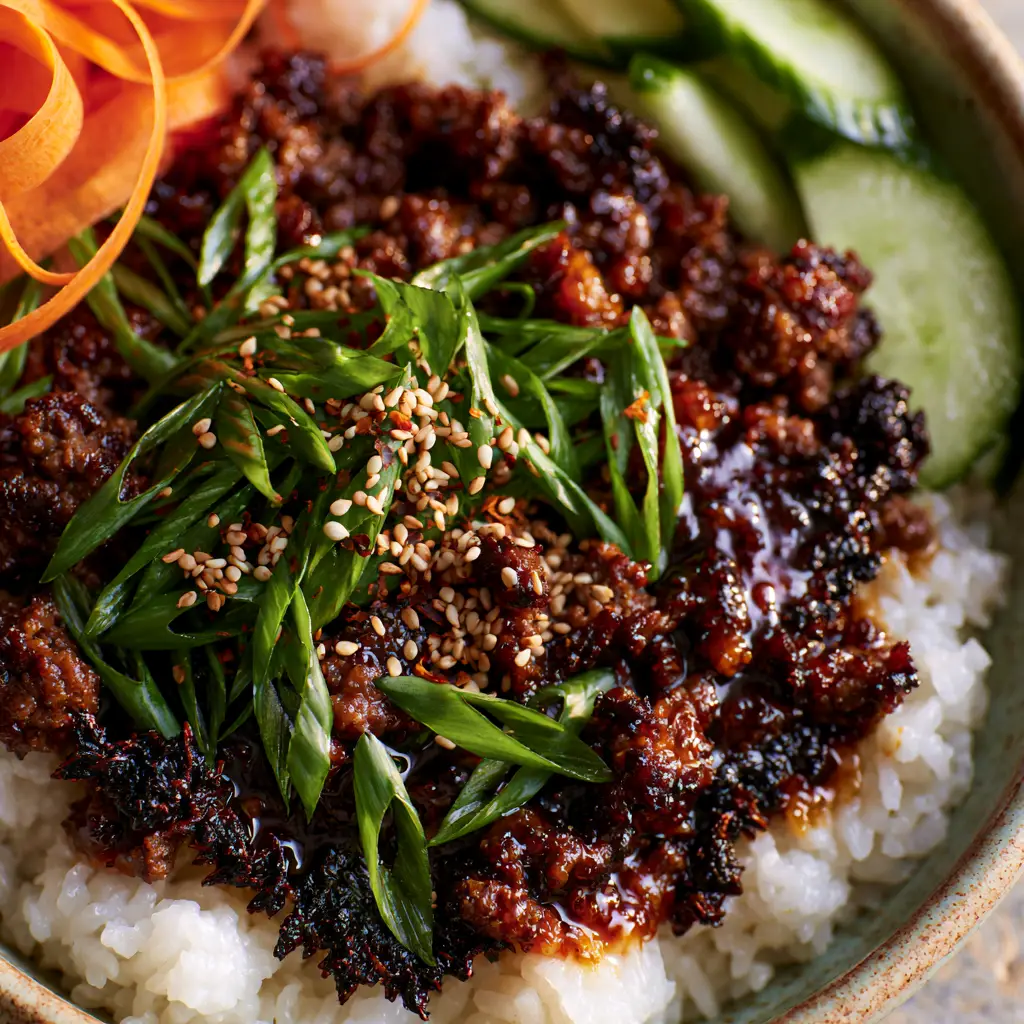
Pour in the soy sauce, brown sugar, and red pepper flakes. Increase the heat slightly and stir constantly as the liquid begins to bubble. The sugar will emulsify with the soy and beef juices, creating a thick, glistening coating that looks like liquid mahogany.
Step 5: Final Aromatics and Assembly
Remove the pan from the heat and stir in the toasted sesame oil. This preserves the delicate volatile oils that give the dish its signature scent. The beef should now be “coated in a thick, glistening, lacquered dark soy and ginger glaze” as per our visual blueprint.
To assemble, place a generous scoop of fluffy jasmine rice in a ceramic bowl. Top with a heap of the caramelized beef. Arrange the raw carrot ribbons and cucumber slices on the side. Garnish heavily with the bias-cut scallions, toasted sesame seeds, and an extra pinch of red chili flakes.
Chef’s Secrets for Korean Beef Bowl Success
- Avoid Over-Crowding: If your pan is too small, the beef will release moisture and boil instead of searing. Cook in two batches if necessary to maintain that “crispy, jagged” edge.
- The Sugar Balance: If the sauce feels too salty, add an extra teaspoon of brown sugar. If it is too sweet, a splash of rice vinegar (5ml) can provide the necessary acidity to balance the palate.
- Freshness is Key: Always use fresh ginger. The powdered version cannot replicate the bright, spicy notes required for this specific glaze.
- Temperature Contrast: Serve the beef immediately while it is piping hot, but keep the cucumbers and carrots in the refrigerator until the very last second. This temperature play is a hallmark of great Asian-inspired bowls.
Safe Storage and Reheating Guidelines
These Korean beef bowls are exceptional for meal prep. Store the cooked beef and rice in an airtight glass container in the refrigerator for up to 4 days. I recommend storing the raw carrots and cucumbers in a separate container to maintain their crispness.
To reheat, place the beef and rice in a pan with a tablespoon of water and cover with a lid to steam through. This prevents the beef from drying out. Alternatively, microwave on high for 2 minutes. Always add fresh garnishes after reheating to revive the dish’s visual appeal.
What to Serve with Your Korean Beef Bowls
While these bowls are a complete meal on their own, they pair beautifully with other vibrant textures. If you are hosting a larger dinner, consider starting with a refreshing peach and arugula salad to provide a fruity contrast to the salty beef.
For those who love more noodle-based options, this beef also works wonderfully alongside a spicy Asian noodle salad. If you have leftover ginger and soy sauce, you might also enjoy preparing a sesame ginger tuna steak for your next meal to keep the flavor theme consistent.
Frequently Asked Questions
Yes, you can use ground turkey or chicken, though they have less fat and may not get as crispy. If using leaner meats, add an extra teaspoon of oil to the pan to help with the caramelization process.
The secret is high heat and patience. Use a cast-iron skillet and let the beef sit undisturbed for several minutes without stirring. This allows the moisture to evaporate and the Maillard reaction to create those charred, jagged edges.
Always store the cooked beef and rice separately from the raw carrots and cucumbers. Reheat the beef and rice together, and only add the chilled vegetables just before serving to maintain the texture contrast.
Jasmine rice is preferred for its fluffy texture and floral aroma, which balances the heavy soy-ginger flavors. However, you can use brown rice or even rice noodles if you prefer a different base.
The combination of brown sugar and soy sauce creates a syrup as it reduces. The sugar caramelizes at high heat, which creates that thick, glistening coating that sticks to the beef rather than running to the bottom of the bowl.
The Ultimate Korean Beef Bowls Recipe
Korean Beef Bowls with Crispy Caramelized Edges and Ginger Glaze
Ingredients
Equipment
Method
- Combine rinsed jasmine rice and water in a pot. Bring to a boil, then simmer covered for 15 minutes. Fluff with a fork.
- Julienne carrots and slice cucumbers. Cut scallions on a diagonal bias. Keep chilled.
- Heat oil in a heavy skillet. Add beef in chunks and let sit undisturbed for 4-5 minutes until a dark-brown, crispy crust forms on the bottom.
- Drain fat. Add ginger and garlic for 30 seconds. Pour in soy sauce, sugar, and pepper flakes. Stir until the sauce reduces into a thick, glistening lacquer.
- Bowl the rice, top with beef, and arrange cold vegetables. Garnish with sesame seeds and extra scallions.
Notes
Keep the cucumbers and carrots chilled until the final second for the best texture contrast.
Closing & Call to Action
These Korean beef bowls are a testament to how simple ingredients can be elevated through proper technique. By focusing on the sear and the reduction of the glaze, you create a meal that is both comforting and sophisticated. We would love to see your crispy edges and glistening glazes! Please leave a comment below with your results and follow us on Pinterest for more visually inspired culinary guides.