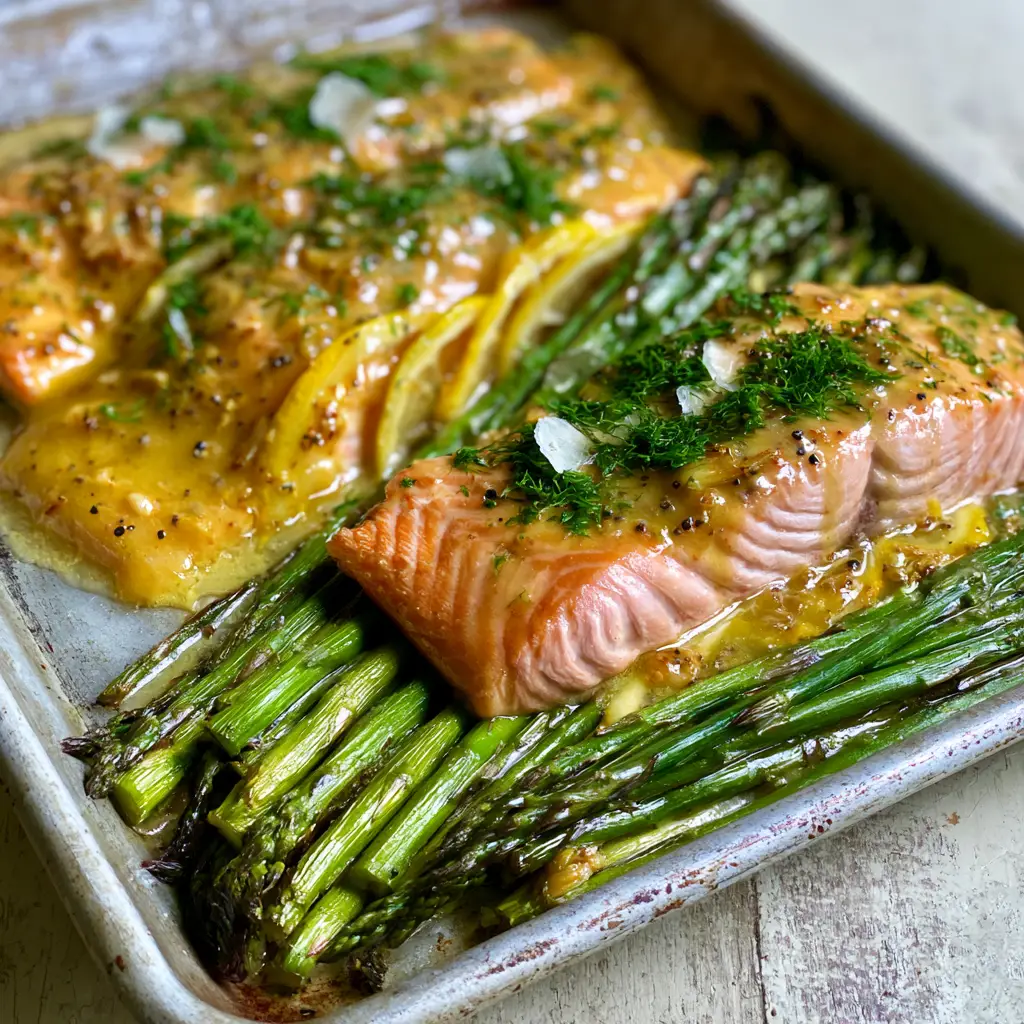
Imagine pulling a weathered silver sheet pan from the oven, the air filled with the aroma of roasted garlic and zesty citrus. Your Baked Dijon Salmon sits center stage, boasting a thick, glossy, translucent golden-yellow glaze that shimmers under the kitchen lights. Every flake of the Atlantic salmon is moist and tender, perfectly complemented by the crunch of emerald green asparagus with charred, crispy tips.
This isn’t just a meal; it’s a sensory experience designed for the enthusiastic home cook who values both aesthetics and flavor. The combination of pungent Dijon mustard, rich melted butter, and paper-thin caramelized lemon rounds creates a sophisticated profile that tastes like a high-end bistro dish. Whether you are looking for a quick weeknight win or a healthy dinner that impresses, this recipe delivers on every promise.
The Irresistible Allure of This Sheet Pan Masterpiece
- Perfectly Flaked Texture: By using thick, center-cut fillets, we ensure the salmon remains succulent and separates into beautiful pink flakes at the touch of a fork.
- The “Golden-Yellow” Glaze: A specialized blend of Dijon and garlic butter creates a translucent, glistening coating that clings to the fish without overpowering it.
- Textural Contrast: The vibrant green asparagus spears are roasted until the stalks are tender-crisp while the tips become delightfully blistered and charred.
- Caramelized Citrus Notes: Tucking paper-thin lemon slices between the components allows the natural sugars to brown, adding a deep, jammy acidity to the dish.
- Visual Finishing Touches: A generous dusting of bright green fresh dill and large Maldon sea salt flakes provides that professional, “unedited” food photography finish.
Sourcing the Essential Ingredients for Your Baked Dijon Salmon
To achieve the results seen in our visual blueprint, ingredient quality is paramount. Every element on the silver sheet pan serves a purpose, from the structural integrity of the fish to the aromatic garnish.
Center-Cut Atlantic Salmon Fillets: You will need two thick fillets, approximately 6oz (170g) each. Center-cut pieces are preferred because their uniform thickness ensures even cooking throughout the fillet.
Dijon Mustard: Use 2 tbsp (30g) of high-quality, creamy Dijon. It provides the acidic backbone for the glaze and helps the butter emulsify into that signature translucent golden sheen.
Unsalted Butter: 2 tbsp (28g) of melted butter acts as the fat carrier for the garlic and pepper. Using unsalted butter allows you to control the final seasoning with the coarse sea salt flakes.
Fresh Garlic: 3 cloves (approx. 15g) of minced garlic are essential. These tiny specks will sauté directly in the glaze as the salmon bakes, releasing a mellow, toasted flavor.
Slender Asparagus Spears: 1 bunch (approx. 450g) of thin asparagus is ideal. Slender spears char more effectively at the tips in the time it takes the salmon to reach medium-rare.
Lemon: One large lemon, sliced into paper-thin rounds. These are tucked around the fish to infuse the glaze with citrus oils while the edges caramelize on the hot silver pan.
Foundation Pantry Staples: You will also need 1 tbsp (15ml) of extra virgin olive oil for the asparagus, 1/2 tsp (1g) of freshly cracked black pepper, and 1 tsp (5g) of Maldon sea salt flakes for that final crunch.
Fresh Dill: 2 tbsp (4g) of finely chopped dill. Unlike dried herbs, fresh dill provides the “vibrant emerald” contrast required for the final presentation.
Must-Have Tools for Professional Results
To replicate the authentic food photography style of this dish, the equipment is just as important as the ingredients. A weathered silver sheet pan is the hero here, as it conducts heat evenly and provides the perfect rustic backdrop.
A sharp mandoline or chef’s knife is required to get the lemon slices paper-thin. If the slices are too thick, they won’t caramelize; they will simply steam. You will also need a small glass bowl for whisking the Dijon glaze and a pastry brush to ensure the salmon is coated in a thick, glossy layer.
The Culinary Science of the Perfect Bake
Preparing the Salmon and Asparagus
Start by preheating your oven to 400°F (200°C). This high temperature is the secret to achieving blistered asparagus tips while keeping the interior of the Baked Dijon Salmon moist. Pat the salmon fillets completely dry with a paper towel; any surface moisture will steam the fish rather than allow the glaze to set.
If you enjoy the flavor profile of this dish, you might also want to explore our honey garlic baked salmon for a sweeter twist. Place the salmon fillets on the weathered silver sheet pan, leaving enough room for the asparagus spears to be spread in a single layer.
Whisking the Translucent Dijon Glaze
In a small bowl, combine the melted butter, Dijon mustard, minced garlic, and half of the cracked black pepper. Whisk vigorously until the mixture is emulsified and looks like liquid gold. The mustard acts as a stabilizer, preventing the butter from breaking during the roasting process.
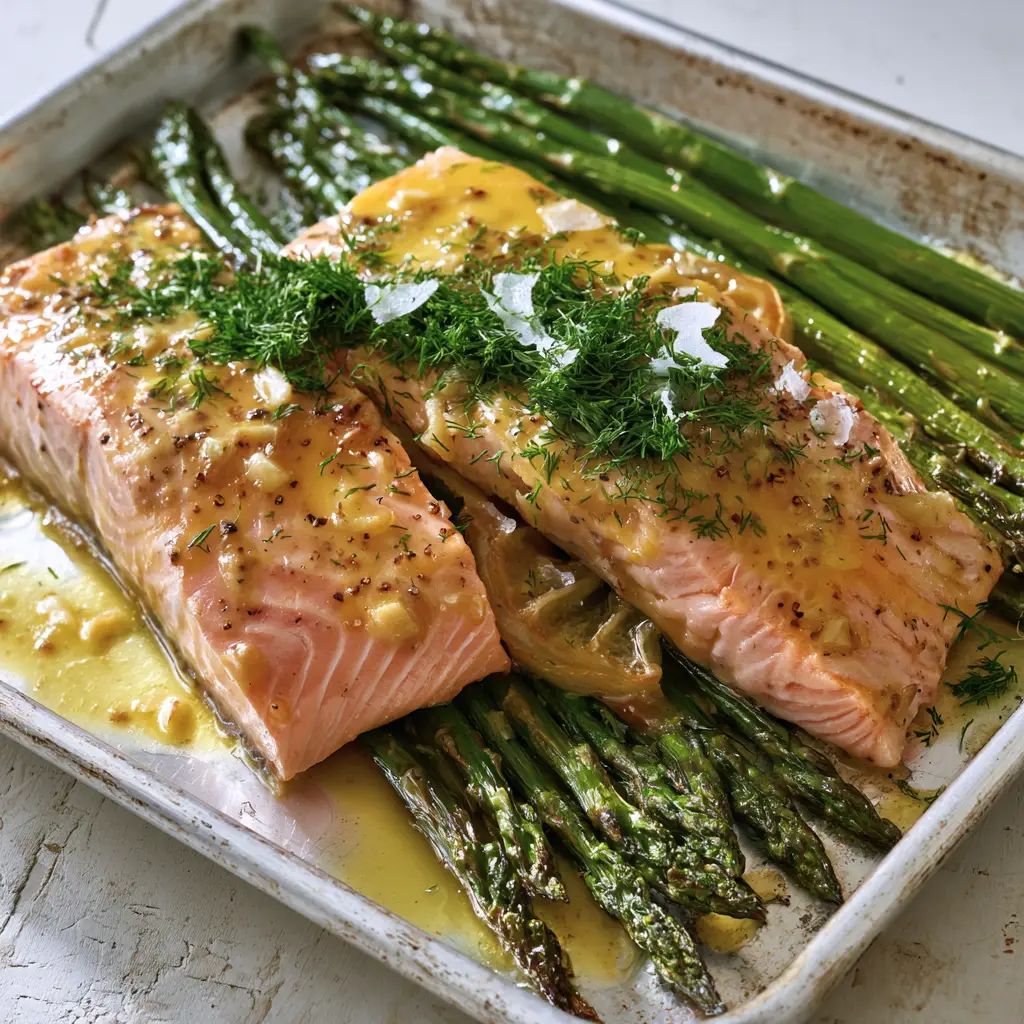
Generously brush the glaze over the top and sides of the salmon. You want a thick coating that will become glossy and translucent as the heat hits it. Sprinkle the remaining cracked black pepper directly onto the glaze for visual definition.
Achieving the Char and Caramelization
Toss the asparagus spears in 1 tbsp (15ml) of olive oil and a pinch of salt. Arrange them alongside the salmon. Now, take your paper-thin lemon rounds and tuck them partially under the edges of the salmon and between the asparagus spears. This contact with the silver pan is what triggers the Maillard reaction, turning the lemons sweet and charred.
Slide the pan into the center rack of the oven. Bake for 12-15 minutes. Look for the visual cues: the salmon flakes should begin to separate slightly, and the asparagus tips should look dark and crispy. If the lemons aren’t charred to your liking, you can turn on the broiler for the final 60 seconds.
Expert Tips for Sheet Pan Perfection
- The Snap Test: Always trim the woody ends off your asparagus by finding the natural breaking point. This ensures every bite on the pan is tender.
- Room Temperature Fish: Take your salmon out of the fridge 15 minutes before cooking. This prevents the outside from overcooking while the center remains cold.
- Don’t Crowd the Pan: If the asparagus is piled up, it will steam. Spread it out to ensure those tips get the “blistered” texture described in the Midjourney prompt.
- Freshness Matters: Only chop the dill at the very last second. This preserves the volatile oils and ensures the herb remains a “bright green” rather than turning dull.
How to Store and Reheat Your Leftovers
While Baked Dijon Salmon is best enjoyed fresh from the oven, leftovers can be stored in an airtight container in the refrigerator for up to 2 days. To reheat, avoid the microwave, which can make the salmon rubbery. Instead, place the fillets back on a sheet pan in a 300°F (150°C) oven until warmed through.
For a cold lunch option, flake the chilled salmon over a vermicelli noodle salad or use it as a protein boost for a pasta primavera.
What to Serve with Dijon Salmon
To round out this meal, consider adding a starch that can soak up any extra garlic butter glaze. These crispy potato bites offer a wonderful crunch that contrasts with the tender fish. If you prefer a lighter pairing, a crisp green salad or a side of dill pickle chips can provide a refreshing acidic counterpoint.
For those who love a bit of fusion, try serving the salmon alongside a korean bulgogi beef bowl inspired vegetable spread for a multi-cultural feast.
Frequently Asked Questions
Yes, but ensure the salmon is completely thawed and patted dry with paper towels. Excess moisture will prevent the Dijon glaze from adhering and becoming glossy.
No, the peel contains essential oils that flavor the dish. By slicing them paper-thin, the pith loses its bitterness and the entire slice becomes edible and caramelized.
The salmon is done when it reaches an internal temperature of 145°F (63°C) or when the flakes easily separate with a fork while remaining moist and pink in the center.
A smooth, creamy Dijon is best for this glaze. Avoid grainy mustard if you want the specific ‘translucent golden-yellow’ look described in our visual blueprint.
This usually happens if the pan is overcrowded or the oven temperature is too low. Ensure the spears are in a single layer and the oven is fully preheated to 400°F (200°C).
The Ultimate Baked Dijon Salmon Recipe
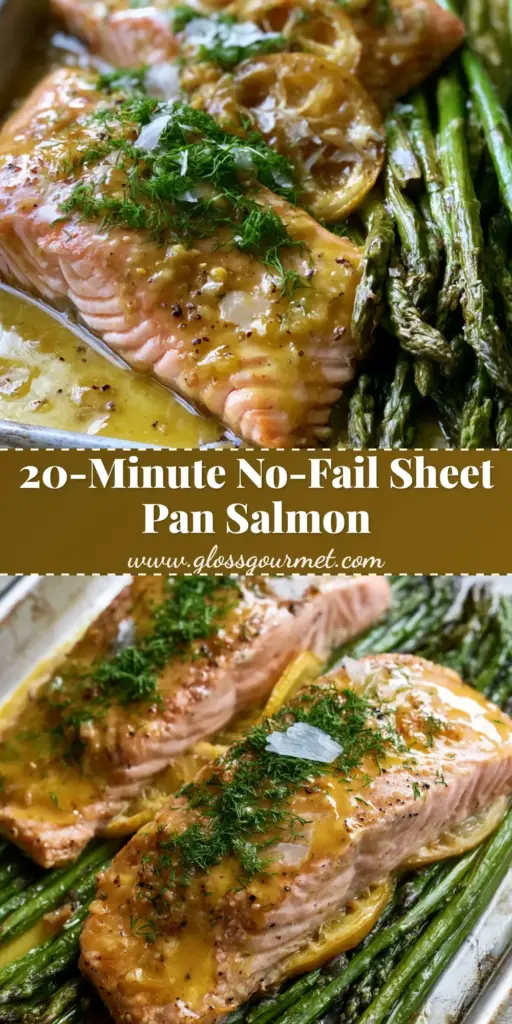
Baked Dijon Salmon with Blistered Asparagus and Caramelized Lemon
Ingredients
Equipment
Method
- Preheat oven to 400°F (200°C). Pat salmon fillets dry and place on a silver sheet pan. Trim the woody ends off the asparagus.
- In a small bowl, whisk together melted butter, Dijon mustard, minced garlic, and half of the black pepper until emulsified.
- Brush the thick Dijon glaze over the salmon. Toss asparagus with olive oil and salt, then arrange on the pan. Tuck lemon slices between the salmon and asparagus.
- Bake for 12-15 minutes until the salmon shows moist, separated pink flakes and asparagus tips are blistered and charred.
- Remove from oven. Dust with fresh chopped dill and sprinkle with Maldon sea salt flakes before serving.
Notes
Ensure the lemon slices are paper-thin to achieve caramelization within the short baking window.
Closing & Call to Action
This Baked Dijon Salmon is a testament to how simple ingredients, when treated with professional technique, can produce a visually stunning and delicious result. The balance of the sharp Dijon, the savory garlic, and the charred lemon creates a harmony of flavors that you will return to week after week. If you enjoyed this recipe, please leave a comment below and share your results! Don’t forget to pin this recipe to your favorite board on Pinterest so you never lose track of this sheet pan staple.