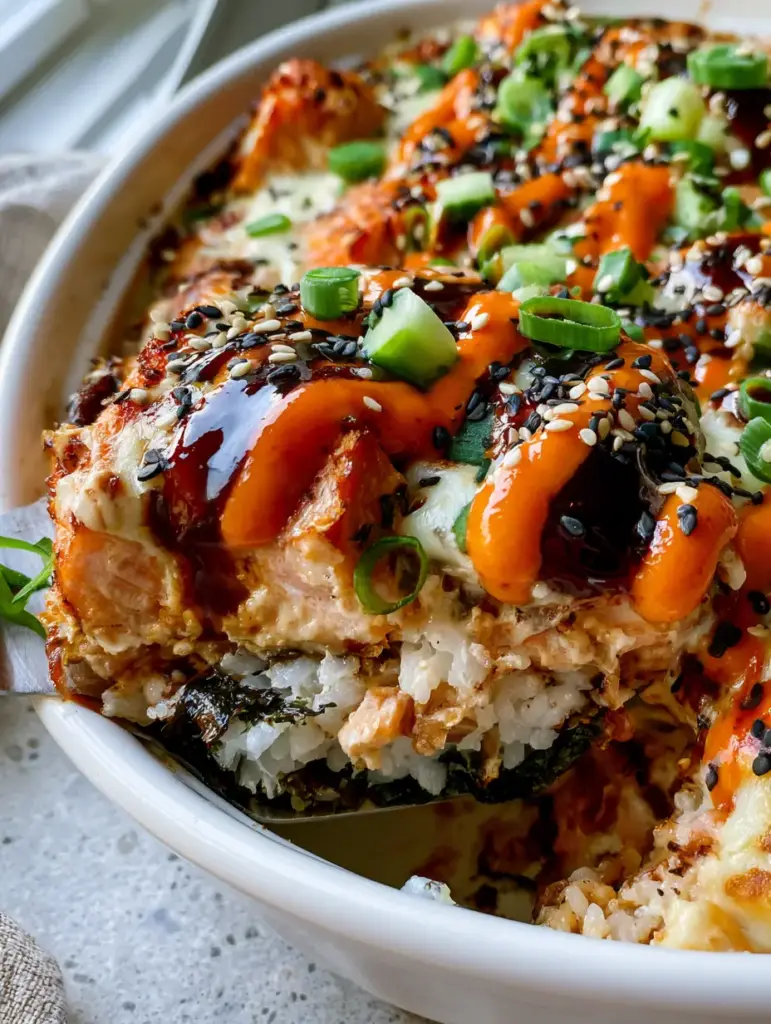
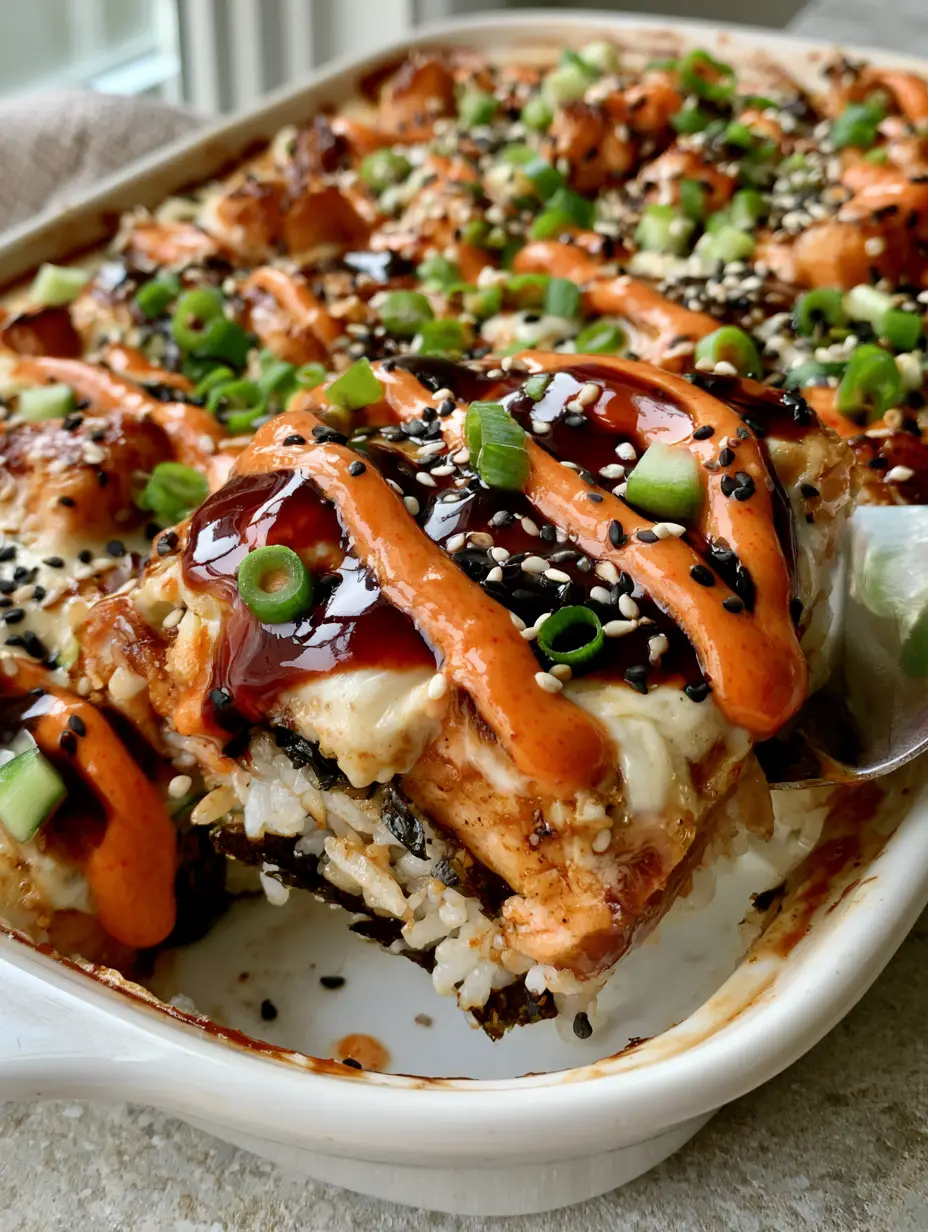
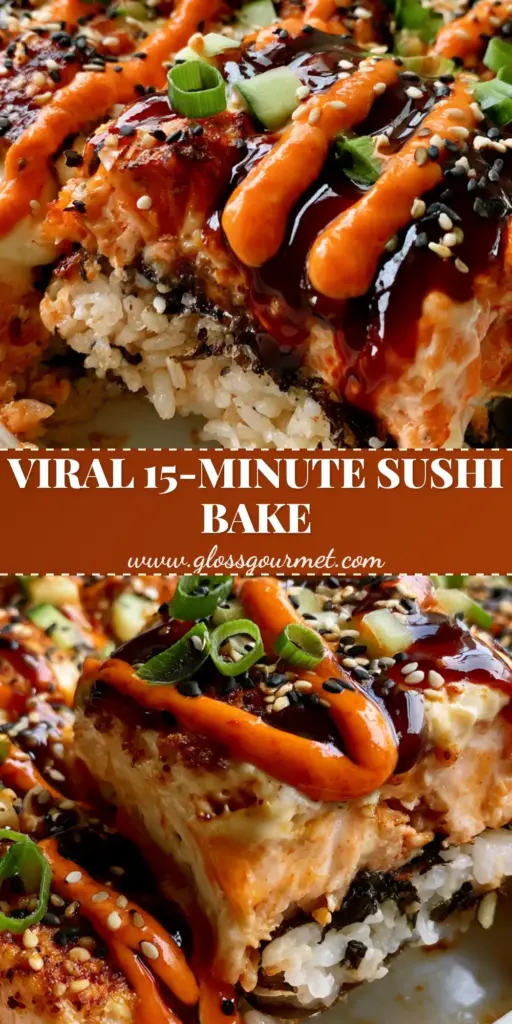
The sushi bake has taken the culinary world by storm, transforming the delicate art of hand-rolled sushi into a comforting, shareable casserole that is as visually stunning as it is delicious. Imagine a spatula lifting a perfectly square portion from a white ceramic dish, revealing distinct layers of fluffy, vinegared sushi rice, roasted nori, and succulent, flaked salmon. As the light catches the glossy dark brown unagi sauce and the bright orange zig-zags of sriracha mayo, you realize this isn’t just dinner; it’s a sensory experience.
This gourmet rendition focuses on forensic visual accuracy, ensuring your final dish looks exactly like a high-end restaurant offering. We achieve this by balancing the creamy, melted textures of Kewpie mayo with the crisp, vibrant snap of emerald green scallions and diced Persian cucumbers. Whether you are hosting a potluck or looking for elevated hot lunch recipes, this dish delivers on every promise of flavor and texture.
Every bite offers a contrast between the warm, umami-rich baked salmon and the cold, refreshing crunch of the cucumber garnish. By following our scientific approach to rice preparation and salmon searing, you will master the “golden-brown” finish seen in professional food photography. Let’s dive into the components that make this specific version the ultimate crowd-pleaser.
The Irresistible Allure of a Gourmet Salmon Casserole
- Textural Harmony: Experience the bridge between soft, steamed sushi rice and the crisp, toasted texture of roasted nori sheets.
- Visual Masterpiece: The striking contrast of deep brown unagi sauce against bright orange sriracha mayo creates a professional, “social-media-ready” aesthetic.
- Flavor Depth: We use authentic furikake and vinegared rice to ensure every layer is seasoned to perfection, not just the topping.
- Refreshing Finish: Finely diced Persian cucumbers provide a necessary cooling element that cuts through the rich, creamy Kewpie mayo.
Essential Elements for the Ultimate Sushi Bake
To achieve the specific visual results of our blueprint, you must use high-quality, authentic ingredients. Generic substitutions often fail to provide the correct viscosity for drizzles or the right stickiness for the base.
Short-Grain Sushi Rice: You will need 2 cups (400g) of raw sushi rice, which yields about 6 cups of cooked rice. The high starch content is vital for creating a structural base that doesn’t crumble when lifted with a spatula.
Rice Vinegar Seasoning: A mixture of 3 tbsp (45ml) rice vinegar, 1 tbsp (12g) sugar, and 1 tsp (6g) salt. This “sushi su” seasons the rice, providing that signature tangy brightness that balances the heavy fats in the topping.
Fresh Salmon Fillets: Use 1 lb (450g) of fresh salmon. Baking and then flaking the salmon ourselves ensures a juicy, tender texture that canned alternatives simply cannot replicate.
Kewpie Mayonnaise: Unlike Western mayo, this Japanese staple uses only egg yolks and MSG, providing a deeper yellow hue and a much richer, umami-forward flavor profile. You will need 1/2 cup (120ml) for the salmon mix and extra for the decorative melted top.
Sriracha and Unagi Sauce: These provide the “zigzag” visual. Unagi sauce (eel sauce) is a thickened soy-based glaze that adds a sweet, salty finish, while sriracha mayo adds a gentle heat and vibrant orange color.
Toasted Nori Sheets: 2 to 3 sheets of roasted seaweed, crumbled or layered. These act as the “middle layer” in our blueprint, providing a briny depth and separating the rice from the protein.
Crunchy Garnishes: 2 small Persian cucumbers, finely diced, and 3 scallions, thinly sliced. These must be added after baking to maintain their vibrant emerald green color and crisp texture.
Furikake and Sesame Seeds: A generous dusting of dried seaweed furikake and a mix of toasted black and white sesame seeds. These add the final “macro-shot” details that signify a gourmet dish.
Professional Culinary Tools for Precision
Achieving the perfect sushi bake requires more than just a pan; it requires the right tools to ensure the layers stay distinct and the sauces look pristine. A 9×13 inch (23×33 cm) white ceramic baking dish is ideal for heat distribution and provides a neutral background that makes the colors pop.
A rice cooker is highly recommended for consistent texture, but a heavy-bottomed pot works if you monitor the steam closely. You will also need a silicone spatula for pressing the rice firmly into the dish—this prevents the “lifted portion” from falling apart.
For the sauces, using small squeeze bottles allows for the precise, thick zigzag drizzle described in our visual prompt. If you don’t have these, a plastic sandwich bag with a tiny corner snipped off will suffice to achieve that professional finish.
Step-by-Step Guide to Layering Perfection
Preparing the Vinegared Sushi Rice Base
Start by rinsing your sushi rice under cold water until the water runs clear; this removes excess surface starch and prevents the rice from becoming gummy. Cook the rice according to package instructions, then while still warm, gently fold in your rice vinegar, sugar, and salt mixture. Use a slicing motion with your spatula to avoid mashing the grains, ensuring they remain fluffy and distinct.
Baking and Flaking the Juicy Salmon filling
Season your salmon fillets with a pinch of salt and bake at 400°F (200°C) for 12-15 minutes until just opaque. Once cooled slightly, flake the salmon into bite-sized chunks. In a medium bowl, fold the salmon together with the Kewpie mayo and a splash of sriracha. You want the salmon to be well-coated but still visibly chunky to create that “golden-brown seared” look during the second bake.
Assembling the Structural Layers
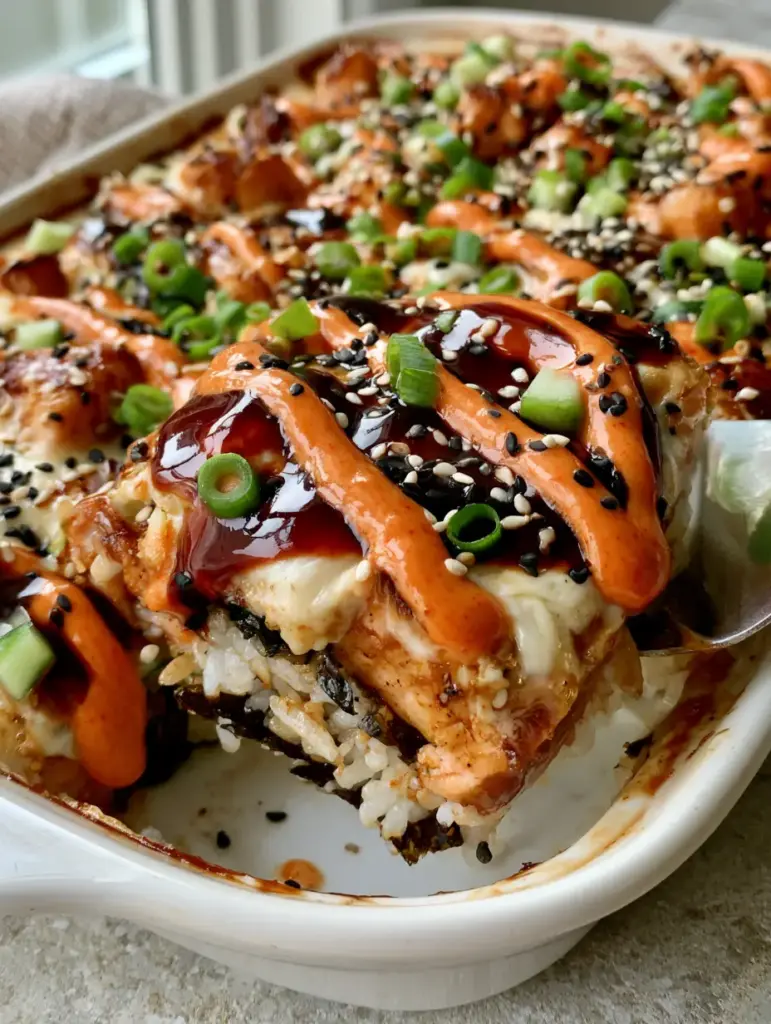
Grease your ceramic dish lightly with 1 tsp (5ml) of neutral oil. Press the seasoned rice into the bottom in an even, 1-inch layer. Sprinkle a dense coating of furikake over the rice, followed by a layer of crumbled or whole toasted nori sheets. Spread the creamy salmon mixture over the nori, smoothing it out to the edges. This layering technique is what creates the beautiful cross-section when served.
The Final Bake and Signature Drizzle
Place the dish back into the oven at 425°F (220°C) for 8-10 minutes. For the “golden-brown seared” effect, turn the broiler on for the last 2 minutes, watching closely until the Kewpie mayo starts to bubble and brown. Remove from the oven and immediately apply your thick zigzag drizzles of orange sriracha mayo and glossy dark unagi sauce. The residual heat will help the sauces set slightly into the nooks of the salmon.
Expert Tips for Culinary Success
- Press the Rice: Use a wet spatula to press the rice firmly into the dish. If the base is too loose, your portions will crumble when you try to lift them.
- Temperature Control: Allow the baked salmon to cool for 5 minutes before mixing with mayo. If the salmon is too hot, it will break the emulsion of the Kewpie mayo, making the topping greasy.
- Garnish Timing: Never bake the cucumbers or scallions. Adding them fresh after the bake preserves the “emerald green” visual and providing a temperature contrast that is essential for the palate.
- Sauce Viscosity: If your unagi sauce is too thin, simmer it in a small pan for 3 minutes to reduce it. It should be thick enough to hold its shape in a drizzle without running into the other sauces.
Storage, Reheating, and Make-Ahead Advice
The sushi bake is best enjoyed fresh, but it can be stored in an airtight container in the refrigerator for up to 2 days. Because of the mayonnaise content, we do not recommend freezing this dish, as the sauce will separate and become oily upon thawing.
To reheat, place a portion in the microwave for 45-60 seconds at medium power. To maintain the “seared” top, you can also use an air fryer at 350°F (175°C) for 3-4 minutes. If you have leftover fresh cucumbers, add them after reheating to restore the crunch.
What to Serve With Your Salmon Sushi Bake
While this dish is a meal in itself, it pairs beautifully with light, acidic sides that cleanse the palate. A simple fresh spinach salad with a ginger-soy vinaigrette is the perfect accompaniment. If you are serving this as part of a larger Asian-inspired spread, consider pairing it with honey chicken or even some baked dumplings for a variety of textures.
For a lighter lunch option, you might even scoop the warm bake into fresh lettuce cups or serve it alongside cauliflower tacos if you are hosting a fusion-themed dinner party. The richness of the salmon and mayo demands a drink with high carbonation, like a sparkling yuzu soda or a light lager.
Frequently Asked Questions
You can prepare the rice and salmon filling a day in advance. Assemble and bake just before serving to ensure the nori stays crisp and the garnishes remain fresh.
While canned salmon works in a pinch, fresh salmon fillets provide a much juicier texture and allow for the golden-brown seared finish that defines a gourmet sushi bake.
Kewpie mayo is highly recommended for its richer, umami flavor and thinner consistency, which is essential for achieving the perfect sauce drizzle.
Furikake is a dry Japanese seasoning consisting of seaweed, sesame seeds, and salt. You can find it in the international aisle of most grocery stores or at Asian markets.
Rinsing removes excess surface starch, which ensures the rice grains remain distinct and fluffy rather than turning into a gummy paste when baked.
The Ultimate Gourmet Salmon Sushi Bake Recipe
Sushi Bake Recipe with Creamy Salmon and Spicy Mayo Drizzle
Ingredients
Equipment
Method
- Cook the sushi rice in a rice cooker or pot until fluffy. While warm, fold in rice vinegar, sugar, and salt.
- Press the rice firmly into the bottom of the ceramic dish using a wet spatula.
- Bake salmon at 400°F (200°C) for 15 minutes, then flake and mix with Kewpie mayo.
- Sprinkle furikake over the rice, add crumbled nori, and spread the salmon mixture evenly on top.
- Bake at 425°F (220°C) for 10 minutes, broiling the last 2 minutes until the top is golden-brown.
- Drizzle with unagi sauce and sriracha mayo. Top with diced cucumbers, scallions, and sesame seeds.
Notes
Ensure the cucumbers are added fresh after baking for the best texture contrast.
Closing & Call to Action
This sushi bake is a testament to how simple ingredients, when handled with professional technique and an eye for visual detail, can create a restaurant-quality meal at home. The combination of warm, vinegared rice, rich seared salmon, and the crunch of fresh Persian cucumbers makes it a recurring favorite in any kitchen. If you enjoyed this recipe, please leave a comment below and share your results! Don’t forget to pin this recipe to your favorite boards on Pinterest so you can find it whenever the craving for gourmet comfort food hits.