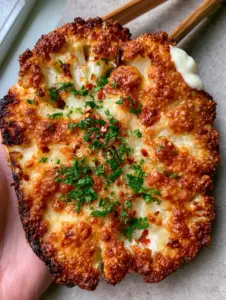
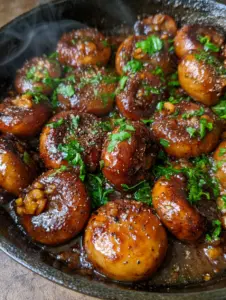
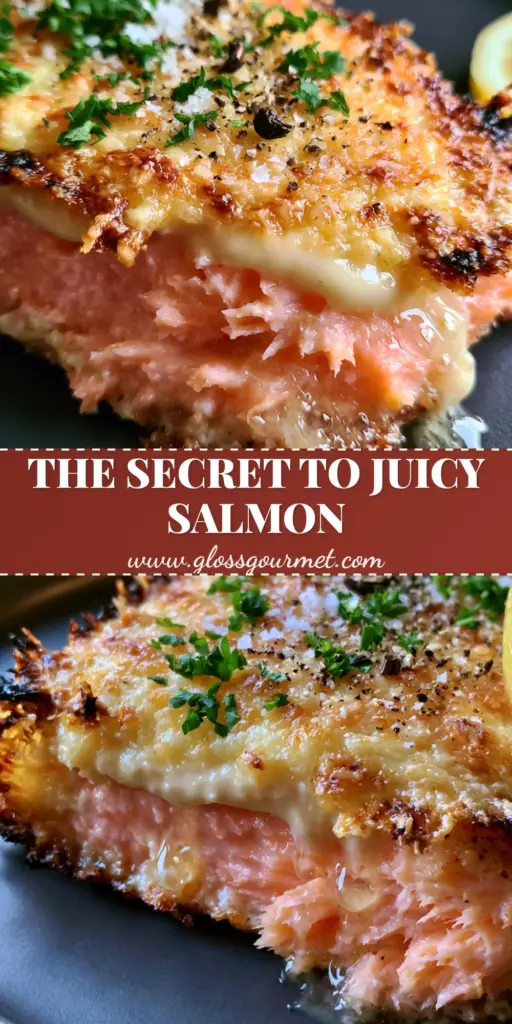
When you pull this baked salmon with mayo and cheese out of the oven, the first thing you’ll notice is the audible sizzle of natural juices seeping from the tender, vibrant pink flakes. The visual contrast is stunning: a thick, opaque white mayonnaise sealant acts as a thermal barrier, topped by a bubbly, golden-brown Garlic Parmesan crust with those coveted charred, crispy cheese edges. It is a restaurant-quality centerpiece that relies on simple pantry staples to achieve a professional-grade finish.
The secret to this recipe lies in the “sealant” technique. By coating a thick center-cut fillet with a savory mayo-based mixture, you effectively trap moisture inside the protein fibers. This prevents the white albumin from leaching out, resulting in a fillet that isn’t just cooked, but truly succulent. Whether you are a fan of tangy mustard-based fish or prefer the sweetness of honey-glazed seafood, this savory cheese-crusted version offers a rich, decadent profile that stands in a league of its own.
Imagine a macro-shot of your dinner: the emerald-green parsley scattered over the molten parmesan, the glisten of coarse sea salt reflecting the morning light, and a bright yellow lemon half-moon resting on a matte charcoal plate. This isn’t just a meal; it’s a sensory experience designed for the enthusiastic home cook who appreciates the intersection of culinary science and aesthetic plating.
Why You Will Crave This Garlic-Parmesan Crusted Fillet
- Moisture-Lock Technology: The mayonnaise layer creates an airtight seal that prevents the salmon from drying out under high heat, ensuring flaky, pink results every single time.
- Textural Contrast: You get a soft, buttery interior contrasted against a bubbly, golden-brown crust with charred, crispy cheese edges that provide a satisfying “crunch.”
- Aromatic Profile: Toasted minced garlic and cracked black peppercorns infuse the fat-rich topping, releasing an irresistible scent as it broils.
- Visual Elegance: With vibrant greens from the parsley and bright yellow lemon accents, this dish looks as good as it tastes, perfect for your next dinner party or a high-end weeknight treat.
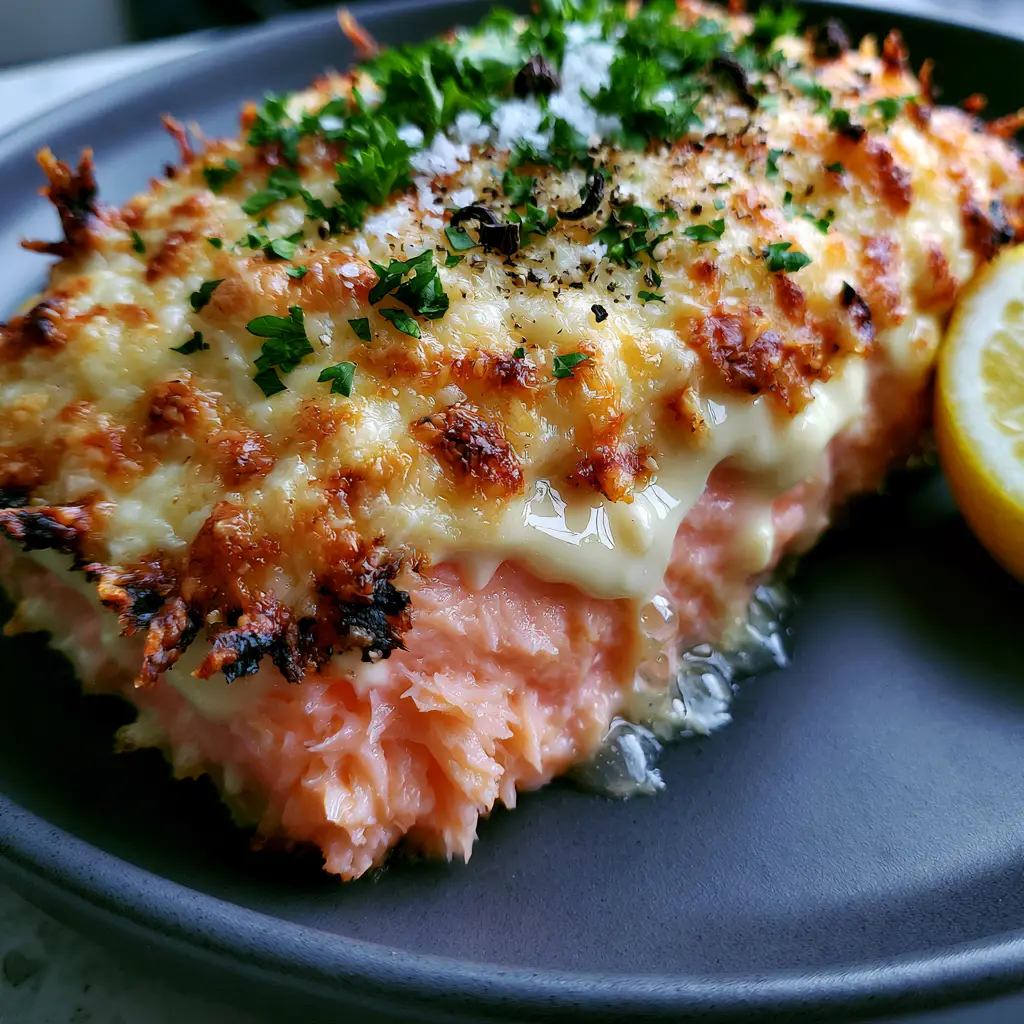
The Science Behind the Mayo-Based Sealant
Many home cooks are surprised to see mayonnaise in a high-heat recipe, but it is a culinary “cheat code” for fish. Since mayonnaise is an emulsion of oil and egg yolks, it serves two purposes: it provides a fat barrier that prevents evaporation and acts as the perfect “glue” for the parmesan cheese.
While some prefer a traditional breadcrumb crust, using a mayo-cheese base creates a more cohesive, creamy topping that integrates with the fish rather than sitting on top of it. This method is particularly effective for thicker center-cut fillets, which require more time in the oven and are prone to drying out at the edges.
Essential Ingredients for the Perfect Glistening Finish
Center-Cut Salmon Fillet: Use a 1.5-pound (680g) thick fillet. The center cut ensures even thickness, which is crucial for achieving that “just-opaque” pink center without overcooking the tail section.
Full-Fat Mayonnaise: You’ll need 1/2 cup (120ml) of high-quality mayo. Avoid “light” versions as the higher water content will steam the fish rather than create that thick, opaque white sealant layer.
Freshly Grated Parmesan: Use 1/2 cup (50g) of Parmigiano-Reggiano. Pre-shredded cheese often contains cellulose (anti-caking agents) which prevents it from melting into those beautiful bubbly, golden-brown charred edges.
Toasted Minced Garlic: 3 cloves (15g) of garlic, finely minced. The garlic toasts inside the mayo-cheese mixture, losing its raw bite and turning into sweet, nutty nuggets of flavor.
Fresh Emerald-Green Parsley: 2 tablespoons (8g) of finely chopped parsley. This provides the essential “pop” of color and a fresh, herbaceous counter-note to the rich fats.
Coarse Sea Salt and Cracked Black Peppercorns: Use high-quality sea salt and freshly cracked peppercorns. The larger grains of salt and the coarse pepper shards provide a visual “glisten” and a punch of heat that cuts through the creaminess.
Lemon Half-Moon Slices: One bright yellow lemon, sliced. The acidity is non-negotiable; a squeeze of fresh juice brightens the natural juices and the heavy cheese crust.
Tools Required for Culinary Success
To achieve the visual results seen in our “Visual Recipe Blueprint,” you will need a rimmed baking sheet. A rimmed sheet catches the glistening natural juices and prevents them from spilling onto your oven floor.
We also recommend using parchment paper or a silicone mat. This prevents the delicate salmon skin from sticking, allowing you to lift the fillet cleanly onto a matte charcoal ceramic plate for that professional presentation.
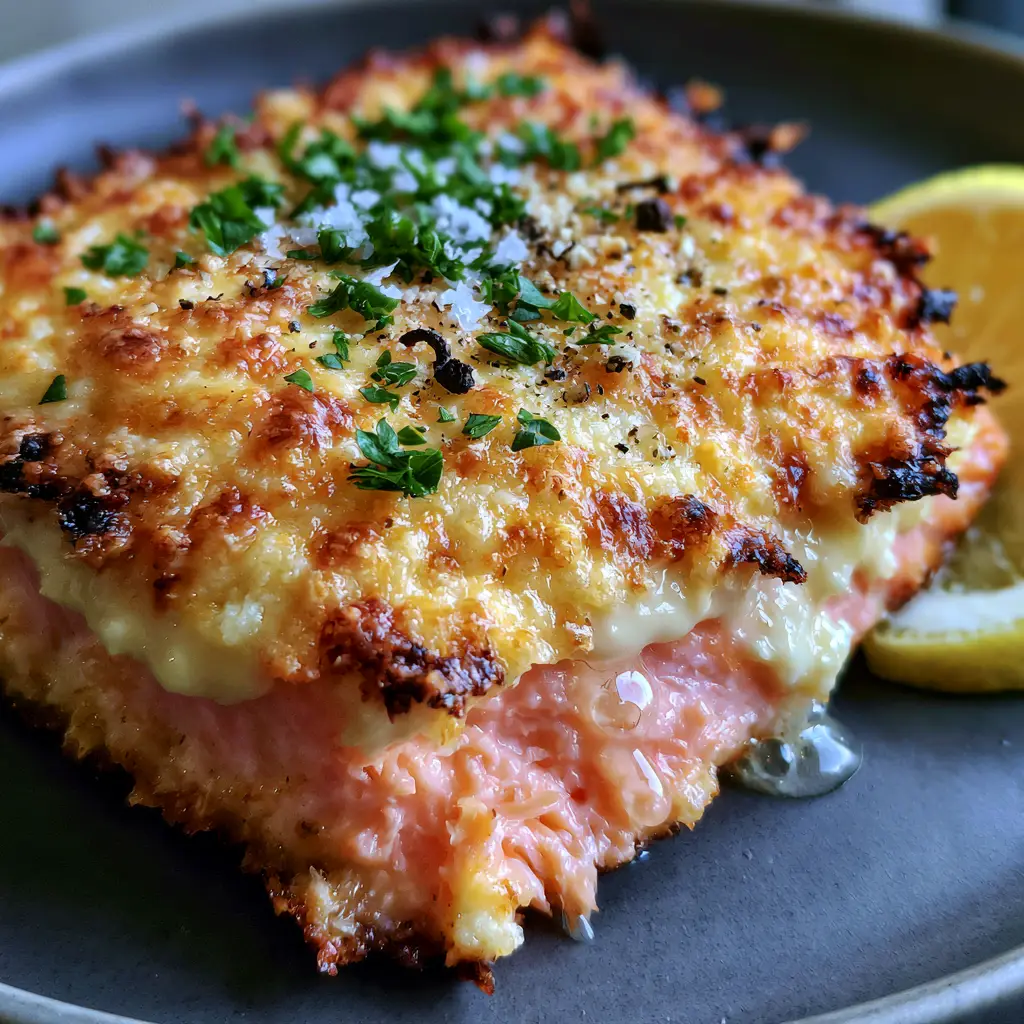
Step-by-Step Instructions: Mastering the Bake and Broil
Preparing the Salmon Base
Preheat your oven to 400°F (200°C). Pat the salmon fillet extremely dry with paper towels; any surface moisture will interfere with the mayo sealant’s ability to “stick” to the protein fibers.
Place the salmon on your prepared baking sheet. Season the raw flesh lightly with a pinch of sea salt, keeping in mind that the parmesan cheese will add significant salinity later in the process.
Mixing the Creamy Garlic-Parmesan Topping
In a small bowl, whisk together the mayonnaise, minced garlic, and 1/4 cup (25g) of the parmesan cheese. Save the remaining cheese for the final sprinkle to ensure a varied texture on the crust.
The consistency should be thick and spreadable. If it feels too thin, add another tablespoon of cheese to bolster the structure of the “sealant” layer.
Applying the Thick Opaque White Sealant
Using a spatula or the back of a spoon, spread the mayo mixture evenly over the top of the salmon. Ensure you cover the sides of the fillet as well; this prevents the edges from becoming tough and “rubbery” during the bake.
Sprinkle the remaining parmesan cheese and the cracked black peppercorns over the top. The peppercorns should be visible against the white background, creating a rustic, gourmet look.
The Baking and Visual Cues
Bake for 12-15 minutes, depending on the thickness of your fillet. At the 12-minute mark, look for “visual cues”: the salmon should be firm but still give slightly when pressed, and the mayo layer should look set.
Switch your oven to the “Broil” setting for the final 2-3 minutes. Watch closely! You are looking for the cheese to transform into a bubbly, golden-brown crust with charred, crispy edges. This is where the magic happens.
Garnishing for Maximum Appeal
Remove the salmon from the oven. You should see moisture and clear juices seeping from the sides of the flakes. Immediately scatter the chopped emerald-green parsley over the hot cheese so the residual heat releases the herb’s oils.
Finish with a final flourish of coarse sea salt and serve with the lemon half-moon slices on the side. The heat of the fish will slightly warm the lemon, making it easier to squeeze.
Expert Tips for the Most Flaky Salmon
- Room Temperature Start: Take your salmon out of the fridge 15 minutes before cooking. This ensures the center-cut fillet cooks evenly without the exterior becoming overdone.
- Don’t Over-Broil: The transition from golden-brown to burnt happens in seconds. Stay by the oven window during the final broiling phase.
- Check for Doneness: Use a fork to gently pull back a flake in the thickest part. If it is a vibrant pink and flakes easily, it is perfect.
- The Resting Period: Let the salmon rest for 3-5 minutes before slicing. This allows the glistening natural juices to redistribute, ensuring every bite is moist.
Storage, Reheating, and Make-Ahead Advice
While baked salmon with mayo and cheese is best served fresh, leftovers can be stored in an airtight container in the refrigerator for up to 2 days. The mayo-cheese crust will lose its crispness but will maintain the moisture of the fish.
To reheat, avoid the microwave as it will turn the salmon rubbery. Instead, place the fillet in a 275°F (135°C) oven covered with foil for 10 minutes, then remove the foil for the last 2 minutes to revive the crust.
We do not recommend freezing this dish once cooked. The emulsion of the mayonnaise can break during the thawing process, leading to a greasy texture that lacks the visual appeal of the original dish.
Perfect Pairings: What to Serve With Cheesy Salmon
Because this dish is rich and savory, it pairs beautifully with high-contrast sides. A refreshing vermicelli noodle salad offers a bright, acidic crunch that balances the fat of the mayo.
If you prefer a more classic “steakhouse” feel, serve the salmon alongside crispy potato bites or a light pasta primavera. The vegetables in the pasta provide a vibrant color palette that complements the emerald parsley and yellow lemon on your plate.
For those looking for a lower-carb option, these lettuce wraps can be adapted by using the salmon flakes as the protein base for a Fusion-style lunch the next day.
Frequently Asked Questions
We recommend using full-fat mayonnaise. Light versions have a higher water content, which can cause the crust to become runny rather than forming that thick, opaque white sealant that browns beautifully.
It is best to leave the skin on during baking. It acts as an extra layer of insulation against the heat of the pan and helps the fillet hold its shape. You can easily slide a spatula between the skin and the meat when serving.
The salmon is done when it reaches an internal temperature of 125°F-130°F (52°C-54°C) for medium. Visually, it should be vibrant pink and the flakes should separate easily when gently pressed with a fork.
Freshly grated Parmesan (Parmigiano-Reggiano) is the gold standard. It has a low moisture content and a high protein-to-fat ratio, which allows it to brown and crisp into charred edges perfectly.
That white liquid is albumin, a protein that leaches out when salmon is overcooked or cooked too quickly. The mayo and cheese crust in this recipe acts as a barrier to help prevent this and keep the juices inside the fish.
The Complete Recipe: Baked Salmon with Mayo and Cheese
Baked Salmon with Mayo and Cheese: The Ultimate Creamy Garlic Crust
Ingredients
Equipment
Method
- Preheat oven to 400°F (200°C). Line a baking sheet with parchment paper. Pat the salmon fillet dry with paper towels to ensure the topping adheres.
- In a small bowl, combine mayonnaise, minced garlic, and half of the parmesan cheese. Stir until a thick paste forms.
- Spread the mayo mixture over the top and sides of the salmon. Sprinkle the remaining parmesan and cracked peppercorns over the top.
- Bake for 12-15 minutes until the salmon is nearly opaque. Turn the broiler to high and broil for 2-3 minutes until the crust is bubbly and golden-brown with charred edges.
- Remove from oven. Garnish with fresh parsley and coarse sea salt. Serve with lemon slices on the side.
Notes
Do not use light mayo; the fat is necessary for the golden-brown crust.
Closing & Call to Action
This baked salmon with mayo and cheese is a testament to how a few simple ingredients can create a world-class culinary result. The combination of the bubbly Garlic Parmesan crust and the succulent, flaky pink interior makes it a repeat favorite for anyone who tries it. It perfectly captures the essence of modern home cooking: efficient, beautiful, and incredibly delicious.
If you made this recipe, please leave a comment below and tell us how your crust turned out! Don’t forget to follow us and save this recipe to your favorite boards on Pinterest so you can find it whenever the craving for cheesy, garlicky salmon hits.