There is a specific, audible “crack” that occurs when you bite into a perfectly executed spanakopita recipe. It is the sound of dozens of paper-thin layers of phyllo pastry surrendering to the pressure, revealing a steaming, savory heart of emerald spinach and briny feta cheese. This isn’t just a side dish; it is a masterclass in textural contrast.
In this guide, we are evolving the traditional large tray bake into sophisticated, individual spanakopita muffins. Imagine translucent, golden-brown edges that look like scorched parchment paper, cradling a center overflowing with a moist, creamy filling. This approach ensures every single bite has that coveted “shatteringly crisp” exterior and a rich, herb-forward interior.
Whether you are preparing a spread of healthy hot lunch recipes or looking for a show-stopping appetizer, this technique guarantees professional results. We will focus on the culinary science of moisture management and the art of the golden egg wash to achieve that handheld smartphone-photo-worthy glow.
Why This Individual Spanakopita Recipe Reigns Supreme
- The Maximum Crunch Factor: By using a muffin tin, we increase the surface area of the phyllo dough, creating more golden-brown, toasted edges than a traditional square cut.
- The Ricotta Secret: While traditional recipes use egg alone, our “creamy ricotta binder” ensures the filling stays moist and lush, preventing the spinach from becoming a dry, fibrous mass.
- Textural Integrity: We utilize “large crumbles of Greek feta cheese” rather than crumbled bits, providing distinct pockets of melted, salty goodness in every bite.
- Aesthetic Finishing: Toasted white sesame seeds and fresh dill sprigs offer a nutty crunch and an aromatic lift that elevates the visual appeal from rustic to gourmet.
The Secret Essentials for Your Greek Spinach Filling
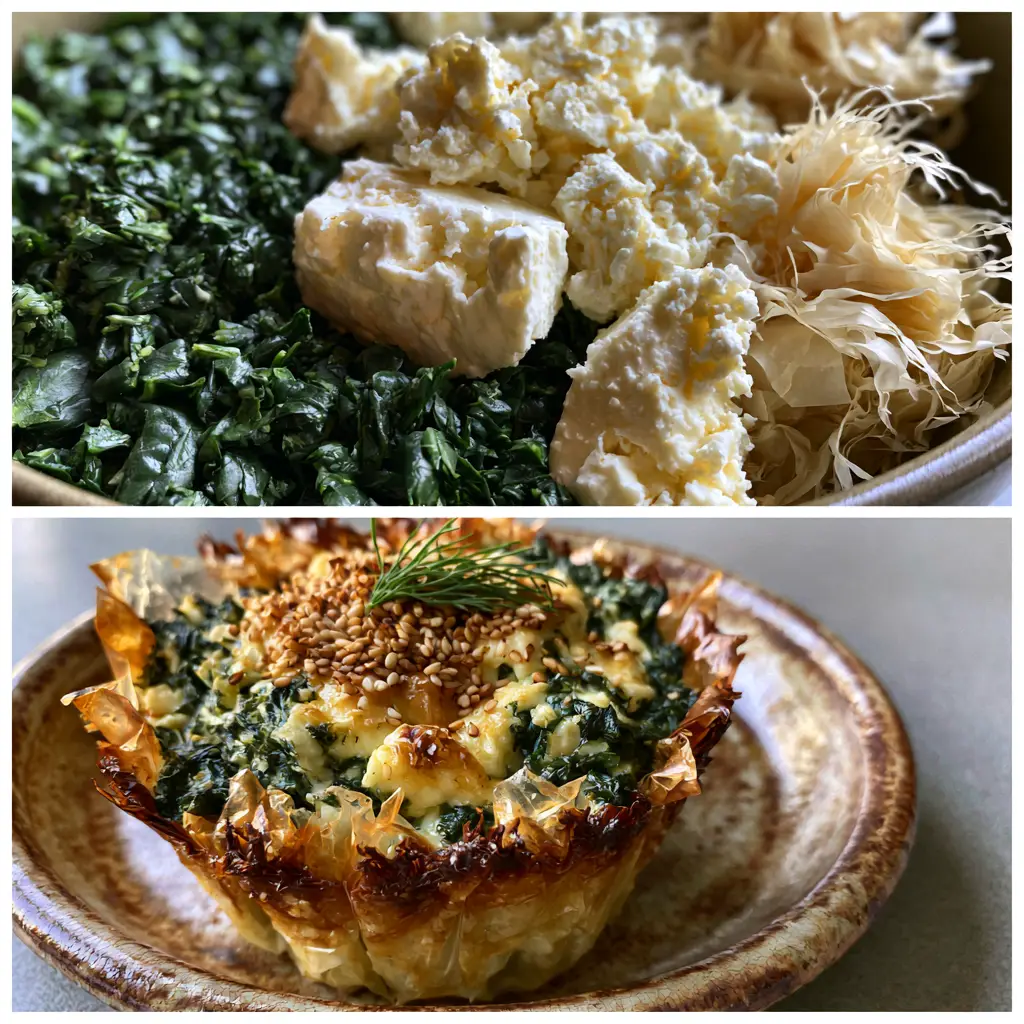
To achieve the result seen in our culinary blueprint, each ingredient must serve a specific structural and flavor purpose. We do not just toss things in a bowl; we build layers of flavor.
Baby Spinach: 1 lb (450g) of sautéed baby spinach. Sautéing before filling is non-negotiable as it allows us to express all excess water, preventing the dreaded “soggy bottom” phyllo syndrome.
Phyllo Dough: 1 package (450g), thawed overnight. These “whisps of phyllo dough” must be handled with care to maintain their integrity, as they provide the translucent, paper-thin structural walls of our pies.
Greek Feta Cheese: 1.5 cups (200g) of high-quality sheep’s milk feta. Large crumbles are essential so the cheese maintains its identity against the dark green spinach during the bake.
Whole Milk Ricotta: 1/2 cup (125g) to act as our creamy binder. This “invisible” ingredient provides the luxurious mouthfeel that balances the sharp saltiness of the feta.
Fresh Dill & Green Onions: 1/2 cup (25g) each, finely chopped. These herbs provide the “fresh dill sprigs” aroma that defines an authentic spanakopita recipe and cuts through the richness of the pastry.
Unsalted Butter & Olive Oil: 1/2 cup (115g) butter melted with 2 tbsp (30ml) oil. This fat blend is what creates the “shatteringly crisp” texture through a process similar to frying the dough layers as they bake.
Toasted White Sesame Seeds: 2 tbsp (18g) for garnish. These add a micro-crunch and a visual “finished” look that matches our macro-shot aesthetic.
Large Egg + 1 tsp Water: This is your golden egg wash. It’s the secret to achieving that deep golden toasted hue seen on the edges of the pastry.
Essential Tools for Pastry Perfection
Achieving the translucent, golden edges described in our Midjourney prompt requires more than just good ingredients; you need the right conduit for heat. A standard 12-cup muffin tin is the hero here, acting as a mold for our individual phyllo nests. You will also need a high-quality pastry brush (silicone or natural bristle) to ensure every square inch of the phyllo is hydrated with fat, which is the only way to achieve that “deep golden toasted hue.” A heavy-bottomed skillet is required for sautéing the spinach, and a clean kitchen towel is mandatory for squeezing out every last drop of moisture from the greens.
The Culinary Blueprint: Step-by-Step Instructions
Phase 1: Preparing the Emerald Filling
Start by sautéing your baby spinach in a large skillet over medium heat with a splash of olive oil. Listen for the “hiss” of moisture evaporating. Once wilted, transfer the spinach to a colander and let it cool. This is the most critical step of the spanakopita recipe: once cool, use a clean kitchen towel to squeeze the spinach until it is bone-dry. If you skip this, the steam will ruin your crisp phyllo.
In a large mixing bowl, combine the dry spinach, large crumbles of feta, ricotta, chopped dill, and green onions. Fold gently. You want to see “large crumbles of white feta” interspersed with the “dark green spinach” in the raw mix. Season with a pinch of nutmeg and black pepper, but go light on the salt, as the feta is naturally briny.
Phase 2: Mastering the Phyllo Nest
Lay out your thawed phyllo sheets on a clean surface. Keep them covered with a damp towel to prevent them from becoming brittle. Take one sheet, brush it lightly with your butter-oil mixture, and stack another sheet on top. Repeat until you have a stack of 4 layers. Cut these into large squares (approx 5×5 inches).
Gently press each square stack into a greased muffin tin cup. The edges should overhang the rim, creating those “whisps of phyllo dough” that will eventually become “shatteringly crisp.” Don’t worry about being too neat; the rustic, ruffled look is exactly what we are aiming for in our vertical split-view aesthetic.
Phase 3: The Assembly and Golden Glow
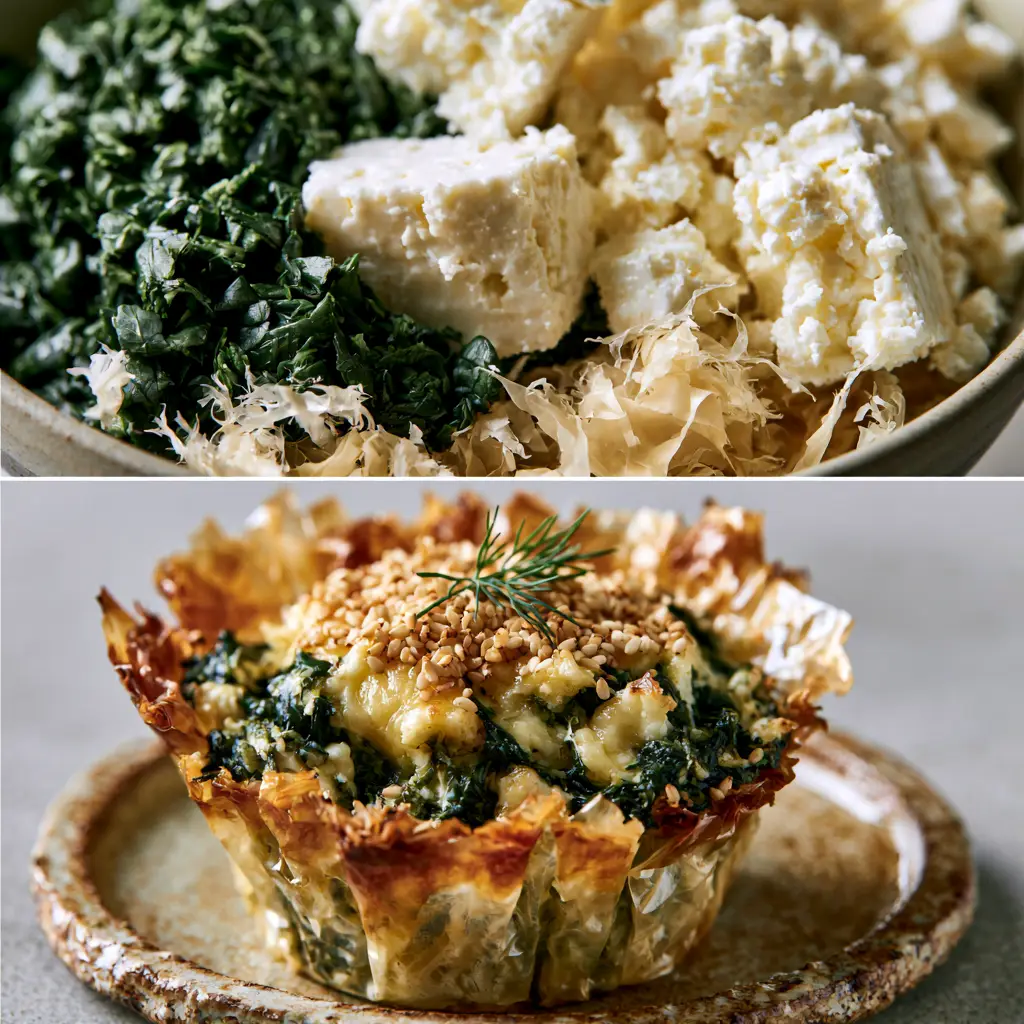
Spoon a generous amount of the spinach-feta mixture into the center of each phyllo nest. The filling should be “overflowing,” just as described in our macro shot. Whisk your egg with a teaspoon of water and carefully brush the exposed phyllo edges. This egg wash is what transforms the pale dough into a “deep golden toasted hue” in the oven.
Sprinkle a dusting of toasted white sesame seeds over the top of each muffin. This adds a layer of sophistication and a nutty aroma that develops beautifully during the bake.
Phase 4: The Precision Bake
Slide the tin into a preheated oven at 375°F (190°C). Bake for 20-25 minutes. You are looking for specific sensory cues: the aroma of toasted butter and dill should fill the kitchen, and the phyllo edges should appear “translucent and paper-thin” with a visible mahogany-gold color. The center filling should be set but still appear moist and “melted.”
Expert Tips for Success
- The Dryness Test: If you think you’ve squeezed the spinach enough, squeeze it one more time. Residual moisture is the enemy of the spanakopita recipe.
- Phyllo Temperature: Never work with frozen phyllo. It must be fully thawed in the fridge for 24 hours to prevent the sheets from shattering before they even hit the pan.
- Feta Quality: Use block feta stored in brine, not pre-crumbled varieties. Pre-crumbled feta is often coated in anti-caking agents that prevent it from achieving that “melted feta filling” texture.
- Internal Balance: If you find the filling too sharp, you can serve these alongside a fresh spinach salad with a lemon-tahini dressing to provide a bright acid balance.
The Best Ways to Store and Reheat
Spanakopita is at its peak immediately after baking when the “shatteringly crisp” texture is most prominent. However, you can store leftovers in an airtight container in the refrigerator for up to 3 days. To reheat, avoid the microwave at all costs—it will turn the pastry into a soggy mess. Instead, use a toaster oven or a standard oven at 350°F (175°C) for 5-8 minutes until the edges regain their crispness.
You can also freeze the unbaked muffins. Assemble them in the tin, freeze until solid, then transfer to a freezer bag. Bake directly from frozen, adding about 10 minutes to the total cook time. This makes them a perfect addition to a spread of comforting broccoli mac and cheese for a diverse family dinner.
What to Serve With This Individual Spanakopita
These individual pies are incredibly versatile. For a Mediterranean-themed dinner, pair them with a buttery Chilean sea bass or a savory chicken vesuvio. The herbal notes of the dill and spinach complement roasted meats and delicate fish perfectly. If you are leaning into a vegetarian feast, they stand tall next to roasted cauliflower or a hearty bowl of grain salad.
Frequently Asked Questions
Yes, you can use frozen spinach, but it must be completely thawed and squeezed even more thoroughly than fresh spinach, as it tends to hold more water.
The secret is the egg wash combined with a blend of butter and olive oil. The proteins in the egg brown beautifully, while the oil helps ‘fry’ the outer layers of the phyllo.
Keep the phyllo dough covered with a slightly damp (not wet) towel at all times while working. This prevents it from drying out and becoming brittle.
Sogginess is usually caused by excess moisture in the spinach. Ensure you sauté the spinach first and then squeeze it very firmly in a clean kitchen towel until no more liquid emerges.
Ricotta acts as a creamy binder that prevents the filling from drying out in the oven, providing a rich contrast to the sharp feta and crisp pastry.
The Ultimate Spanakopita Recipe: Shatteringly Crisp Individual Pies
[Image-Pin]
Spanakopita Recipe: Shatteringly Crisp Individual Greek Spinach Pies
Ingredients
Equipment
Method
- Sauté baby spinach in a skillet until wilted; drain and squeeze in a kitchen towel until bone-dry.
- Combine dry spinach with large feta crumbles, ricotta, dill, and onions in a bowl until incorporated.
- Brush phyllo sheets with butter-oil mix, stacking 4 layers deep before cutting into 5x5 inch squares.
- Press squares into muffin tin, allowing edges to overhang for a rustic, crisp look.
- Spoon filling into nests, brush with egg wash, and sprinkle with toasted sesame seeds.
- Bake at 375°F (190°C) for 20-25 minutes until the edges are a deep golden toasted hue.
Notes
Tip 2: Use block feta in brine for the best melting texture in your spanakopita recipe.
[Image-Pin-2]
Unlock Your Inner Greek Chef
Mastering this spanakopita recipe is a gateway to understanding the delicate balance of pastry and moisture. The contrast between the “shatteringly crisp” exterior and the “creamy ricotta binder” inside is a culinary experience everyone should have in their repertoire. Whether you’re making these for a weeknight meal or a festive gathering, they are guaranteed to disappear in minutes.
If you enjoyed the crunch and flavor of these individual pies, please leave a comment below and share your results! Don’t forget to follow us on Pinterest for more visually stunning recipes. Your feedback helps us continue to develop the best-tasting content for home cooks everywhere!
[Image-Pin-3]