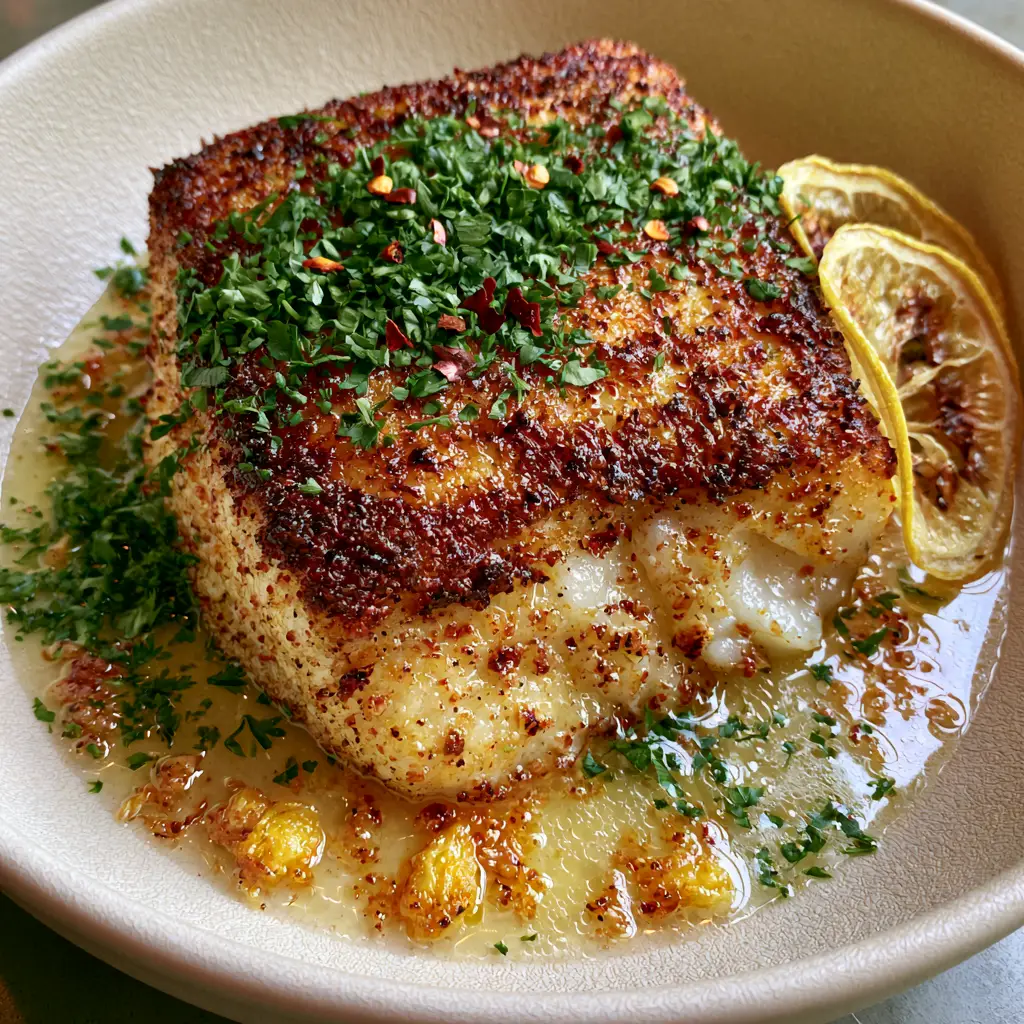
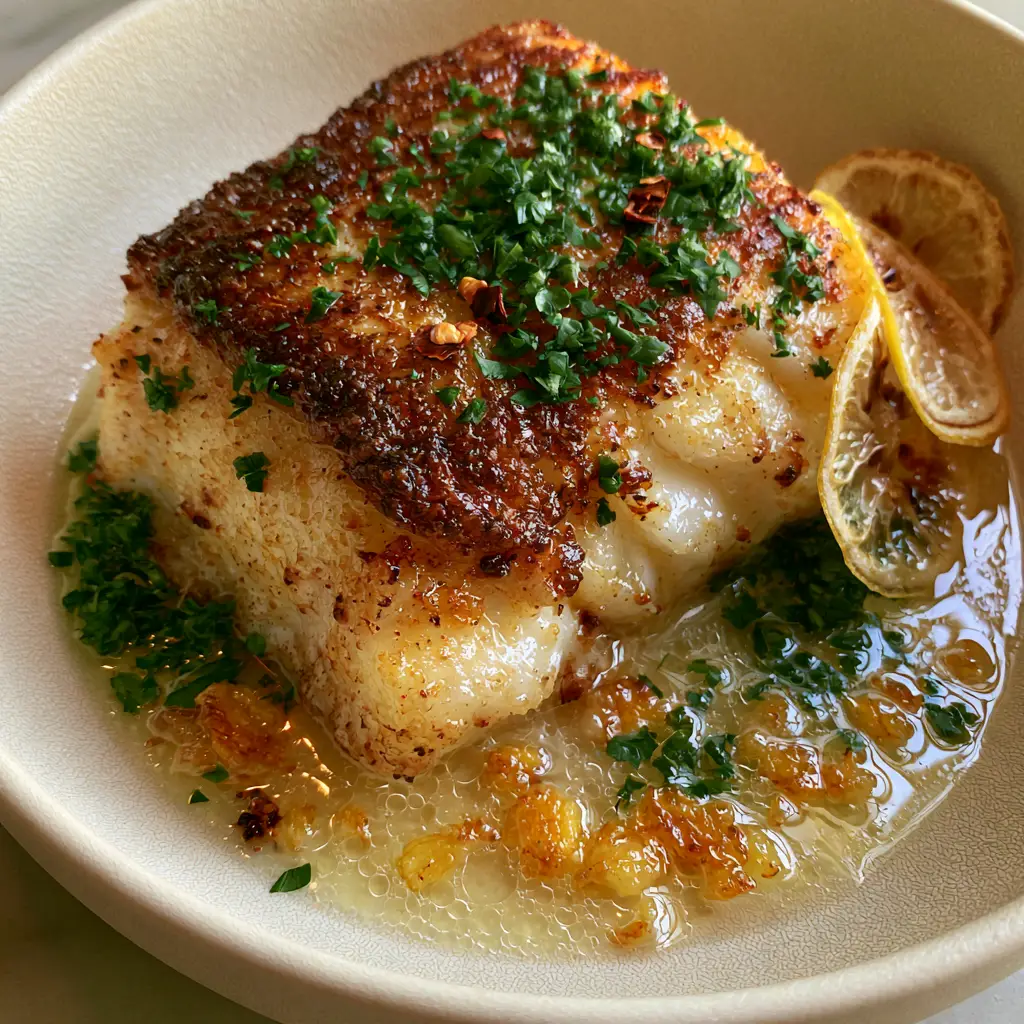
Mastering the ultimate Chilean sea bass recipe is the culinary equivalent of capturing lightning in a pan. This dish represents the pinnacle of seafood luxury, where a thick, buttery fillet meets a high-heat sear to create a breathtaking contrast of textures. Imagine a deep, golden-brown crust that shatters under the fork, revealing moist, pearlescent white flakes that melt like butter on the palate.
The secret to this restaurant-quality result lies in the balance of temperature and acidity. We pair the rich, fatty profile of the fish with a translucent, glossy lemon-garlic butter sauce, punctuated by micro-bits of sautéed golden garlic. To elevate the visual appeal, we finish the plate with paper-thin charred lemon wheels and a vibrant dusting of fresh parsley and red chili flakes.
Whether you are hosting a sophisticated dinner party or looking for a transformative weeknight meal, this preparation ensures success. Much like our perfectly grilled halibut, the key here is respecting the delicate nature of the protein while applying bold, technical heat for maximum flavor development.
Why This Seared Sea Bass Method Is Unbeatable
- The Perfect Maillard Reaction: We use specific drying techniques to ensure a deep golden-brown, crispy seared crust that provides a structural “crunch” against the tender interior.
- High-Fat Content Mastery: Chilean sea bass (Patagonian toothfish) is famous for its high oil content, making it nearly impossible to overcook if you follow our internal temperature cues.
- Symphonic Flavor Profile: The combination of nutty browned butter, sharp citrus, and a hint of heat from dried red chili flakes creates a complex sauce that complements the fish without masking it.
- Visual Precision: This recipe is designed to look exactly like a high-end smartphone photo, featuring charred lemon wheels and glistening micro-garlic for a modern, matte-textured ceramic presentation.
The Anatomy of a Perfect Chilean Sea Bass Recipe
Achieving a five-star result requires understanding your ingredients before they ever hit the pan. For the best Chilean sea bass recipe, you must seek out thick-cut fillets, ideally 1.5 to 2 inches (3.8 to 5 cm) thick, which allow for a heavy sear without overcooking the center.
Chilean Sea Bass Fillets: You will need 2 large fillets, approximately 6-8 oz (170-225g) each. Look for fish that is bright white with a firm, springy texture and no “fishy” odor.
High-Smoke Point Oil: Use 2 tbsp (30ml) of avocado or grapeseed oil. These oils can withstand the high heat necessary to achieve that signature golden-brown crust without burning.
Unsalted European-Style Butter: 3 tbsp (45g) of high-fat butter creates the base for our translucent, glossy sauce. Using unsalted butter allows you to control the seasoning precisely.
Fresh Garlic: 3 cloves, minced into micro-bits. This ensures the garlic turns golden and sweet rather than bitter and burnt in the pan sauce.
Lemon Components: You will need 1 whole lemon. Half will be sliced into three paper-thin wheels for charring, and the other half will be juiced for the butter emulsion.
The Finishing Garnishes: 2 tbsp (8g) of finely minced fresh parsley, 1/2 tsp (1g) of dried red chili flakes, and a generous crack of black pepper. These add the essential color and “pop” seen in professional food photography.
Essential Tools for a Professional Seafood Sear
To replicate the results of a professional kitchen, your equipment must be up to the task. A heavy-bottomed stainless steel or cast-iron skillet is non-negotiable for the Chilean sea bass recipe to ensure even heat distribution and a superior crust.
A flexible fish spatula is also vital for getting under the fillet without breaking those delicate, pearlescent flakes. Finally, an instant-read meat thermometer will be your best friend, ensuring you hit the perfect internal temperature of 145°F (63°C) every single time.
Step-by-Step: Crafting the Golden Crust and Glossy Sauce
Phase 1: Preparing the Fish for the Pan
Begin by removing your sea bass fillets from the refrigerator 15 minutes before cooking. Use a paper towel to pat the fish extremely dry on all sides; any moisture on the surface will create steam and prevent that golden-brown crust from forming.
Season the fillets generously with kosher salt and cracked black pepper. While this is a seafood dish, don’t be afraid to season like you would a steak; the high fat content can handle the salt, which helps form the crust.
Phase 2: The High-Heat Sear
Heat 2 tbsp (30ml) of oil in your skillet over medium-high heat until the oil is shimmering and just beginning to wisps of smoke. Carefully lay the fillets into the pan, laying them away from you to avoid oil splashes.
Press down lightly with your spatula for the first 30 seconds to ensure even contact. Sear undisturbed for 4-5 minutes. You are looking for a visual cue: the bottom third of the fish should turn opaque, and the edges against the pan should look deep golden-brown.
Phase 3: Basting and Finishing
Flip the fillets gently. Immediately reduce the heat to medium and add the 3 tbsp (45g) of butter, micro-bits of garlic, and the three paper-thin lemon wheels to the empty spaces in the pan.
As the butter melts and foams, use a large spoon to continuously pour the hot garlic butter over the fish. This process, called “arroser,” cooks the top of the fish while infusing it with aromatics. Remove the fish once the internal temperature hits 140°F (60°C); it will rise to 145°F (63°C) while resting.
Phase 4: Charring the Lemons and Emulsifying the Sauce
While the fish rests on a warm plate, leave the lemon wheels in the pan for an extra 60 seconds until they are slightly blackened and caramelized. Squeeze the remaining lemon juice into the pan and whisk vigorously to create a translucent, glossy sauce.
Expert Tips for a Flawless Chilean Sea Bass
- The “Dry-Brine” Hack: If time permits, salt your fish and leave it uncovered in the fridge for 30 minutes. This draws out surface moisture for an even crispier result.
- Don’t Overcrowd the Pan: Cooking more than two thick fillets at once will drop the pan temperature, leading to grey, steamed fish rather than seared fish.
- Sourcing Sustainability: Always look for MSC-certified Chilean sea bass to ensure you are supporting sustainable fishing practices for this slow-growing species.
- Temperature is King: Unlike salmon, which some prefer medium-rare, sea bass is best enjoyed when the collagen has fully broken down at 145°F (63°C), resulting in those iconic pearlescent flakes.
What to Serve with Your Seared Sea Bass
Because this Chilean sea bass recipe is so rich, you want side dishes that offer high acidity or a crisp texture. A light fresh spinach salad with a lemon vinaigrette is a classic pairing that cuts through the butter sauce perfectly.
For a more heart-warming meal, serve the fish over a bed of garlicky greens or alongside herb-roasted potatoes which can soak up the extra lemon garlic butter. If you’re looking for a starch that complements the elegance of the fish, consider a simple saffron risotto or even a light pasta like garlic-infused noodles for a fusion twist.
Frequently Asked Questions
Yes, but ensure it is completely thawed in the refrigerator overnight. The most important step for frozen fish is patting it extremely dry with paper towels to ensure the moisture doesn’t prevent a good sear.
Use a heavy-bottomed pan and high-smoke point oil. Most importantly, do not try to flip the fish too early. When the crust has properly formed, the fish will naturally release from the pan.
Black cod (sablefish) is the best substitute as it shares a similar high fat content and buttery texture. Halibut is another option, though it is much leaner and requires more careful monitoring.
The USDA recommends 145°F (63°C). Because of its high fat content, sea bass stays moist at this temperature, allowing the large, pearlescent flakes to separate perfectly.
Chilean sea bass is actually Patagonian toothfish. It is expensive due to its remote Antarctic habitat, strict fishing quotas to ensure sustainability, and its unique, high-fat ‘buttery’ texture that is highly prized in fine dining.
The Ultimate Chilean Sea Bass Recipe Card
Chilean Sea Bass Recipe with Lemon Garlic Butter and Charred Lemons
Ingredients
Equipment
Method
- Pat the sea bass fillets extremely dry with paper towels to ensure a golden-brown crust.
- Generously season all sides of the fillets with kosher salt and cracked black pepper.
- Heat oil in a skillet over medium-high heat until shimmering. Place fillets in the pan and sear undisturbed for 4-5 minutes until a deep golden-brown crust forms.
- Flip the fish, reduce heat to medium, and add butter, micro-bits of garlic, and lemon wheels. Spoon the foaming butter over the fish for 3-4 minutes.
- Remove fish at 140°F (60°C). Allow lemon wheels to char for 1 more minute, then add lemon juice to the pan to create the glossy sauce.
Notes
Ensure the pan is fully preheated before adding the fish to achieve the pearlescent flake texture.

Closing the Kitchen: Your Path to Seafood Mastery
This Chilean sea bass recipe is more than just a meal; it is a masterclass in pan-searing technique and flavor balancing. By focusing on the golden-brown crust and the pearlescent white flakes, you bring the sophistication of a high-end steakhouse into your own home kitchen.
We invite you to share your results and tag us in your beautiful plating photos! If you enjoyed this deep dive into gourmet seafood, be sure to sign up for our newsletter for more technical recipe guides. Don’t forget to save this recipe to your “Dinner Goals” board on Pinterest so you can find it the next time you want to impress.