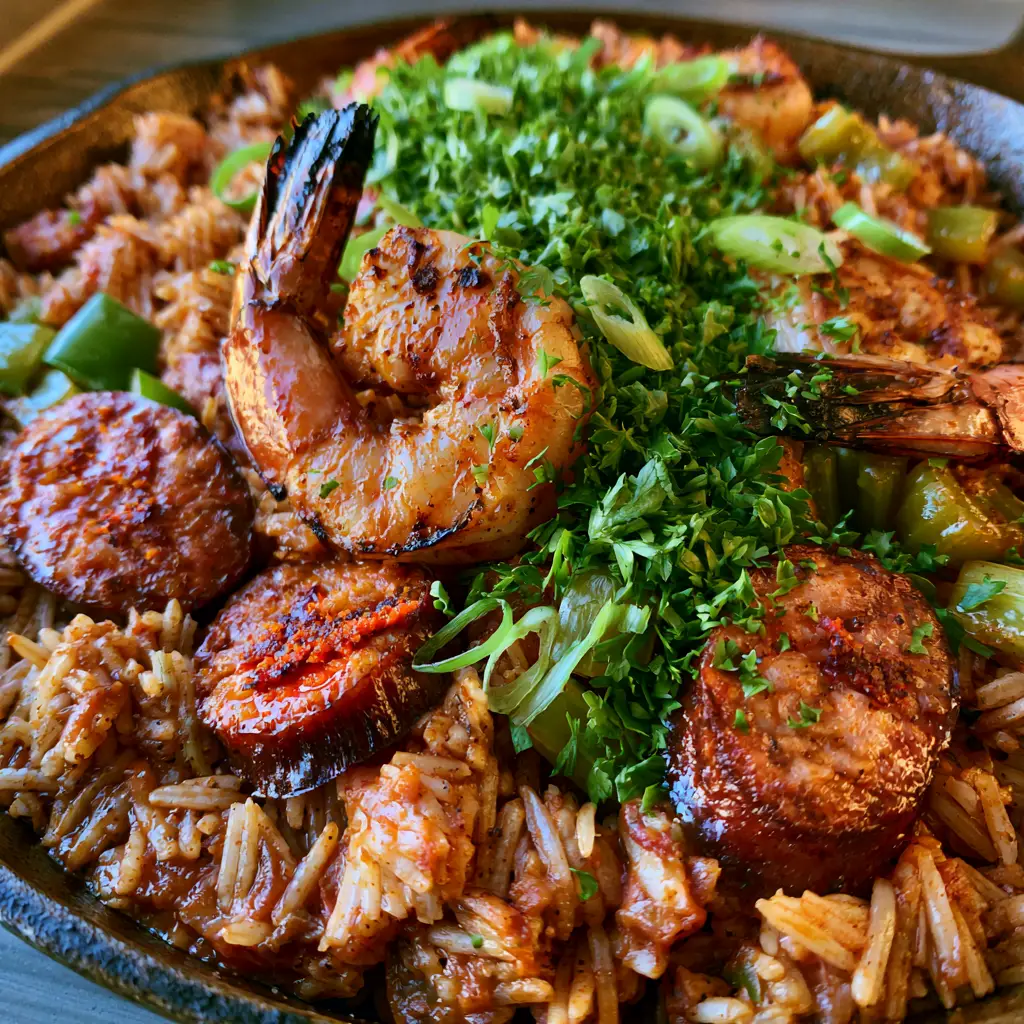
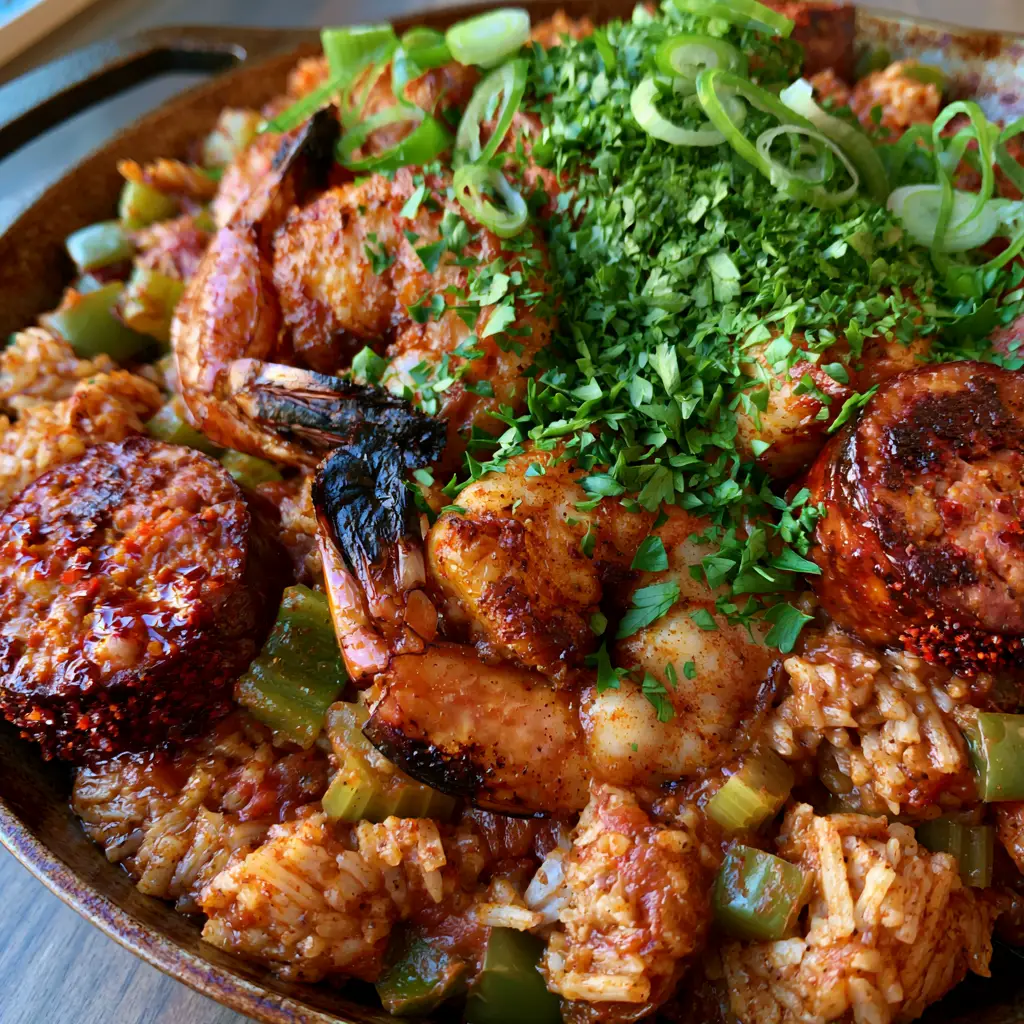
The jambalaya recipe is more than just a meal; it is a sensory journey through the heart of Louisiana. When you look at a perfectly prepared pot, you should see vibrant colors and distinct textures: individual, fluffy grains of long-grain rice, each coated in a rich, reddish-brown sauce, and jumbo shrimp with beautifully charred tails. This isn’t a mushy stew; it’s a masterclass in heat management and layering flavors within the seasoned walls of a rustic cast iron skillet.
Achieving the visual perfection described in our blueprint requires a forensic approach to heat. We aren’t just boiling ingredients; we are searing, sautéing, and steaming to ensure the andouille sausage coins are browned to a crisp and the green bell peppers hold their structural integrity. Whether you are a seasoned pro or a curious home cook, this guide will show you how to master the jambalaya recipe that looks as incredible as it tastes.
Why This One-Pot Masterpiece Works
- Individual Grain Distinction: Unlike gummy versions, this recipe uses a specific rinsing and toasting technique to ensure every grain of rice remains fluffy and separate.
- Maillard-Driven Depth: By searing the andouille sausage and jumbo shrimp first, we develop a deep fond in the skillet that flavors the entire dish.
- Textural Contrast: You get the snap of the charred shrimp, the bite of the browned sausage, and the crunch of fresh scallions against the tender rice.
- Visual Vibrancy: The combination of rich tomato-based sauce and a heavy dusting of fresh flat-leaf parsley creates a restaurant-quality presentation.
The Essential Pantry for Authentic Creole Flavor
Jumbo Shrimp (with tails): 1 lb (450g). Leaving the tails on provides a stunning visual “char” and adds deep crustacean flavor to the cooking oil during the initial sear.
Andouille Sausage: 12 oz (340g). This smoked, spicy pork sausage is cut into thick coins to provide glistening spicy fat and a hearty, browned texture.
Long-Grain White Rice: 2 cups (400g). Essential for the “fluffy” requirement; the long starch molecules prevent clumping when handled with the proper technique.
The Trinity (Bell Pepper & Celery): 1 large green bell pepper (150g) and 2 stalks of celery (100g). These provide the aromatic base and pops of green color that must be sautéed just until softened.
Crushed Tomatoes & Chicken Stock: 1 can (14.5 oz / 411g) tomatoes and 3 cups (710ml) stock. This creates the “rich reddish-brown sauce” that coats the rice without making it soggy.
Foundational Invisibles: 2 tbsp (30ml) vegetable oil, 1 tsp (6g) kosher salt, and 1 tsp (2g) red chili flakes. The oil is critical for the initial high-heat sear, while the chili flakes provide the signature heat visible in the final garnish.
Fresh Aromatics & Garnishes: 1/2 cup (15g) flat-leaf parsley and 3 scallions (25g). These are added at the very end to maintain their bright green hue against the warm tones of the rice.
Required Equipment for the Perfect Sear
To achieve the specific “rustic” look from our visual blueprint, a 12-inch (30cm) Seasoned Cast Iron Skillet is mandatory. The heavy iron retains heat better than stainless steel, allowing for the “charred tails” on the shrimp and the “browned coins” of sausage without overcooking the centers. You will also need a fine-mesh strainer to rinse the rice, which is the secret step to preventing mushiness.
The Step-by-Step Path to Fluffy Rice and Perfectly Seared Proteins
Step 1: The High-Heat Protein Sear
Heat 1 tbsp (15ml) of vegetable oil in your cast iron skillet over medium-high heat until it begins to shimmer. Add the jumbo shrimp in a single layer, seasoned lightly with salt. Sear for 90 seconds per side until the tails are visibly charred and the flesh is opaque; remove and set aside. In the same skillet, add the andouille coins, browning them until the spicy fat renders and the edges are crisp and dark brown.
Step 2: Sautéing the Aromatic Base
Lower the heat to medium. Add the diced green bell peppers and celery into the rendered sausage fat. Sauté for 4-5 minutes. You are looking for a specific sensory cue: the vegetables should be softened and fragrant but still hold their square shape, avoiding a translucent “mushy” state. This creates the textural foundation of the jambalaya recipe.
Step 3: Toasting the Rice for Maximum Fluffiness
Add your rinsed and drained long-grain rice directly into the skillet with the vegetables. Stir for 2 minutes to coat every grain in the residual fat and spices. This “toasting” step creates a protective barrier around the grain, ensuring they stay individual and fluffy once the liquid is added. Add the red chili flakes now to bloom their heat in the oil.
Step 4: The Low-and-Slow Simmer
Pour in the crushed tomatoes and chicken stock, scraping the bottom of the skillet to release the browned bits (the fond). Bring to a boil, then immediately reduce the heat to the lowest setting. Cover tightly with a lid or heavy foil. Simmer for 18–20 minutes. Do not lift the lid; the steam is what creates the perfect rice texture.
Step 5: The Final Assembly and Garnish
Once the liquid is absorbed, turn off the heat. Gently fold the seared sausage and charred shrimp back into the rice. Cover for 5 minutes to let the residual heat warm the proteins. Finish with a heavy dusting of freshly chopped flat-leaf parsley and thin-sliced scallions. The green herbs should pop against the reddish-brown rice for that authentic smartphone-photography aesthetic.
Expert Tips for Success
- Rinse the Rice: Always rinse your long-grain rice under cold water until the water runs clear. This removes excess surface starch, which is the primary cause of clumping and mushiness.
- Don’t Over-Stir: Once the liquid is in the skillet, stop stirring. Stirring activates starches, which will turn your beautiful jambalaya recipe into a porridge-like consistency.
- Temperature Control: If your shrimp aren’t charring, your pan isn’t hot enough. Cast iron takes time to heat up; give it a full 5 minutes before adding your first ingredient.
- Internal Link Inspiration: If you enjoy the bold, spiced profiles of New Orleans, you might also love the complexity of a crispy spanakopita for a lighter side or a tender Chilean sea bass for your next seafood night.
Storage, Reheating & Freezing
Store leftovers in an airtight container in the refrigerator for up to 3 days. To reheat while maintaining the fluffiness of the rice, add a splash of water or stock to the pan and heat on low with a lid. While you can freeze jambalaya for up to 2 months, the shrimp may become slightly rubbery upon thawing. For the best experience, enjoy this jambalaya recipe fresh from the skillet.
What to Serve With This Creole Classic
Because this dish is so rich and hearty, it pairs beautifully with light, acidic sides. A crisp fresh spinach salad with a lemon vinaigrette helps cut through the spicy fat of the andouille sausage. If you are hosting a larger dinner party, consider serving these alongside French dip sandwiches for a multi-regional comfort food spread that will keep your guests talking.
Frequently Asked Questions
You can, but brown rice requires more liquid and a significantly longer cooking time (about 45 minutes). The texture will be heartier and chewier rather than the light, fluffy texture described in this recipe.
To prevent mushy rice, you must rinse the long-grain rice thoroughly to remove surface starch and toast it in the skillet with oil for two minutes before adding liquid. Additionally, never stir the rice once it begins to simmer.
Creole jambalaya (the ‘red’ version) includes tomatoes, which give the rice its signature reddish-brown color. Cajun jambalaya (the ‘brown’ version) does not include tomatoes and relies on the browning of the meat for its color and flavor.
Andouille sausage is the gold standard for jambalaya due to its double-smoked flavor and spicy kick. If you cannot find it, a high-quality Kielbasa or Spanish Chorizo can be used as a substitute.
Leaving the tails on provides two benefits: it creates a beautiful visual ‘char’ when seared at high heat, and the shells release additional savory depth into the sauce as the dish finishes cooking.
The Definitive Skillet Jambalaya Recipe
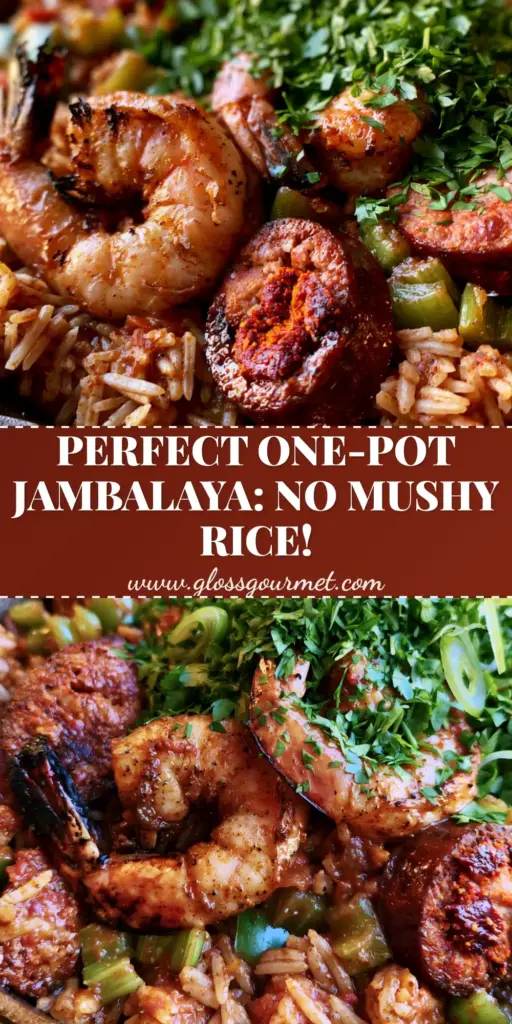
Jambalaya Recipe: The Ultimate One-Pot Creole Classic in a Cast Iron Skillet
Ingredients
Equipment
Method
- Heat oil in cast iron skillet. Sear shrimp for 90 seconds per side until tails are charred. Remove and set aside.
- Add andouille coins to the skillet. Brown until fat is rendered and edges are crisp. Remove sausage.
- Sauté diced bell peppers and celery in the sausage fat until softened but still holding shape.
- Add rinsed rice to the skillet. Stir for 2 minutes to toast the grains and coat in fat.
- Add tomatoes and stock. Bring to a boil, cover, and simmer on low for 18-20 minutes until liquid is absorbed.
- Fold proteins back in. Let rest for 5 minutes. Garnish with heavy parsley and scallions.
Notes
Do not stir the rice while it is simmering to ensure fluffiness.
Closing & Call to Action
Mastering this jambalaya recipe brings the soulful, vibrant flavors of the Gulf Coast right into your kitchen. By focusing on the “Forensic Visual Accuracy” of charred shrimp and individual rice grains, you’ve elevated a simple one-pot meal into a culinary work of art. If you enjoyed this recipe, please leave a comment below and share your photos with us on Pinterest! Don’t forget to sign up for our newsletter for more elite-tier recipes like our baked Huli Huli chicken.