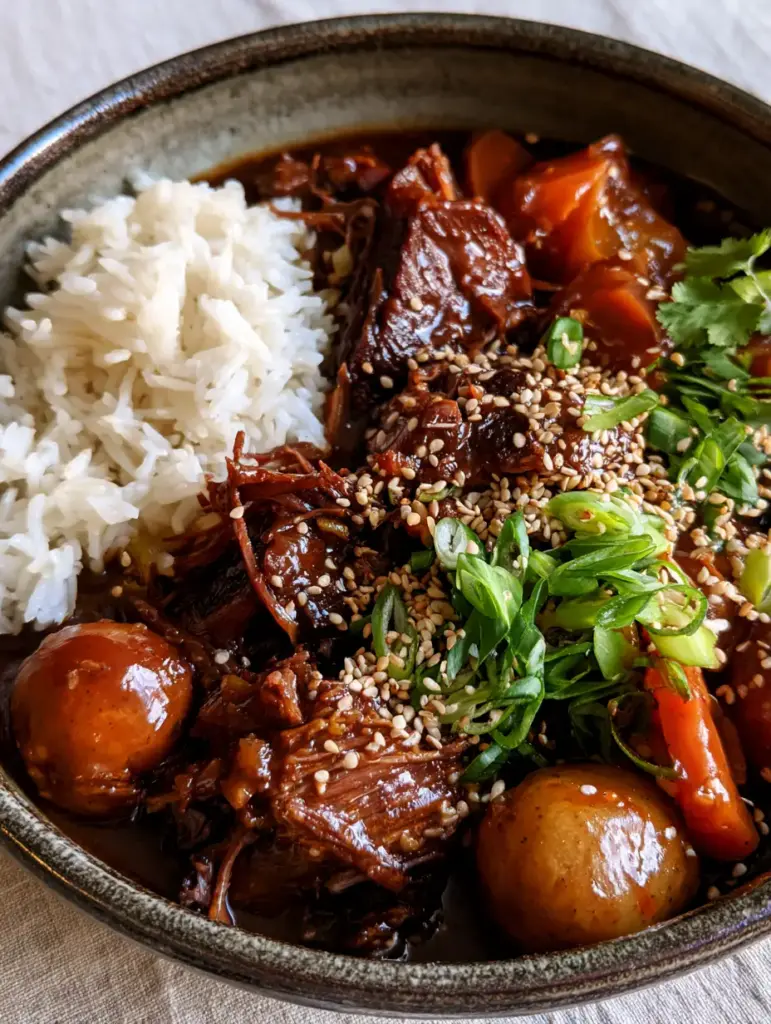
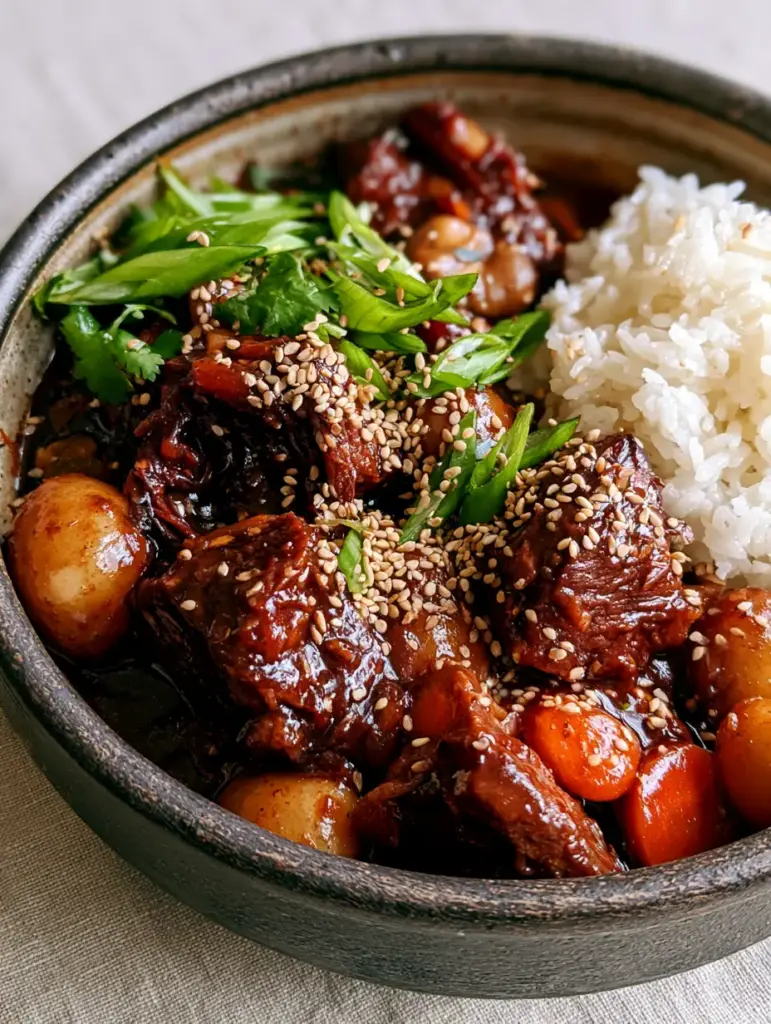
There is something deeply primal about a Korean Pot Roast that has been braised until the fibers of the beef chuck roast simply surrender to the touch of a fork. This isn’t just a meal; it is a visual and sensory masterpiece characterized by a thick, glistening mahogany glaze that clings to every succulent shred of meat. Imagine a rustic dark stoneware bowl, steam rising from a bed of fluffy jasmine rice, topped with chunky, falling-apart beef that glows under natural daylight.
The beauty of this dish lies in the contrast between the deep, umami-rich dark tones of the soy-garlic reduction and the vibrant pops of color from freshly sliced scallions and bright cilantro leaves. Whether you are a seasoned home cook or just beginning your journey into braising, this recipe provides a foolproof bridge between Western comfort food and Eastern aromatic profiles. Every bite offers a symphony of salty, sweet, and savory notes that will leave your guests asking for seconds.
Why This Slow-Cooked Umami Masterpiece Works
- The Mahogany Glaze: Through a patient reduction process, the soy sauce, brown sugar, and beef aromatics transform into a thick, glistening lacquer that provides professional-level specularity in every photo.
- Visual Texture Contrast: We pair the heavy, shredded texture of the beef with glossy whole baby potatoes and perfectly tender carrot rounds, ensuring each bowl looks like a work of art.
- Aromatic Depth: By using fresh ginger, whole garlic cloves, and toasted sesame seeds, we build layers of flavor that penetrate deep into the connective tissues of the chuck roast.
- Balanced Presentation: The addition of crisp red bell peppers and fresh green herbs cuts through the richness of the beef, providing a clean finish to a hearty meal.
The Anatomy of Ingredients for Korean Pot Roast
Selecting the right components is the first step in achieving that “falling apart” texture seen in our visual blueprint. Each ingredient serves a specific culinary purpose, from structural integrity to flavor enhancement.
3 lbs (1.36kg) Beef Chuck Roast: This cut is essential because its high collagen content breaks down into gelatin during the long cooking process, resulting in that signature shredded texture. Look for heavy marbling to ensure the meat stays moist under the thick glaze.
1 cup (240ml) Low-Sodium Soy Sauce: This serves as the foundational liquid for our mahogany glaze. It provides the deep saltiness and the dark pigments necessary for that glistening, dark finish.
1/2 cup (100g) Packed Brown Sugar: Sugar is not just for sweetness; it is the catalyst for the glaze’s viscosity. It helps the sauce thicken and creates the reflective “glossy” look on the potatoes and carrots.
1 lb (450g) Whole Baby Potatoes: We keep these whole to maintain their structural integrity during the braise. They soak up the soy-garlic juices while keeping a creamy interior.
3 large (150g) Carrots, cut into thick rounds: Carrot coins provide a natural sweetness and a change in texture. Their orange hue remains vibrant even after being coated in the dark sauce.
2 large (200g) Red Bell Peppers: Sliced into strips, these add a necessary crunch and a bright visual pop. Unlike the carrots, these are added later to ensure they don’t become overly soft.
Foundational Aromatics: 6 cloves (18g) of smashed garlic and 2 inches (20g) of sliced ginger create the “soy-garlic” backbone. These invisible ingredients are scientifically required to balance the heavy fats of the beef.
Steamed Jasmine Rice: A neutral, fluffy base is required to absorb the excess glaze. If you enjoy diverse textures, you might also enjoy the crunch found in crispy Chinese honey chicken.
Essential Kitchen Tools for Professional Braising
To achieve the results shown in our dark stoneware bowl, you need tools that manage heat distribution effectively. A heavy-bottomed Dutch oven or a rustic stoneware pot is ideal for maintaining a consistent simmer.
You will also need a sharp chef’s knife for creating those precise carrot rounds and finely sliced scallions. A wide spider strainer or slotted spoon is helpful for removing the tender vegetables without breaking them. Finally, a small whisk is necessary for incorporating the cornstarch slurry, which ensures the glaze reaches its maximum thickness and shine.
Mastering the Braise: Step-by-Step Instructions
Phase 1: The Maillard Reaction and Searing
Begin by patting your 3 lbs (1.36kg) chuck roast completely dry with paper towels. Season liberally with 1 tsp (6g) of kosher salt and 1/2 tsp (1g) of black pepper. In a large Dutch oven, heat 2 tbsp (30ml) of neutral oil over medium-high heat until it shimmers.
Sear the beef for 5-7 minutes per side. Visual Cue: You are looking for a deep, dark brown crust—this is the Maillard reaction, which is the foundation of the mahogany color. Once seared, remove the beef and set it aside on a plate.
Phase 2: Building the Soy-Garlic Liquid
Lower the heat to medium. Add the smashed garlic and sliced ginger, sautéing for 60 seconds until fragrant. Pour in 1 cup (240ml) of soy sauce, 2 cups (480ml) of beef stock, 1/2 cup (100g) of brown sugar, and 1 tbsp (15ml) of toasted sesame oil.
Use a wooden spoon to scrape the bottom of the pot, releasing all the browned bits (fond). This is much like the flavor-building process used in a Mississippi pot roast, but with an East Asian flavor profile.
Phase 3: The Long, Slow Simmer
Return the beef to the pot. The liquid should come about halfway up the sides of the meat. Cover tightly and place in a 325°F (165°C) oven for 2 hours. At the 2-hour mark, nestle the 1 lb (450g) of baby potatoes and carrot rounds around the beef. Cover and cook for another 45-60 minutes.
Sensory Cue: The beef is ready when a fork inserted into the center meets no resistance and the meat easily pulls away into chunky pieces. The potatoes should be pierceable with a knife but still hold their “whole” shape.
Phase 4: Achieving the Glistening Glaze
Remove the beef and vegetables carefully to a platter. Increase the stovetop heat to high and bring the remaining liquid to a boil. Whisk together 1 tbsp (8g) of cornstarch with 1 tbsp (15ml) of water and pour it into the pot. Boil for 3-5 minutes until the sauce reduces into a thick, dark mahogany glaze that coats the back of a spoon.
Return the beef and vegetables to the pot, tossing gently to coat. Add the sliced red bell peppers during the last 2 minutes of warming so they retain their snap. While the roast finishes, you could prepare a light fresh spinach salad to serve on the side.
Expert Tips for a Picture-Perfect Korean Pot Roast
- Control the Shred: Don’t over-shred the beef into tiny strings. For the best visual appeal, leave the beef in large, chunky pieces that look “visibly falling apart” but still substantial.
- The Potato Secret: If using larger baby potatoes, par-boil them for 5 minutes before adding them to the pot to ensure the centers are creamy while the outsides get that glossy lacquer.
- Toasting the Seeds: Always toast your white sesame seeds in a dry pan for 2 minutes before garnishing. This releases oils that complement the soy-garlic glaze perfectly.
- Garnish Generously: The contrast between the dark sauce and the “generous amount of freshly sliced bright green scallions” is what makes the dish pop. Don’t be shy with the herbs!
Storage, Reheating, and Make-Ahead Advice
This Korean Pot Roast actually tastes better the next day as the flavors continue to meld. Store leftovers in an airtight container in the refrigerator for up to 4 days. When reheating, add a splash of water or beef broth to loosen the glaze, as the gelatin in the sauce will cause it to set into a jelly when cold.
For long-term storage, you can freeze the shredded beef and sauce for up to 3 months. However, the potatoes and carrots may change texture slightly upon thawing. If you have leftover beef but no vegetables, consider repurposing it into a hearty pot roast soup for a completely different meal.
What to Serve With Your Braised Beef
The richness of the mahogany glaze demands a simple side. Steamed jasmine rice is the traditional choice, but you could also serve this alongside garlic chicken lo mein if you are hosting a larger Asian-inspired feast. The fluffy rice acts as a sponge for the extra sauce, ensuring not a single drop of that umami-garlic goodness goes to waste.
Frequently Asked Questions
Yes! Sear the beef first in a pan, then place all ingredients in the slow cooker on low for 8 hours. You will still need to reduce the sauce on the stovetop at the end to get that thick glaze.
The secret is the reduction and the sugar. By boiling the braising liquid after the beef is cooked and adding a cornstarch slurry, the sugars and soy sauce thicken into a reflective, dark lacquer.
This specific version focuses on the savory soy-garlic profile and is not inherently spicy. You can add gochugaru (Korean chili flakes) or sliced jalapeños if you prefer a heat kick.
Beef chuck roast is the gold standard. Its high collagen content breaks down during the slow braise, providing the shredded, tender texture and rich mouthfeel required for this dish.
You likely added them too early. Ensure you only add the baby potatoes during the last 45-60 minutes of cooking so they soften without losing their structural integrity.
The Ultimate Korean Pot Roast Recipe
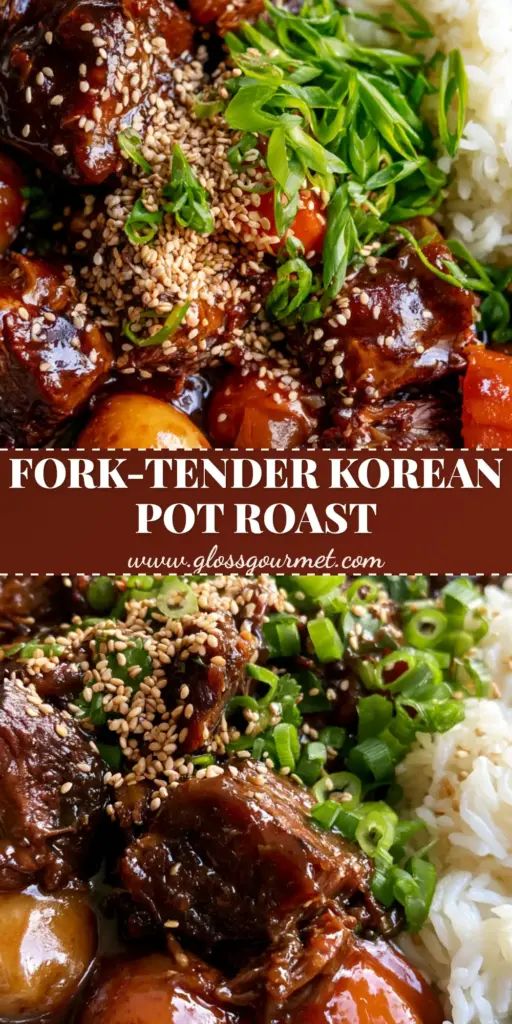
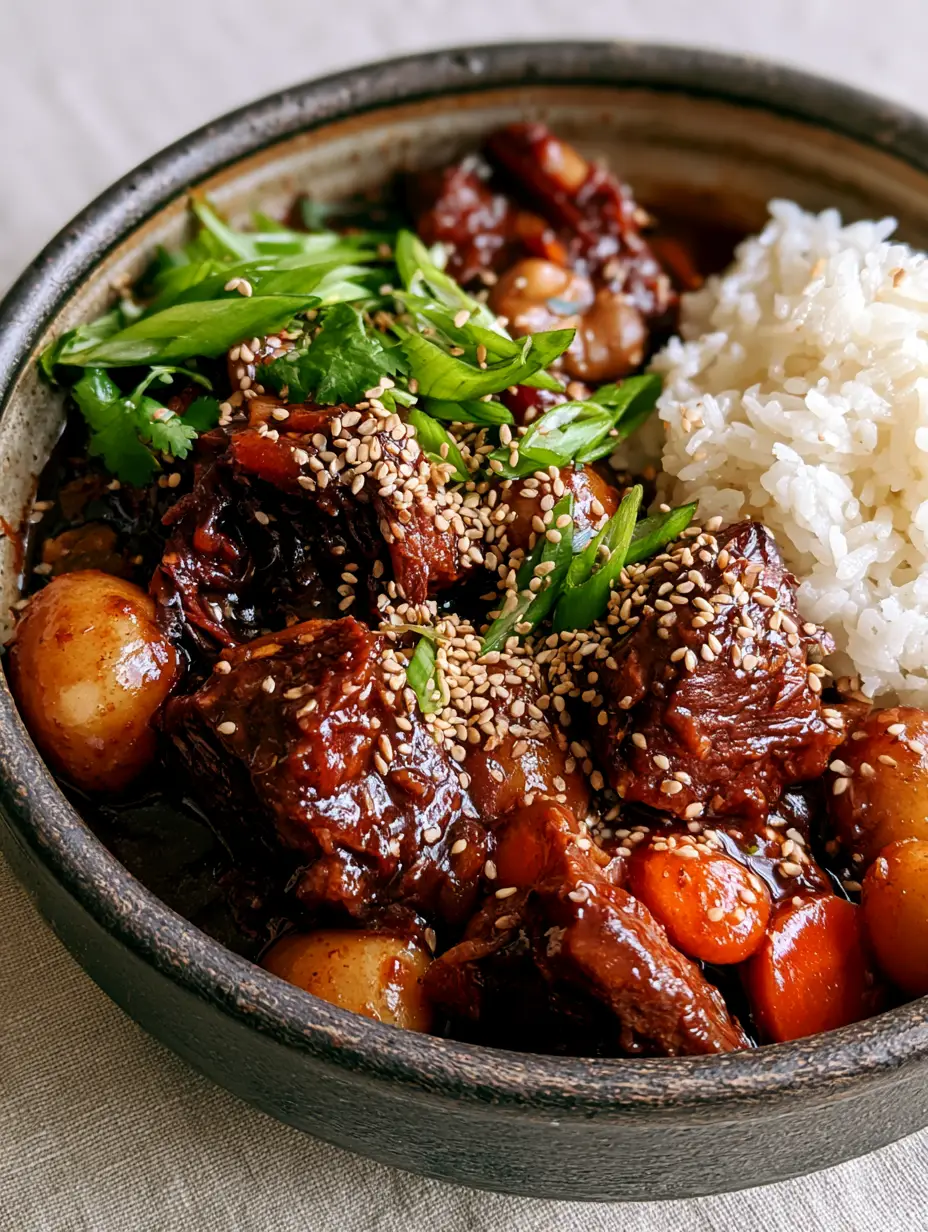
Korean Pot Roast with a Mahogany Soy-Garlic Glaze and Tender Baby Potatoes
Ingredients
Equipment
Method
- Season the chuck roast and sear in a hot Dutch oven with oil until a deep brown crust forms on all sides.
- Remove beef. Sauté garlic and ginger, then deglaze the pot with soy sauce, stock, brown sugar, and sesame oil.
- Return beef to the pot and cook at 325°F (165°C) for 2 hours.
- Add potatoes and carrots; cook for another 45-60 minutes until beef is falling apart.
- Remove meat and veggies. Boil the liquid with a cornstarch slurry until it forms a thick, glistening mahogany glaze.
- Toss beef and veg in the glaze. Serve over jasmine rice and top with sesame seeds, scallions, and cilantro.
Notes
Toast sesame seeds for 2 minutes to enhance their nuttiness.
Bring the Flavors of Seoul to Your Kitchen
Creating a Korean Pot Roast is a rewarding experience that fills your home with the intoxicating aroma of toasted sesame, sweet ginger, and savory garlic. This dish proves that with a little patience and the right visual cues, you can create a restaurant-quality meal in a dark stoneware bowl that looks just as good as it tastes. We hope this becomes a new staple in your home-cooked rotation.
If you enjoyed this recipe, please leave a comment below and share your results! Don’t forget to follow us and save this recipe to your favorite boards on Pinterest for your next Sunday dinner inspiration.