There is a specific culinary magic that happens when fermented soy paste meets high-intensity heat. This baked miso salmon is the embodiment of that alchemy, delivering a thick, mahogany-colored glaze that bubbles and glistens under the broiler. If you have been searching for a restaurant-quality meal that requires minimal cleanup, this sheet pan masterpiece is your answer.
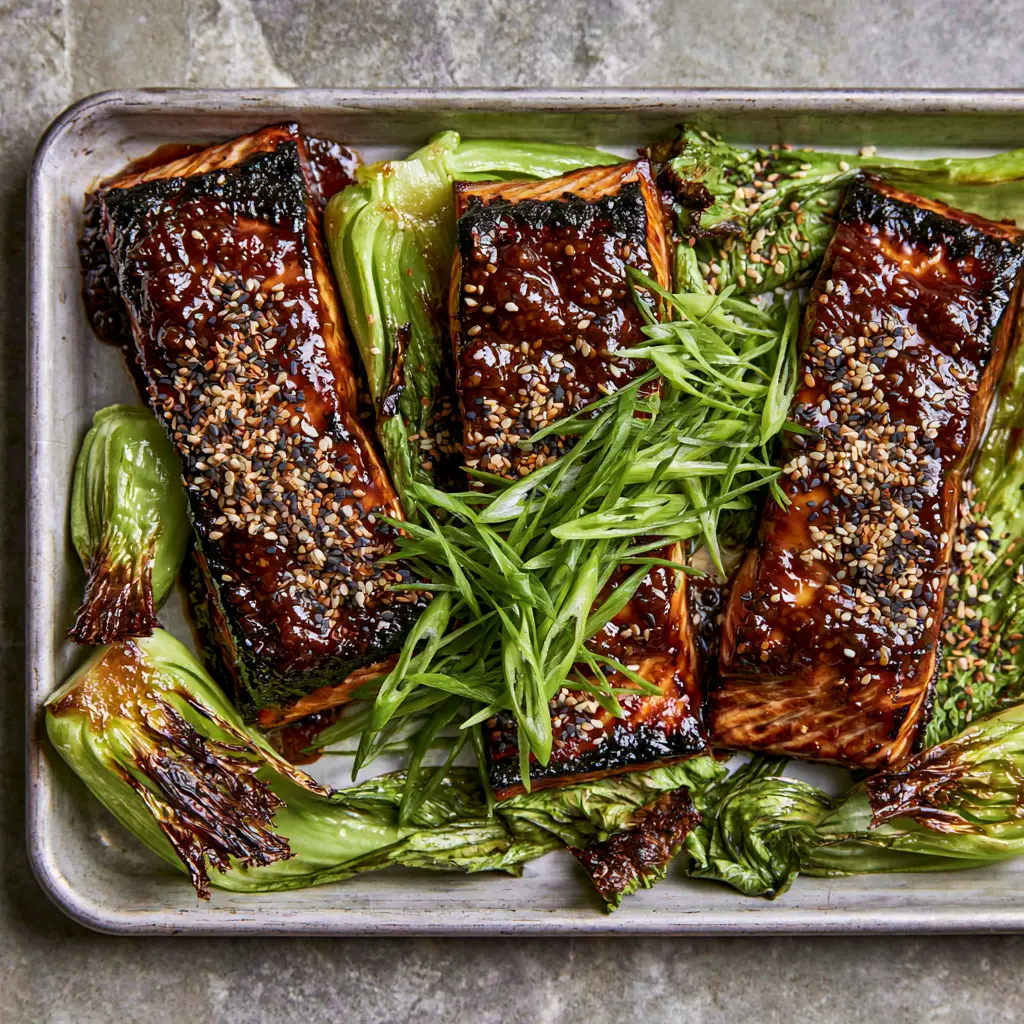
Inspired by the classic flavors of Japanese cuisine, this recipe focuses on the balance of sweet, salty, and umami. The Atlantic salmon fillets emerge from the oven incredibly flaky and moist, while the accompanying baby bok choy achieves that elusive contrast of tender, wilted leaves and crispy, seared tips. It is a visual and sensory feast that looks just as good on a neutral stone countertop as it does on a fine dining plate.
Whether you are a seasoned home cook or a weeknight warrior, the depth of flavor achieved here will surprise you. By using a parchment paper-lined baking sheet, we ensure the delicate fish stays intact while allowing the sugars in the miso to caramelize into those signature charred edges we all crave.
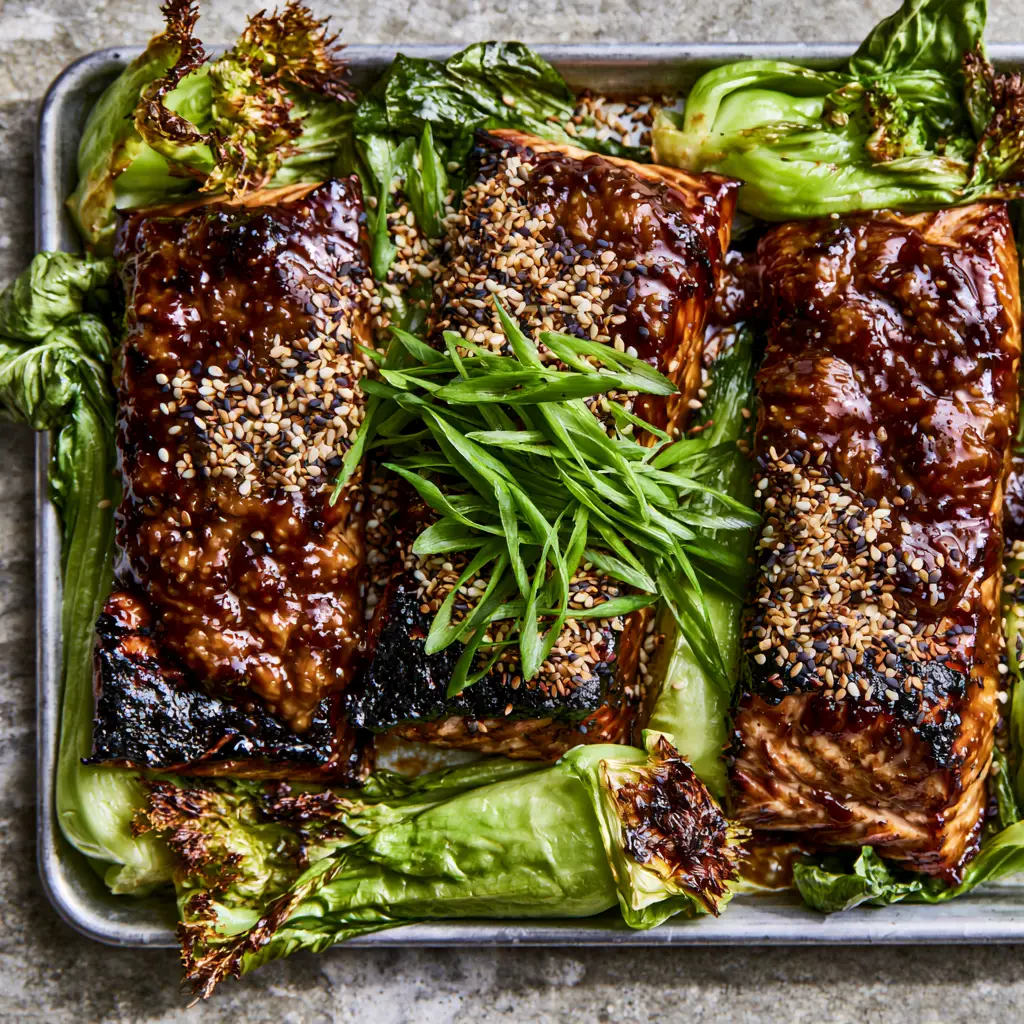
The Visual and Textural Allure of This Sheet Pan Meal
- The Mahogany Glaze: A thick, glistening coating that bubbles during the final stages of cooking, creating a deep, rich color and concentrated umami flavor.
- Perfectly Flaky Fish: High-quality Atlantic salmon roasted until just tender, ensuring every forkful is moist and buttery.
- Charred Baby Bok Choy: Vibrant green greens that provide a fresh, peppery crunch with charred tips that mimic the texture of grilled vegetables.
- The Finishing Touches: A heavy garnish of toasted black and white sesame seeds and bright green scallions for a professional, “high-res” food photography finish.
Essential Ingredients for the Perfect Baked Miso Salmon
Atlantic Salmon Fillets: You will need three large fillets, roughly 6 ounces (170g) each. Atlantic salmon is preferred for its high fat content, which stands up beautifully to the intense heat of the miso caramelization process without drying out.
White Miso Paste (Shiro Miso): 3 tbsp (54g) of this fermented paste provides the foundational umami. White miso is milder and sweeter than red miso, making it the perfect base for a glaze that complements rather than overpowers the fish.
Mirin and Sake: 2 tbsp (30ml) of mirin and 1 tbsp (15ml) of sake are essential for thinning the glaze and adding a subtle acidity. These traditional Japanese liquids help dissolve the miso and contribute to the glossy sheen of the final dish.
Granulated Sugar or Honey: 1 tbsp (12g-21g) is necessary to trigger the Maillard reaction. This is what creates those bubbling, charred edges on the salmon that make it look so irresistible.
Baby Bok Choy: 4-6 heads of baby bok choy, sliced lengthwise. This vegetable is ideal for sheet pan roasting because its high water content allows it to wilt slightly while the thin leaves turn crispy and dark.
Neutral Oil: 1 tbsp (15ml) of avocado or grapeseed oil is required for the bok choy. A high-smoke point oil ensures the vegetables sear properly without smoking out your kitchen.
Aromatic Garnishes: 1 tbsp (9g) toasted white sesame seeds, 1 tbsp (9g) black sesame seeds, and 2 thinly sliced scallions. These aren’t just for show; they provide a vital textural crunch and a burst of freshness.
Sea Salt Flakes: A final sprinkle of Maldon or sea salt flakes enhances the sweetness of the glaze and draws out the natural flavors of the salmon.
Tools Required for Culinary Success
To achieve the results shown in our photography, you don’t need a professional kitchen, but a few specific tools make a world of difference. First and foremost is a heavy-duty rimmed baking sheet. This ensures heat is distributed evenly, preventing the bottom of the salmon from overcooking before the top is glazed.
Parchment paper is a non-negotiable for this baked miso salmon. Miso glaze is high in sugar, and without parchment, the “bubbling” glaze would fuse to your pan, making cleanup a nightmare and potentially tearing the skin off your beautiful fish. A small whisk and a silicone basting brush are also essential for creating a smooth marinade and applying it thick enough to glisten.
Step-by-Step Instructions to Master the Glaze and Char
Preparing the Signature Miso Marinade
In a small mixing bowl, combine your white miso paste, mirin, sake, and sugar. Whisk vigorously until the mixture is completely smooth and no lumps of miso remain. The consistency should be thick enough to coat the back of a spoon—think of it as a savory caramel.
For the best results, let the salmon fillets sit at room temperature for about 15 minutes before glazing. This ensures they cook evenly throughout. Pat the skin and flesh dry with a paper towel; moisture is the enemy of a good sear, even in the oven.
Roasting the Salmon and Bok Choy
Preheat your oven to 400°F (200°C). Line your baking sheet with parchment paper. Arrange the three salmon fillets in the center, leaving ample space between them. Toss the halved baby bok choy with a light coating of neutral oil and a pinch of salt, then arrange them around the fish.
Using your basting brush, paint a thick layer of the miso glaze over the top and sides of the salmon. You want it to be heavily coated. Slide the tray into the oven and bake for 10-12 minutes. At this stage, the salmon should be nearly cooked through, and the bok choy should be wilted.
The Final Broil for Mahogany Perfection
Switch your oven to the “Broil” setting (high). Position the oven rack so the salmon is about 4-5 inches from the heating element. Watch the tray closely! Broil for 2-3 minutes until the glaze is bubbling vigorously and dark, mahogany charred spots appear on the edges of the fish.
The tips of the bok choy should also begin to turn dark brown and crispy. This is where the “visual blueprint” comes to life. Once the glaze looks like molten glass and the edges are slightly blackened, remove the tray from the oven immediately.
Expert Tips for a Professional Finish
- Check for Doneness: Salmon is best when it reaches an internal temperature of 125°F (52°C) for medium-rare or 135°F (57°C) for medium. The carryover heat will finish it to perfection.
- Don’t Over-Oil the Bok Choy: Too much oil will make the greens soggy rather than charred. A light mist or a quick toss is all you need for those crispy tips.
- Toast Your Seeds: If your sesame seeds aren’t pre-toasted, toss them in a dry pan for 2 minutes until fragrant. This significantly elevates the flavor profile of the baked miso salmon.
- The Skin Trick: If you enjoy crispy skin, ensure the parchment paper is lightly oiled under the fish. The high heat of the sheet pan will help crisp the bottom while the broiler handles the top.
Storage, Reheating, and Freezing
This dish is best served immediately to enjoy the contrast between the hot glaze and the cool, fresh scallions. However, leftovers can be stored in an airtight container in the refrigerator for up to 2 days. When reheating, do so gently in a 300°F (150°C) oven to prevent the salmon from becoming rubbery.
We do not recommend freezing the cooked salmon, as the texture of the glaze and the bok choy will degrade significantly upon thawing. If you have extra raw salmon, it is better to freeze it prior to glazing.
What to Serve with Your Miso Masterpiece
While this sheet pan meal is a complete dinner on its own, it pairs beautifully with other Asian-inspired sides. For a refreshing contrast, try a chilled vermicelli noodle salad or a side of crispy Asian-style potatoes.
If you are looking for more seafood inspiration, you might enjoy comparing this umami-heavy dish to our honey garlic glazed salmon or the zesty profile of a tangy Dijon salmon. For those who love the crunch, our parmesan crusted baked salmon offers a completely different textural experience.
Frequently Asked Questions
Yes, but ensure it is completely thawed and patted dry with paper towels to prevent excess moisture from thinning the glaze.
The secret is the combination of sugar in the marinade and a final 2-3 minutes under the broiler to trigger the Maillard reaction.
Miso can sometimes contain barley or gluten. Use a certified gluten-free miso paste and substitute the soy sauce in the glaze with tamari to make it GF.
White miso (Shiro miso) is best because it has a milder, sweeter flavor that caramelizes beautifully without being overly salty.
Sogginess usually comes from overcrowding the pan or using too much oil. Ensure the bok choy has space and only a light coating of oil.
The Complete Baked Miso Salmon Recipe
Baked Miso Salmon: The Ultimate Mahogany Glazed Sheet Pan Dinner
Ingredients
Equipment
Method
- In a small bowl, whisk together the white miso, mirin, sake, and sugar until a smooth, thick paste forms.
- Preheat oven to 400°F (200°C) and line a baking sheet with parchment paper. Place salmon fillets in the center and arrange oiled bok choy around the sides.
- Brush the miso mixture heavily over the salmon. Bake for 10-12 minutes until the fish is nearly cooked through and the bok choy is wilted.
- Turn the oven to broil. Broil the tray for 2-3 minutes until the glaze is bubbling and mahogany-colored with charred edges.
- Remove from oven. Garnish heavily with toasted sesame seeds, fresh scallions, and sea salt flakes.
Notes
Always pat the salmon dry before glazing to ensure the sauce stays thick and bubbly.
Closing Thoughts on This Flavorful Favorite
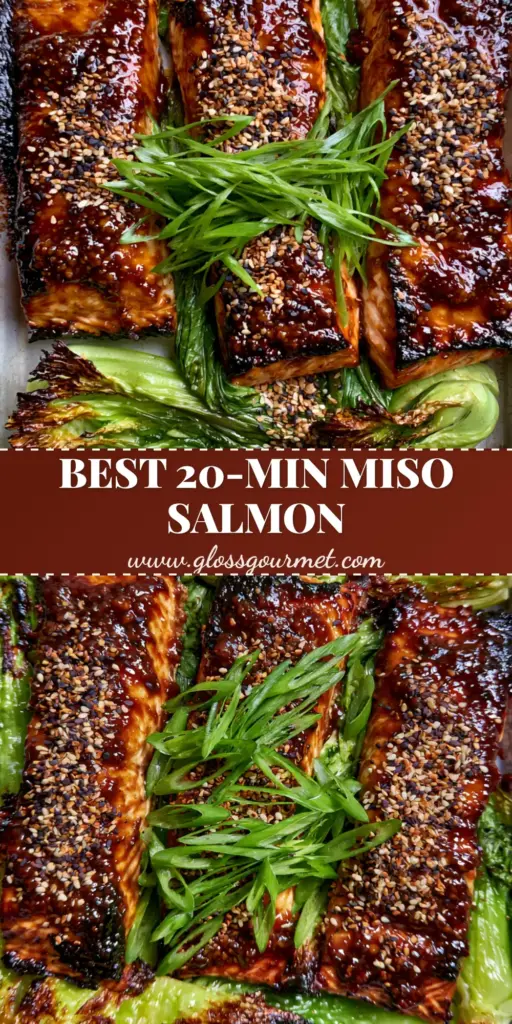
The beauty of baked miso salmon lies in its simplicity and the incredible depth of flavor that a few high-quality ingredients can produce. This is a dish that proves healthy eating doesn’t have to be boring or difficult. The combination of the bubbling mahogany glaze and the vibrant greens makes it a staple in our kitchen, and we hope it becomes one in yours as well.
If you made this recipe, we would love to hear about it! Please leave a comment below and share your photos with us on Pinterest. For more weekly recipe inspiration and culinary tips, don’t forget to sign up for our newsletter.