There is nothing quite like the aroma of a red wine braised brisket slowly transforming in the oven. As the hours pass, the kitchen fills with a deep, savory scent that promises a meal of pure comfort and sophistication. This isn’t just a pot roast; it is a masterclass in slow-cooking technique designed to produce the most tender, succulent beef you have ever tasted.
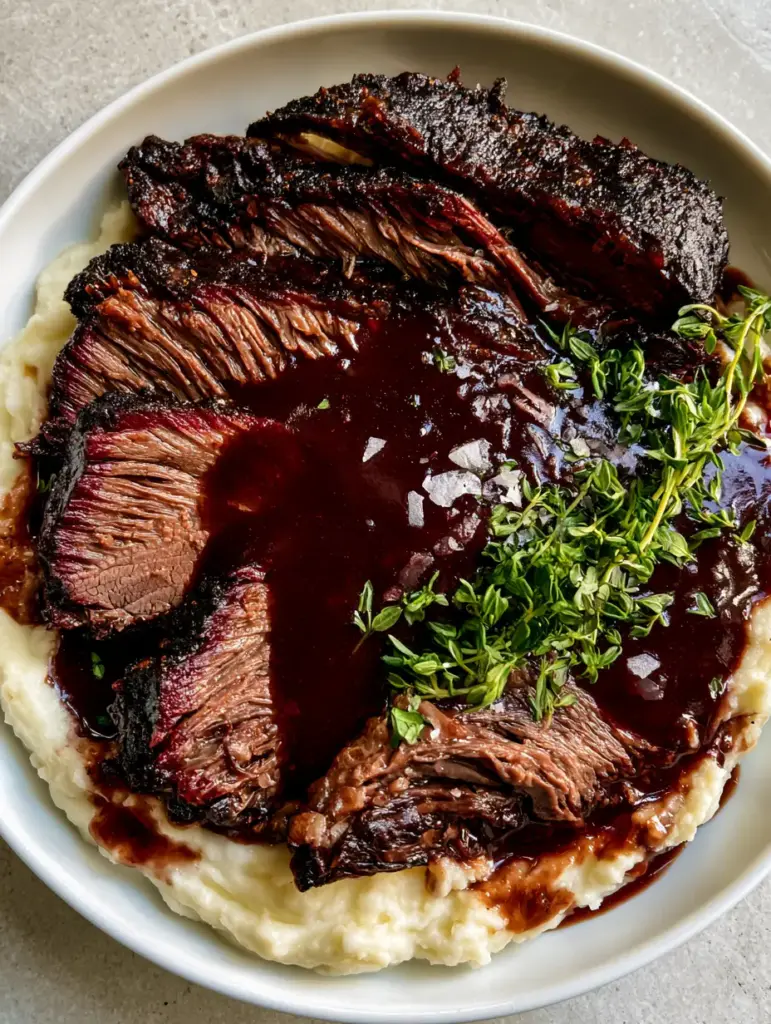
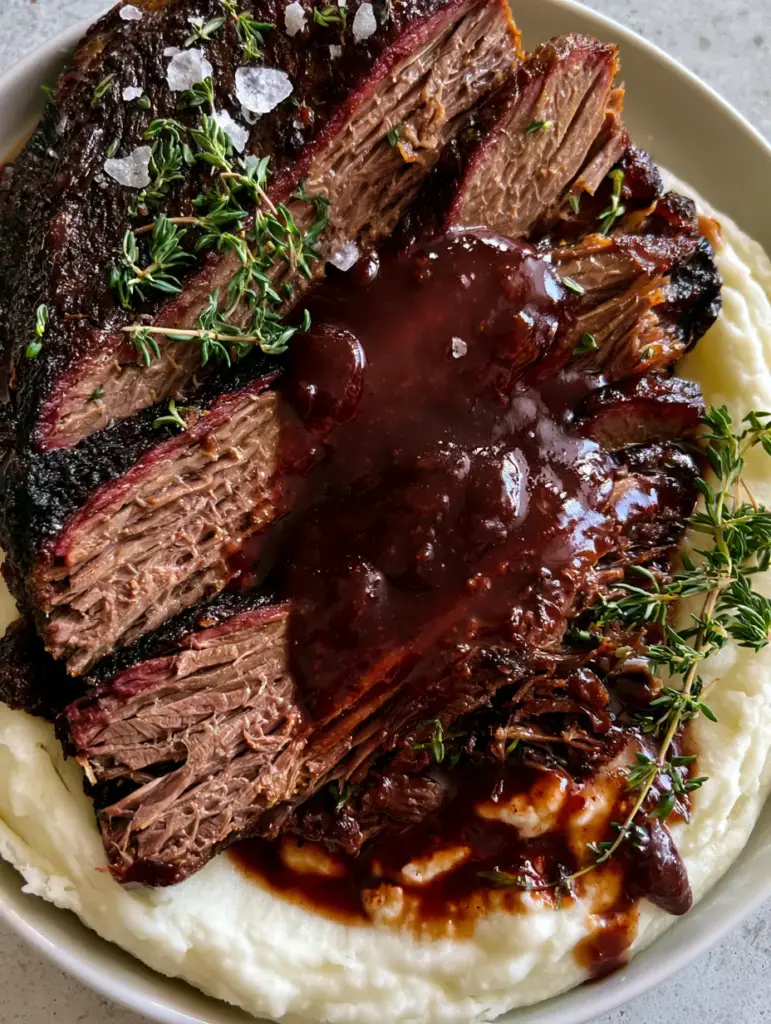
Imagine pulling a heavy Dutch oven from the heat to reveal a slab of beef with a dark mahogany, caramelized outer bark. When you slide your knife through, the meat fibers effortlessly fall apart, glistening with moisture. Drenched in a thick, glossy red wine reduction sauce and served over a bed of buttery white mashed potatoes, this dish is a visual and culinary triumph.
Every element of this red wine braised brisket has been carefully curated to match the rustic elegance of a handheld smartphone photo from your favorite food blog. From the vibrant green thyme leaves to the pinch of large flaky sea salt, we are building layers of flavor and texture that look just as good as they taste. Whether you are hosting a holiday dinner or a cozy Sunday feast, this recipe is your roadmap to perfection.
The Anatomy of the Perfect Red Wine Braised Brisket
To achieve the specific results seen in professional culinary photography, we must focus on three pillars: the Maillard reaction, collagen breakdown, and sauce emulsification. This red wine braised brisket relies on a high-heat sear to develop that signature dark bark before transitioning to a low-and-slow braise.
- The Mahogany Bark: Achieving that deep, caramelized exterior requires patting the meat bone-dry and searing it in a heavy-bottomed pan until a crust forms.
- The Succulent Texture: We utilize a long braising time at a low temperature to transform tough connective tissue into meltingly tender gelatin.
- The Glossy Reduction: The braising liquid is strained and reduced at the end to concentrate the sugars and tannins from the wine into a deep burgundy glaze.
- The Velvet Base: High-fat dairy and a fine-mesh ricer ensure the mashed potatoes provide a smooth, neutral canvas for the rich beef.
- Sensory Contrast: Fresh thyme and Maldon sea salt flakes provide the final pop of color and a crucial crunch against the soft meat.
If you enjoy these deep, savory flavors, you might also love our homemade French dip sandwiches for a similar beefy satisfaction. Alternatively, for a lighter side to balance the richness, consider a crispy spinach salad with a bright vinaigrette.
Essential Ingredients for Success
Every ingredient in this red wine braised brisket serves a scientific purpose. We don’t just add liquid for moisture; we add it to build a complex flavor profile that penetrates deep into the muscle fibers.
The Protein and Aromatics
5 lbs (2.27kg) Beef Brisket: Look for a “second cut” or “point cut” with a decent fat cap, as this fat renders down to keep the meat fibers succulent during the long cook. The fat cap is essential for developing the caramelized bark described in our visual blueprint.
2 tbsp (30ml) Grapeseed or Vegetable Oil: A high-smoke point oil is required for the initial sear, allowing us to reach the temperatures necessary for the Maillard reaction without burning the oil.
2 large (300g) Yellow Onions: Sliced thinly, these onions caramelize in the beef fat, providing a natural sweetness that balances the acidity of the wine.
4 large (250g) Carrots: Cut into large chunks, carrots add earthy notes and contribute natural pectins to the sauce, helping it achieve that thick, glossy finish.
The Braising Liquid and Seasoning
750ml (1 bottle) Dry Red Wine: Choose a bold variety like Cabernet Sauvignon or Malbec; the tannins provide structure to the sauce, while the deep burgundy hue creates the visual pooling effect on the potatoes.
3 cups (720ml) Beef Bone Broth: Using a high-quality bone broth ensures a high gelatin content, which is the secret to a sauce that coats the back of a spoon beautifully.
1/4 cup (60ml) Tomato Paste: This provides Umami depth and helps darken the sauce to that deep mahogany color we are looking for.
1 head (50g) Garlic: Cut crosswise, the garlic mellows during the braise, infusing the liquid with a subtle, sweet nuttiness rather than sharp pungency.
Fresh Thyme and Bay Leaves: These woody herbs withstand the long cooking time, infusing the meat with an herbaceous backbone that is mirrored in the final garnish.
Maldon Sea Salt and Black Peppercorns: Coarse salt is used for seasoning the meat, while the large flakes are reserved for the final “blogger-style” finish.
Professional Tools for a Flawless Braise
To replicate the visual of succulent meat fibers falling apart, you need tools that distribute heat evenly. A heavy Enameled Cast Iron Dutch Oven is the gold standard for this red wine braised brisket because it retains heat and features a tight-fitting lid to prevent moisture loss.
You will also need a sharp slicing knife or a carving knife. To get those thick, clean slices shown in the top-down smartphone photo, you must slice against the grain once the meat has rested. For the potatoes, a potato ricer or food mill is non-negotiable if you want that “velvet-smooth” texture that mimics restaurant-quality plating.
Step-by-Step Instructions to Culinary Excellence
Preparing the Brisket and Initial Sear
Start by taking your brisket out of the refrigerator at least 45 minutes before cooking to bring it to room temperature. This ensures an even sear. Pat the entire surface of the meat bone-dry with paper towels; moisture is the enemy of a good crust. Season aggressively with kosher salt and cracked black pepper on all sides.
Heat the oil in your Dutch oven over medium-high heat. When the oil begins to shimmer and just starts to smoke, carefully lay the brisket in the pan. Sear for 6-8 minutes per side. You are looking for a “Visual Cue” of a deep mahogany-brown crust. Do not rush this; the bark you build here is the bark you see in the final dish.
Building the Braising Base
Remove the brisket and set it aside on a plate. Reduce the heat to medium and add your onions and carrots. Cook them in the rendered beef fat until the onions are translucent and starting to brown around the edges. Stir in the tomato paste and cook for 2 minutes until it turns a rusty brick-red color and smells slightly sweet.
Deglaze the pan with the entire bottle of red wine. Use a wooden spoon to scrape up all the “fond” (the brown bits) from the bottom of the pan—this is concentrated flavor. Let the wine reduce by half to cook off the harsh alcohol edge, leaving behind a deep, concentrated syrup.
The Low and Slow Transformation
Return the brisket and any accumulated juices to the pot. Pour in the beef broth until the liquid reaches about two-thirds of the way up the side of the meat. Add the garlic head, bay leaves, and half of the thyme sprigs. Cover with a tight lid and place in a preheated oven at 300°F (150°C).
Braise for 3.5 to 4 hours. You will know it is ready when a fork inserted into the center meets no resistance and the meat fibers look like they could be pulled apart with a spoon. Remove the brisket carefully to a cutting board and tent it loosely with foil to rest for at least 20 minutes.
Refining the Glossy Burgundy Sauce
While the meat rests, strain the braising liquid through a fine-mesh sieve into a saucepan, discarding the solids. Skim off any excess fat from the surface. Bring the liquid to a rapid boil over medium-high heat. Reduce the liquid until it has thickened into a glossy, deep-burgundy reduction that easily coats a spoon.
For a final touch of richness, whisk in a tablespoon of cold butter. This gives the sauce that “gentle glow” mentioned in the Midjourney prompt, reflecting light beautifully for your smartphone photography.
Achieving the Velvet-Smooth Mashed Potatoes
While the brisket is braising, peel and chop 3 lbs (1.36kg) of Yukon Gold potatoes. Boil them in salted water until very tender. Drain them and let them steam for 2 minutes to remove excess moisture. Pass the potatoes through a ricer into a warm bowl.
Gently fold in 1/2 cup (115g) of unsalted butter and 1/2 cup (120ml) of heavy cream. Stir until just combined; do not overwork them or they will become gluey. The result should be a buttery, white, velvet-smooth base that contrasts perfectly with the dark meat.
If you’re looking for more ways to use your Dutch oven, try our classic chicken vesuvio or perhaps a batch of comforting broccoli mac and cheese for a weeknight meal.
Expert Tips for a Food-Blogger Finish
- Slice Against the Grain: Always look for the direction of the muscle fibers. Slicing perpendicular to these fibers ensures the meat “falls apart” in the mouth rather than being chewy.
- The Resting Period: Never skip the rest. Resting allows the juices to redistribute, ensuring the succulent, moist meat fibers seen in the visual prompt.
- Temperature Control: If the sauce is too thin, keep reducing. If it’s too salty, add a splash of water or more broth. The goal is a “thick, glossy” consistency.
- Visual Plating: To replicate the “handheld smartphone photo” look, pool the sauce in the center so it naturally runs into the crevices of the meat and onto the potatoes.
Storage, Reheating, and Make-Ahead Advice
This red wine braised brisket actually tastes better the next day as the flavors continue to marry. You can store the brisket in its sauce in an airtight container in the refrigerator for up to 4 days. When reheating, do so gently on the stovetop over low heat to avoid toughening the meat fibers.
For longer storage, the brisket and sauce freeze beautifully for up to 3 months. Thaw overnight in the fridge before reheating. The mashed potatoes are best served fresh, but can be reheated with an extra splash of cream to restore their velvet texture.
What to Serve with Red Wine Braised Brisket
To balance the heavy, savory notes of the red wine reduction, pair this dish with something bright or crunchy. A fresh spinach salad with citrus segments provides a necessary acidic lift. If you want a more casual vibe, leftover brisket makes incredible gourmet French dip sandwiches the next day.
For dessert, lean into the seasonal vibes with spiced gingerbread macarons or a light lemon cheesecake tart to cleanse the palate after such a rich meal.
Frequently Asked Questions
Yes, but you must sear the meat in a pan first to get the mahogany bark. Transfer to the slow cooker and cook on low for 8-10 hours. Note that you will still need to reduce the sauce on the stovetop afterward.
The secret is to strain the liquid and reduce it significantly to concentrate the gelatins. Finishing the sauce with a tablespoon of cold butter (mounting) adds a professional sheen and gentle glow.
The ‘second cut’ or ‘point cut’ is best. It contains more intramuscular fat and a thicker fat cap, which renders during the slow braise to keep the meat succulent and help develop the dark mahogany bark.
Choose a dry, full-bodied red wine with moderate tannins like Cabernet Sauvignon, Malbec, or Syrah. These varieties provide the structure and deep burgundy color needed for a rich reduction sauce.
The Ultimate Red Wine Braised Brisket Recipe
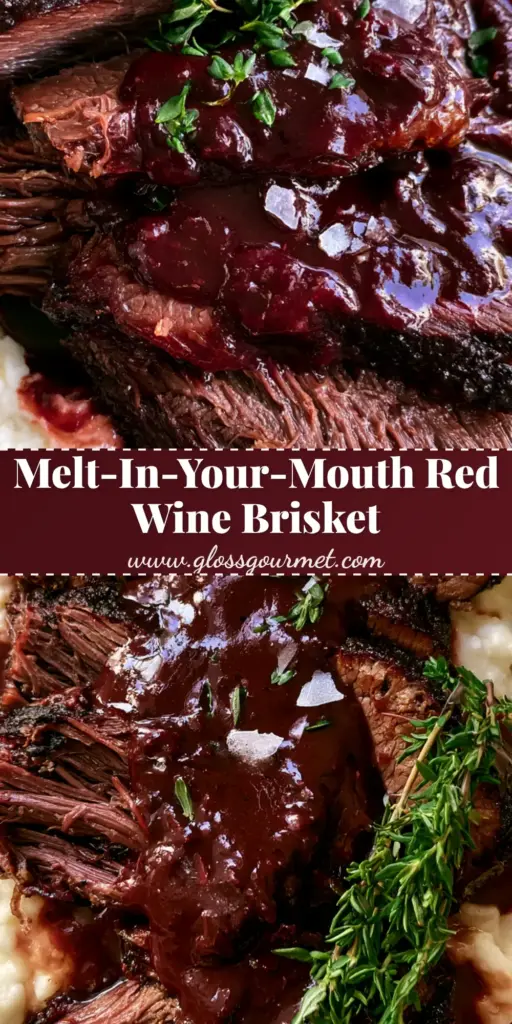
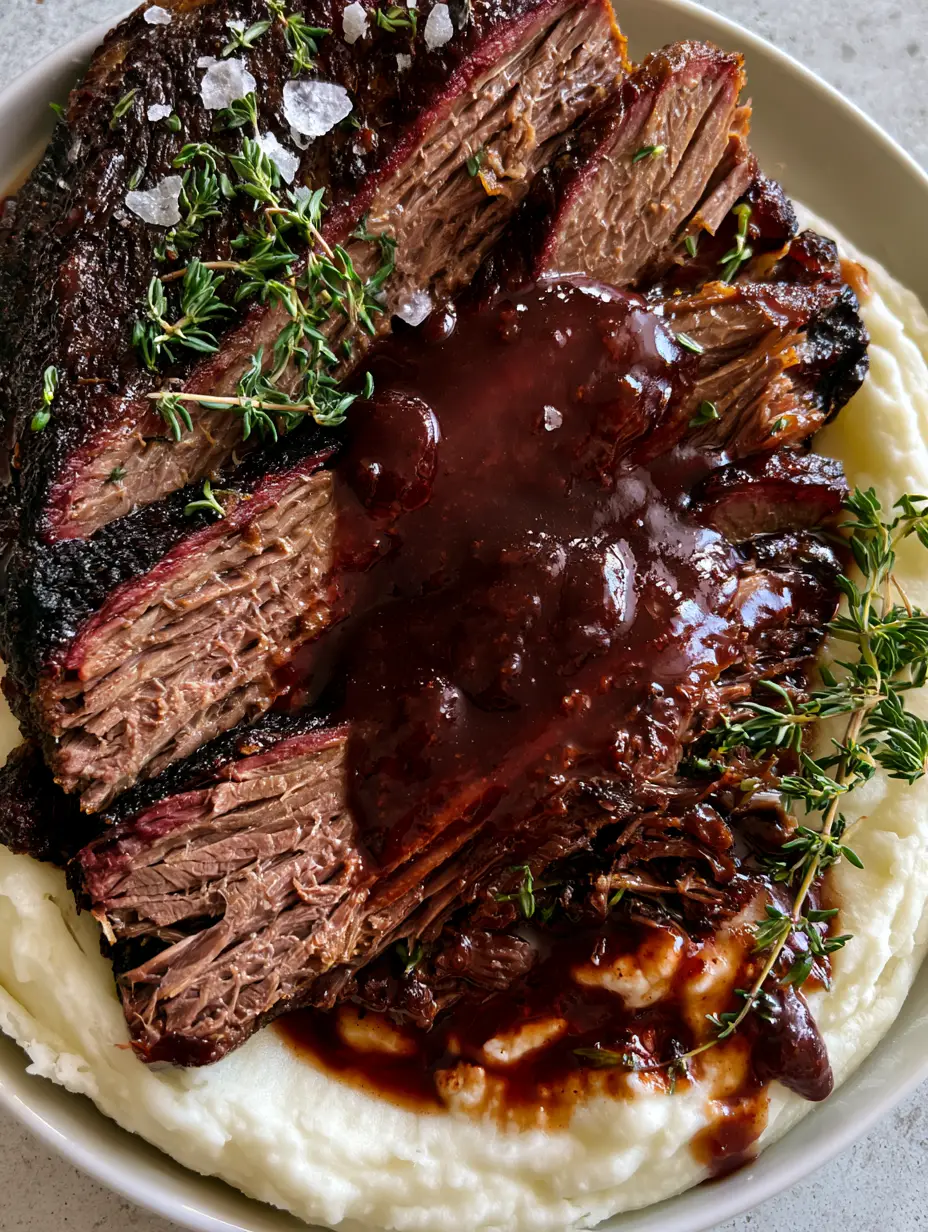
Red Wine Braised Brisket with Velvet Smooth Mashed Potatoes
Ingredients
Equipment
Method
- Pat brisket dry and season with salt/pepper. Sear in oil in a Dutch oven until a deep mahogany bark forms (6-8 mins per side). Remove brisket.
- Add onions and carrots to the pot. Cook until caramelized. Stir in tomato paste and cook for 2 minutes.
- Add red wine, scraping the bottom. Reduce by half. Return brisket, add broth, garlic, and thyme. Cover and bake at 300°F (150°C) for 4 hours.
- Strain braising liquid and boil until thick and glossy. Whisk in butter for shine.
- Slice brisket against the grain. Serve over mashed potatoes, pour sauce over the center, and garnish with thyme and Maldon salt.
Notes
For the best bark, ensure the meat is completely dry before searing.
Closing & Call to Action
This red wine braised brisket is a labor of love that rewards you with restaurant-quality results right in your own kitchen. Between the dark mahogany bark and the velvet-smooth potatoes, it is a dish designed to impress both the palate and the camera lens. We hope this becomes a staple in your home for years to come.
If you made this recipe, please leave a comment below and let us know how it turned out! Don’t forget to share your beautiful plating photos on Pinterest and tag us. For more cozy dinner inspiration, sign up for our newsletter to get recipes delivered straight to your inbox.